

How many inches bike for 11 year old
An 11-year-old should usually compare 20-inch and 24-inch bikes. Measure the child first: height and actual fit matter more than age.
The direct size answer
Under the XBikes starting points, a 20-inch bike covers ages 7–12 and rider heights of 48–60 inches (122–152 cm). A 24-inch bike covers ages 10–14 and heights of 54–64 inches (137–163 cm). That overlap means age 11 does not produce one automatic wheel size.
Start with measured height. If the rider is below 54 inches (137 cm), compare 20-inch bikes first. From 54 to 60 inches (137–152 cm), test both 20-inch and 24-inch bikes because the height ranges overlap. From 60 to 64 inches (153–163 cm), compare a 24-inch bike first; the XBikes starting point places riders over 60 inches (153 cm) in the 26-inch youth-and-adult range as well, so an individual fit check becomes especially important.
These ranges narrow the search, but they do not replace sitting on and controlling the exact bicycle.
Measure before choosing inches
Measure the child without shoes, standing straight against a wall, to get total height. Then measure inseam from the floor to the crotch while the child stands naturally. Record both measurements rather than relying on clothing size or a remembered measurement.
Compare height with the XBikes ranges above, then use inseam to evaluate stand-over room on the actual bicycle. Geometry can differ even when two bicycles share the same wheel size, so wheel diameter alone cannot confirm fit.
What to check on the actual bike
Have the child try the bicycle in the shoes normally worn for riding. The American Academy of Pediatrics guidance emphasizes trying the bike, checking stand-over and control, and avoiding an oversized bicycle bought merely for future growth.
- Stand-over: The child should be able to straddle the bicycle without the frame preventing a stable stance.
- Reach: From the riding position, the child should reach the handlebar without excessive stretching or an awkwardly compressed posture.
- Brake control: The child must be able to reach and operate the brakes confidently. Confirm the controls on the exact model rather than assuming every bike works alike.
- Starting and stopping: Ask the rider to demonstrate a controlled start, turn and stop in a suitable traffic-free area.
- Confidence: If the larger option makes basic control hesitant, it is not the right choice simply because it leaves growing room.
Follow the exact product manual for assembly, adjustment, maintenance, compatibility and limits. If the setup or fit is uncertain, use a qualified bicycle mechanic.
How the supplied 20-inch options help
The supplied catalog contains 20-inch choices, so they are useful comparison points when an 11-year-old measures within the 20-inch starting range. They do not establish fit by title alone, and the catalog supplied here does not include a 24-inch or 26-inch product for an on-page comparison.
The Blue XJD Freestyle BMX Bike, 20-Inch – No Pegs is listed as a kids’ BMX bike with a 20-inch wheel size. The Pink 12/14/16/20" XJD Girls Bike with Training Wheels & Basket is listed as a training-wheel bike and offers 12-inch, 14-inch, 16-inch and 20-inch SKU labels. For this question, only its 20-inch selection falls within the usual 11-year-old comparison; its smaller selections correspond to younger and shorter XBikes starting ranges.
These particular catalog options show two available 20-inch product types and help a parent inspect the relevant size when the child’s measurement supports it.
 Blue XJD Freestyle BMX Bike, 20-Inch – No Pegs
A 20-inch kids’ BMX bike that is relevant when the rider’s measured height and individual fit check support the XBikes 20-inch range.
 Pink 12/14/16/20" XJD Girls Bike with Training Wheels & Basket
Offers 12-, 14-, 16- and 20-inch labels. For an 11-year-old, its 20-inch selection is the relevant comparison, subject to measured height, control and confidence.
When these products are not relevant
Neither supplied product should be treated as a substitute for a 24-inch or 26-inch bicycle. If the child’s height and test ride point toward 24 inches, compare an actual 24-inch model elsewhere in the storefront rather than assuming a 20-inch bike is equivalent. If the rider is over 60 inches (153 cm), include the 26-inch youth-and-adult starting point in the fit comparison.
The training-wheel listing is relevant only if that product type matches the rider’s current confidence and the exact setup proves suitable. The BMX listing identifies a category, not guaranteed comfort, reach or control. Product names and category labels cannot override an individual fit check.
Make the final decision
- Measure height and inseam.
- Use height to shortlist 20, 24 or, when applicable, 26 inches.
- Have the child straddle and ride each shortlisted bicycle.
- Reject any option that compromises reach, braking, balance, starting or stopping.
- Choose a properly fitting helmet that sits level and uses its straps according to the helmet manufacturer’s instructions, consistent with U.S. Consumer Product Safety Commission guidance.
For an 11-year-old, begin with 20 inches below 54 inches tall, test both 20 and 24 inches within their overlap, and favor an actual 24-inch comparison above the 20-inch height range—then let demonstrated control decide.
Bikes for your next adventure
-
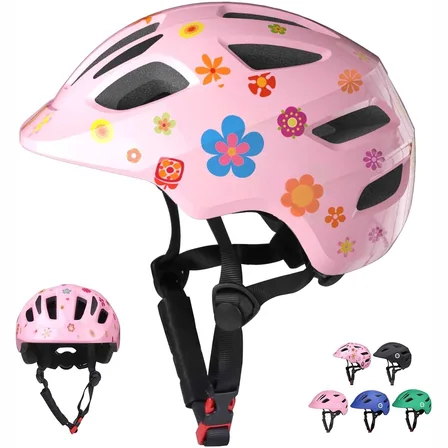
XJD Kids Bike Helmet for Girls, Pink Flowers, Adjustable (XS–S)
The XJD Kids Bike Helmet in Pink Flowers is an adjustable toddler-and-kids helme…$21.24
$24.99 -

Kids Bike Helmet by XJD for Boys & Girls – Black, Blue, Green, Pink, Purple
The XJD Kids Bike Helmet covers a wide 2-to-8-year age range thanks to two head-…$59.99
-

Kids Bike Helmet by XJD for Girls – Pink
The XJD Kids Bike Helmet in Pink is a lightweight multi-sport helmet for girls r…$59.99
$99