

How many kids died from bike accidents
In the United States, 180 children under 18 died in bicycle-riding incidents during 2022–2023—about 90 per year—according to CPSC reporting based on national mortality data.
What that number means
The total combines 14 deaths among children younger than 5 and 166 among ages 5–17. It covers two calendar years, so it should not be read as 180 deaths every year. The average annual rate for ages 5–17 was 1.5 deaths per million children; the report listed 0.4 per million per year for children younger than 5.
“Bike accidents” is not one perfectly consistent statistical category. Counts can differ when a source includes or excludes passengers, off-road incidents, motor vehicles, electric bikes or particular age cutoffs. When comparing figures, check the country, years, ages, bicycle definition and whether the source counts deaths, emergency-department visits or all injuries. A fatality count does not measure how likely one particular child is to be harmed on one ride.
What parents should do with the evidence
The number is serious, but it is more useful when translated into decisions. In the same CPSC analysis, motor-vehicle accidents accounted for 71% of recorded bicycle-riding fatalities across all ages in 2022–2023. That all-age figure is not a child-only percentage, but it supports treating traffic exposure as a central planning issue.
- Choose a practice area separated from moving vehicles whenever possible.
- Match supervision to the child’s present control, judgment and confidence—not simply their birthday.
- Before each ride, confirm that the child can start, steer, stop and follow the planned boundaries.
- Use a properly fitted bicycle helmet. It should sit level, fit securely and have straps adjusted according to its manufacturer’s instructions.
A helmet is essential protective equipment, but it does not make an unsuitable route, poor bicycle fit or inadequate supervision acceptable.
Measure fit before choosing a bicycle
Measure the child’s height and inseam, then have the child try the bicycle. Check stand-over clearance, reach to the handlebar, ability to operate the brakes and whether the child remains in control while starting and stopping. Do not buy an oversized bicycle solely to allow room for growth.
These XBikes ranges are starting points, not proof of fit:
| Wheel size | Starting age range | Rider height |
|---|---|---|
| 12 Inch | 3–4 | 34–40 in / 86–102 cm |
| 14 Inch | 3–6 | 37–45 in / 94–114 cm |
| 16 Inch | 4–7 | 40–48 in / 102–122 cm |
If two ranges overlap, compare both in person where possible. Prefer the option on which the rider can stand over, reach comfortably, control the brakes and maneuver confidently. Age alone cannot settle the choice.
Where the supplied bicycle is relevant
The XJD Girls Bike for Kids Ages 3-8, 12/14/16 Inch with Training Wheels – Purple is relevant only as a three-size training-wheel option for a child whose measurements and individual fit check point to 12, 14 or 16 inches. The “Ages 3-8” wording is a catalog label, not fit evidence; use the XBikes height ranges and an actual tryout instead.
These catalog options help answer the title by turning concern into a concrete fit comparison, but they cannot establish safety or address traffic exposure by themselves.
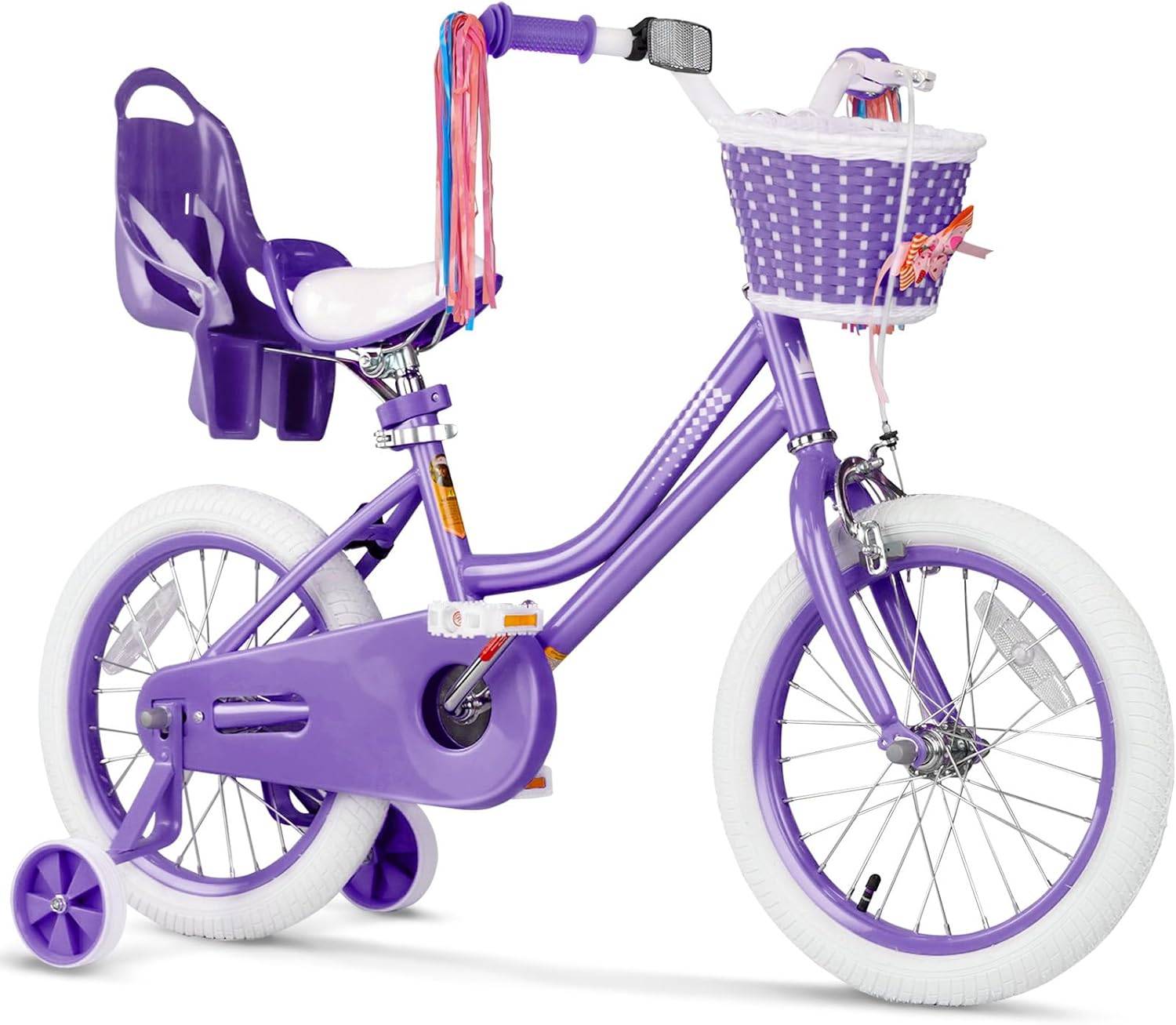
This product is not relevant when the child measures outside all three height ranges, cannot reach or control the brakes, lacks adequate stand-over clearance, or needs a wheel size other than 12, 14 or 16 inches. Training wheels also do not substitute for supervision, route choice, a helmet or learning to stop and steer reliably.
Check setup without guessing
Before riding, inspect the assembled bicycle for loose, damaged or incorrectly positioned parts and confirm that steering, wheels and brakes function normally. Exact assembly steps, fastener torque, maintenance intervals, load limits and compatibility are not supplied here. Follow the manual for the exact product or ask a qualified bicycle mechanic; do not invent settings or borrow specifications from a similar bicycle.
Recheck fit as the child grows or if control changes. A size that once worked can become cramped, while moving up too early can reduce stand-over clearance, reach and braking control.
The decision to make today
Use the fatality figure as a prompt for a specific check, not as a prediction: measure height and inseam, compare the applicable wheel-size ranges, test stand-over and brake reach, fit the helmet level, and select a low-traffic riding area with suitable supervision. If any fit or control check fails, postpone the ride or choose a different size before the child rides again.
Bikes for your next adventure
-
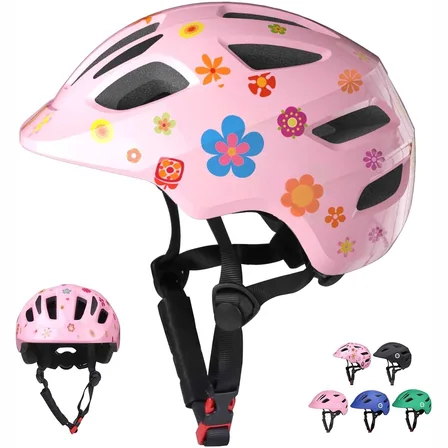
XJD Kids Bike Helmet for Girls, Pink Flowers, Adjustable (XS–S)
The XJD Kids Bike Helmet in Pink Flowers is an adjustable toddler-and-kids helme…$21.24
$24.99 -

Kids Bike Helmet by XJD for Boys & Girls – Black, Blue, Green, Pink, Purple
The XJD Kids Bike Helmet covers a wide 2-to-8-year age range thanks to two head-…$59.99
-

Kids Bike Helmet by XJD for Girls – Pink
The XJD Kids Bike Helmet in Pink is a lightweight multi-sport helmet for girls r…$59.99
$99