

How many kids get killed while riding bicycles
There is no single fixed number of children killed while riding bicycles: the total changes by country, year, age definition and whether the data include only traffic crashes. Use the latest official count for your location rather than an undated worldwide figure.
What number should a parent compare?
For a meaningful answer, define four things: location, calendar year, child age range and incident type. A count for children under 15 is not directly comparable with one for everyone under 18. A road-traffic total may also omit deaths on driveways, trails or private property.
Check the newest finalized table from your national or regional road-safety or public-health authority. Record the number of child pedal-cyclist deaths, then compare it with the same definition across several years. Do not combine preliminary and finalized totals or compare a raw national count with a local rate.
Count, rate and exposure answer different questions
- Annual count: how many children died within the defined population and period.
- Population rate: useful when comparing places or years with different numbers of children.
- Trip or distance rate: useful for comparing exposure, but only when reliable cycling data exist.
- Injury total: a separate measure; it must not be presented as a death count.
A falling death count does not by itself prove that each ride became safer; children may simply have ridden less. Conversely, a higher count can reflect greater exposure. Compare like with like and read the data authority’s definitions and notes.
What to measure on your child’s bicycle
Mortality statistics describe a population; they cannot determine whether a particular bicycle fits. Measure the child’s standing height and inseam, then assess stand-over clearance, reach, ability to steer, brake control and present confidence. Have the child try the bicycle. Do not choose an oversized model merely to allow room for growth.
| Wheel size | Starting age | Rider height |
|---|---|---|
| 12 Inch | 3–4 | 34–40 in / 86–102 cm |
| 14 Inch | 3–6 | 37–45 in / 94–114 cm |
| 16 Inch | 4–7 | 40–48 in / 102–122 cm |
| 18 Inch | 5–9 | 43–52 in / 109–132 cm |
| 20 Inch | 7–12 | 48–60 in / 122–152 cm |
| 24 Inch | 10–14 | 54–64 in / 137–163 cm |
| 26 Inch | Youth and adults | Over 60 in / 153 cm |
These are starting points, not a substitute for an individual fit check. Height, inseam, reach, brake control and confidence take priority over age.
When the supplied bicycles are relevant
The supplied products do not answer how many children die. They are relevant only to the practical next step of comparing 12-, 14- and 16-inch training-wheel bicycles after measuring the rider. Both catalog options provide those three supplied size labels, so they can help frame a fit comparison for children within the corresponding XBikes starting ranges.
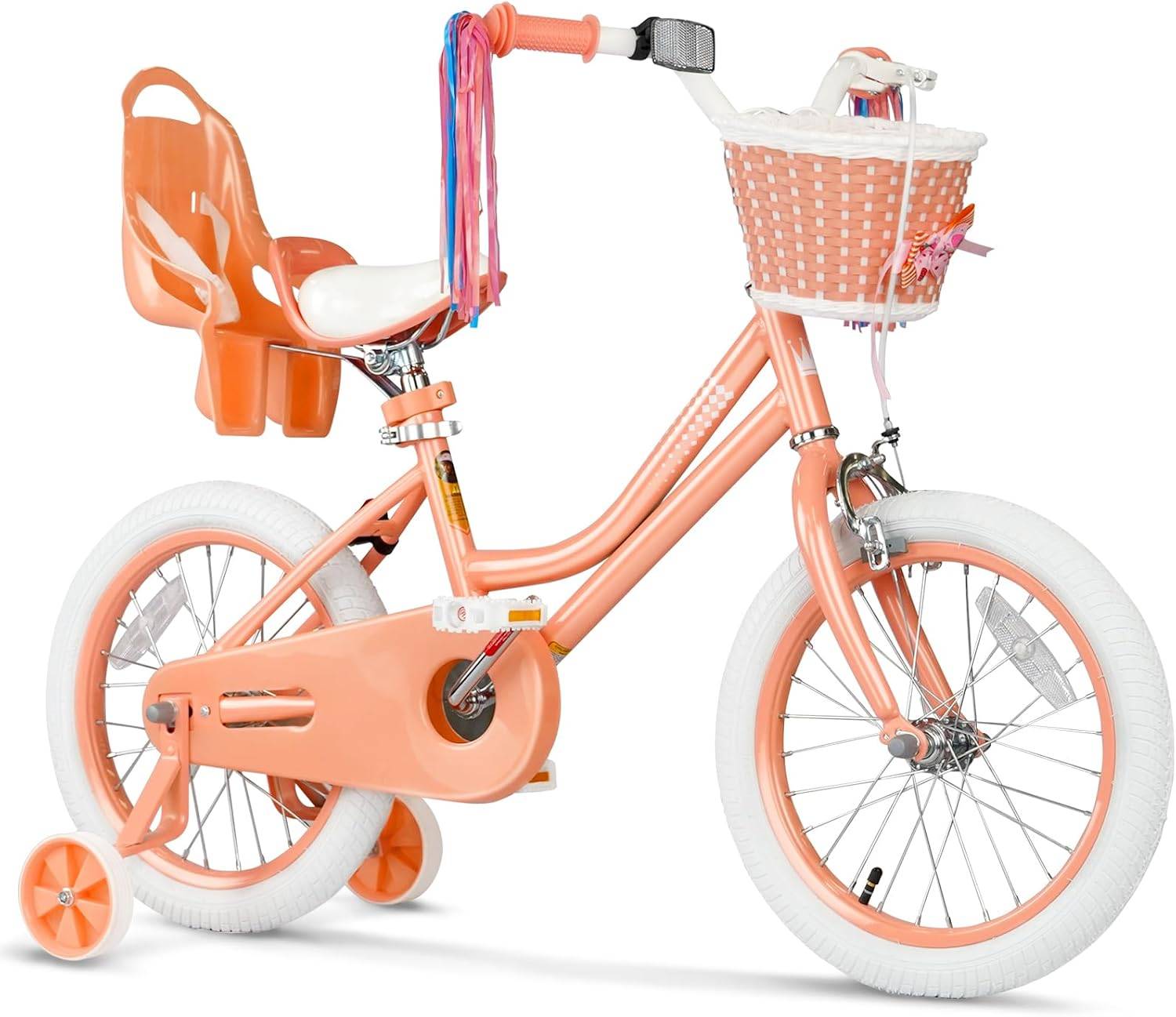 Girls 12/14/16 Inch Kids Bike by XJD with Training Wheels – Peach
A Training Wheel Bike offered with supplied 12 Inch, 14 Inch and 16 Inch labels; relevant only after checking the rider’s measured height, inseam, reach, brake control and confidence.
 XJD Light Purple Girls Bike with Basket, Training Wheels, 12/14/16/20 Inch
A Training Wheel Bike with supplied 12 Inch, 14 Inch and 16 Inch labels. Although its exact title mentions 20 Inch, 20 Inch is not among the supplied available labels.
The Girls 12/14/16 Inch Kids Bike by XJD with Training Wheels – Peach is categorized as a Training Wheel Bike and is supplied in 12 Inch, 14 Inch and 16 Inch labels. The XJD Light Purple Girls Bike with Basket, Training Wheels, 12/14/16/20 Inch is also categorized as a Training Wheel Bike; despite “20 Inch” appearing in its exact catalog title, the supplied available labels are only 12 Inch, 14 Inch and 16 Inch. Treat title wording as a catalog label, not proof of age suitability or current size availability.
Neither product is relevant when the measured rider needs an 18-, 20-, 24- or 26-inch bicycle. In that situation, these are smaller-size comparison points, not equal substitutes. No supplied fact establishes brake type, weight, materials, load limit or certification. Follow the exact product manual for assembly, maintenance and compatibility, or ask a qualified bicycle mechanic.
Actions that reduce avoidable risk
- Use a properly fitting bicycle helmet. It should sit level, fit correctly and have its straps adjusted according to the helmet manufacturer’s instructions.
- Confirm that the child can mount, stop, steer and reach and operate the brakes with control.
- Choose riding places and supervision appropriate to the child’s current skills and confidence.
- Before each ride, address visible damage, loose parts or uncertain operation according to the bicycle manual; use a qualified mechanic when unsure.
Make the title-specific decision
First obtain the latest official child pedal-cyclist death count using a stated place, year, age range and incident definition. Then act on the risk you can control today: measure the child, reject an oversized or uncontrollable bicycle, verify helmet fit and choose only a wheel size that passes an individual fit check.
Bikes for your next adventure
-
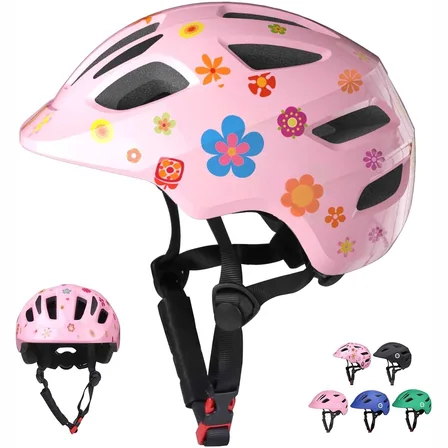
XJD Kids Bike Helmet for Girls, Pink Flowers, Adjustable (XS–S)
The XJD Kids Bike Helmet in Pink Flowers is an adjustable toddler-and-kids helme…$21.24
$24.99 -

Kids Bike Helmet by XJD for Boys & Girls – Black, Blue, Green, Pink, Purple
The XJD Kids Bike Helmet covers a wide 2-to-8-year age range thanks to two head-…$59.99
-

Kids Bike Helmet by XJD for Girls – Pink
The XJD Kids Bike Helmet in Pink is a lightweight multi-sport helmet for girls r…$59.99
$99