

How many miles can a 6 year old bike
There is no fixed number of miles a 6-year-old can ride. Choose distance from the child’s fit, control, confidence, route and condition that day. If “6 year old bike” means a bicycle that is six years old, its remaining mileage depends on inspection and maintenance, not age alone.
Set the distance from the child, not the birthday
Age can suggest a starting wheel size, but it cannot establish riding endurance. Before deciding how many miles to attempt, measure the rider’s standing height and inseam, then have the child try the bicycle. Check that the child can stand over it appropriately, reach the handlebar without stretching, steer predictably and operate the brakes comfortably.
A well-fitting bicycle can make a short ride manageable; an oversized or poorly controlled bicycle can make even a modest route too demanding. The American Academy of Pediatrics advises trying the bicycle rather than buying an oversized model for growth. Do not add distance until starting, stopping, turning and braking look controlled.
Use these size ranges as starting points
| Wheel size | XBikes age starting point | Rider-height starting point |
|---|---|---|
| 12 Inch | Ages 3–4 | 34–40 in / 86–102 cm |
| 14 Inch | Ages 3–6 | 37–45 in / 94–114 cm |
| 16 Inch | Ages 4–7 | 40–48 in / 102–122 cm |
| 18 Inch | Ages 5–9 | 43–52 in / 109–132 cm |
A 6-year-old may therefore overlap several starting ranges. Measure height first, then compare inseam, reach, brake control and confidence on the actual bicycle. A matching age band does not prove fit, and wheel sizes are not interchangeable.
Find today’s practical mileage
Instead of choosing an ambitious mileage target in advance, use a short route close to home with easy turnaround points. The useful distance is the amount the child can complete while remaining attentive, comfortable and fully able to control the bicycle on the return leg.
Watch for signs that the ride should end or turn back:
- steering becomes inconsistent or the child stops looking ahead;
- starting, braking or putting a foot down becomes less controlled;
- the child reports pain, numbness, unusual discomfort or excessive tiredness;
- heat, cold, traffic, hills or the riding surface exceed the child’s current ability;
- confidence drops or the child no longer follows directions reliably.
Record the completed route and how the child felt afterward. On another suitable day, repeat it before considering a slightly longer outing. Progress is better judged by sustained control and an easy return than by comparing the child with another rider’s mileage.
How the supplied bicycle helps with the comparison
The Black XJD Kids' BMX Bicycle with Training Wheels is offered in 12 Inch, 14 Inch and 16 Inch labels. Those choices provide catalog comparison points across three XBikes size ranges that can overlap childhood, including age six in the 14 Inch and 16 Inch starting ranges. They do not determine how many miles a child can ride, and the child must still try the bicycle and pass the individual fit and control checks.
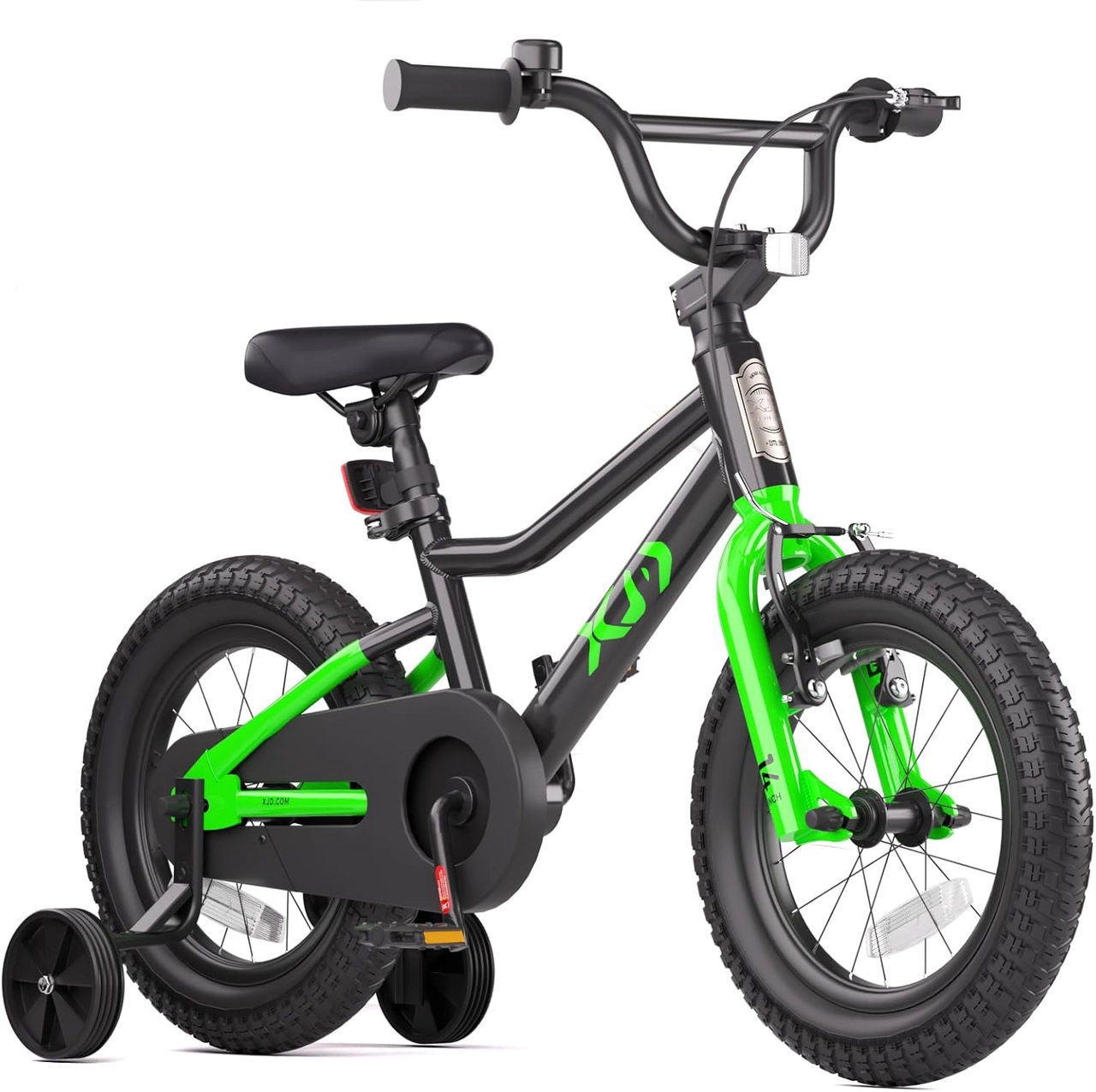
For a measured rider taller than the 16 Inch starting range, this product’s supplied sizes should not be treated as equivalent to an 18 Inch bicycle. Conversely, selecting a larger listed option merely for future growth can reduce present control. Compare the child’s measurements with each exact size rather than relying on the product name or age alone.
Prepare the bicycle and route
Before each outing, confirm that the bicycle appears properly assembled and in serviceable condition. Maintenance steps, torque values, load limits and component compatibility are not supplied here, so follow the exact product manual or ask a qualified bicycle mechanic. A bicycle that is six years old should receive the same condition-based inspection; its calendar age cannot reveal how many miles remain.
The child should wear a bicycle helmet that fits properly, sits level and has straps adjusted according to the helmet manufacturer’s instructions, consistent with U.S. Consumer Product Safety Commission guidance. Choose a supervised route suited to the child’s skills, with a simple way to shorten the ride if needed.
Make the decision
For this 6-year-old, first measure height and inseam, verify stand-over clearance, reach and brake operation on the actual bicycle, and then ride a short return-friendly route. The right mileage today is the distance completed with comfortable, consistent control both outward and home—not a universal number attached to age six.
Bikes for your next adventure
-

Blue XJD Kids Bike Helmet for Boys & Girls
The Blue XJD Kids Bike Helmet is a lightweight, adjustable multi-sport helmet fo…$59.99
$99 -
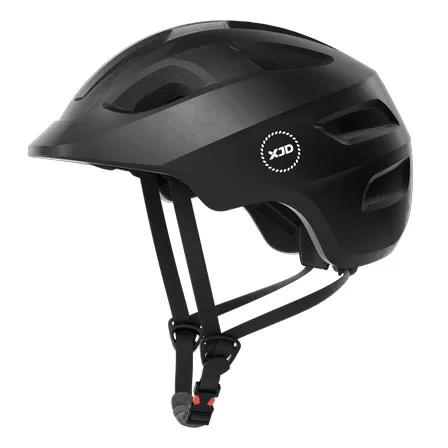
Kids Multi-Sport Bike Helmet by XJD – Black
7 reviews
The XJD Kids Multi-Sport Bike Helmet in Black is a lightweight, adjustable helme…$59.99
$49 -

Kids Bike Helmet by XJD for Boys & Girls – Black, Blue, Green, Pink, Purple
The XJD Kids Bike Helmet covers a wide 2-to-8-year age range thanks to two head-…$59.99