

How many teens own bicycles
There is no single reliable number for how many teens own bicycles. The answer varies by country, year, age range and whether a survey measures ownership, household access or recent riding.
Why the number needs a source and definition
A claim such as “most teens own a bike” is incomplete unless it identifies the surveyed population and date. A bicycle owned by the household may be available to a teen without belonging to that teen. Likewise, a teenager may regularly use a borrowed, shared or rented bicycle without owning one.
For a meaningful local answer, look for a recent school, transport or household survey that reports individual bicycle ownership among the teen ages you care about. Check its location, sample size, collection date and exact question. If the survey reports only bicycle access or cycling participation, do not relabel that figure as ownership.
What a parent should establish first
If the practical question is whether a particular teen needs a bicycle, a broad ownership percentage is less useful than four household-level facts:
- Access: Does the teen already have reliable use of a bicycle, even if it is shared?
- Purpose: Will it be used for recreation, transport, school trips or family rides?
- Fit: Does the current bicycle match the rider’s measured height, inseam and reach?
- Control: Can the rider mount, stop, steer and operate the brakes confidently?
These checks turn an uncertain population statistic into a clear personal decision: no bicycle is needed, an existing one needs a fit assessment, or an appropriately sized option should be compared.
Compare wheel-size starting points
Measure the teen’s height without shoes, then use the XBikes ranges below only to begin the comparison. Age overlaps are expected and do not settle fit.
| Wheel size | Age starting point | Rider-height starting point |
|---|---|---|
| 12 Inch | 3–4 | 34–40 in / 86–102 cm |
| 14 Inch | 3–6 | 37–45 in / 94–114 cm |
| 16 Inch | 4–7 | 40–48 in / 102–122 cm |
| 18 Inch | 5–9 | 43–52 in / 109–132 cm |
| 20 Inch | 7–12 | 48–60 in / 122–152 cm |
| 24 Inch | 10–14 | 54–64 in / 137–163 cm |
| 26 Inch | Youth and adults | Over 60 in / 153 cm |
For many teenagers, 24 Inch or 26 Inch may be the relevant starting point, depending on measured height. A shorter teen may fall elsewhere in the table. Always prioritize height, inseam, reach, brake control and present confidence over age alone.
Complete an individual fit check
Have the teen try the exact bicycle. Confirm adequate stand-over clearance, a comfortable reach to the handlebar and reliable access to the brake controls. The rider should be able to start, steer and stop without stretching, leaning awkwardly or losing control.
Do not buy an oversized bicycle merely to allow room for growth. If fit or control is uncertain, use a qualified bicycle mechanic. Follow the exact product manual for assembly, adjustment, maintenance, compatibility, load limits and torque rather than applying an unsupplied procedure or number.
A properly fitting bicycle helmet is also essential. It should sit level and be secured with its straps according to the helmet manufacturer’s instructions.
How the supplied catalog bikes relate
The two supplied options help show why a product labeled for younger riders should not be treated as a teen-bike answer. The Girls 12/14/16 Inch Kids Bike by XJD with Training Wheels – Peach is categorized as a Training Wheel Bike and is supplied in 12 Inch, 14 Inch and 16 Inch labels. The XJD Light Purple Girls Bike with Basket, Training Wheels, 12/14/16/20 Inch is also categorized as a Training Wheel Bike, but its supplied available SKU labels are 12 Inch, 14 Inch and 16 Inch.
These products are useful only as smaller-wheel comparison points when separating children’s options from likely teen sizing. They are not substitutes for a 24 Inch or 26 Inch bicycle, and none of their supplied available SKU labels identifies those sizes.
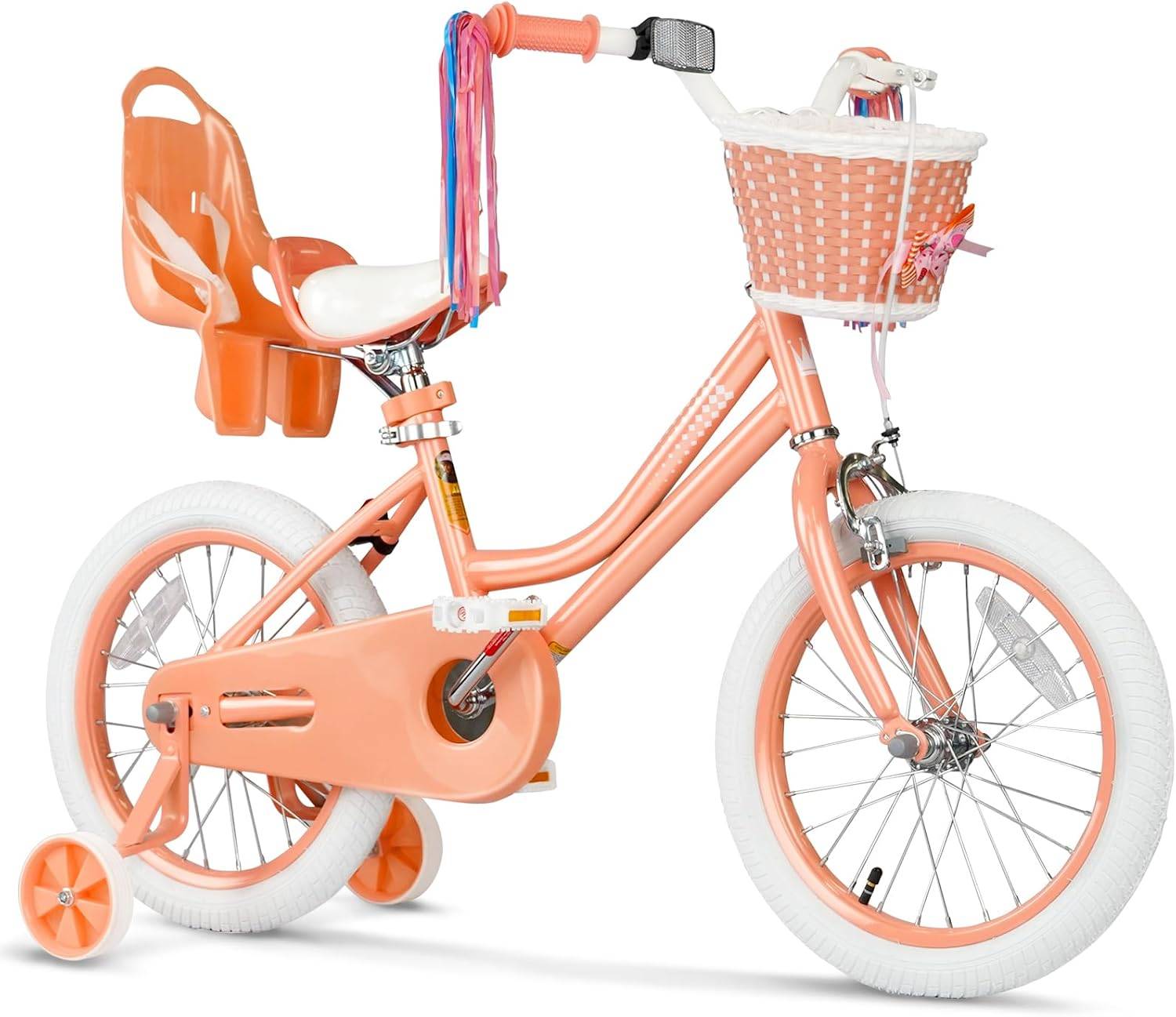 Girls 12/14/16 Inch Kids Bike by XJD with Training Wheels – Peach
A Training Wheel Bike offered in supplied 12 Inch, 14 Inch and 16 Inch labels; it is a smaller-wheel comparison point, not a substitute for likely 24 Inch or 26 Inch teen sizing.
 XJD Light Purple Girls Bike with Basket, Training Wheels, 12/14/16/20 Inch
This Training Wheel Bike has supplied available SKU labels of 12 Inch, 14 Inch and 16 Inch. Despite the exact title mentioning 20 Inch, that size is not listed among the supplied available SKUs.
Make the ownership decision
First, decide whether you need a research statistic or a bicycle for one teen. For research, report only a recent local percentage that explicitly measures individual ownership. For a purchase decision, measure the teen, locate the matching wheel-size starting point, and arrange a real fit-and-control check. If the rider falls in the 24 Inch or 26 Inch range, exclude these supplied 12 Inch, 14 Inch and 16 Inch catalog options from the shortlist.
Bikes for your next adventure
-
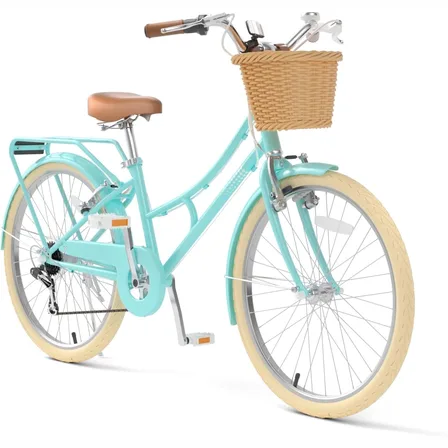
XJD Kids Beach Cruiser Bicycle, Rear Rack & V-Brakes, Mint Green
The XJD Beach Cruiser in Mint Green is a geared, multi-speed cruiser bike for ol…$179.99
$209.99 -

26-Inch XJD Beach Cruiser Bike for Girls – Purple, V-Brake
This XJD 26-inch purple beach cruiser is sized for big kids and teens — suggeste…$218.49
$229.99 -
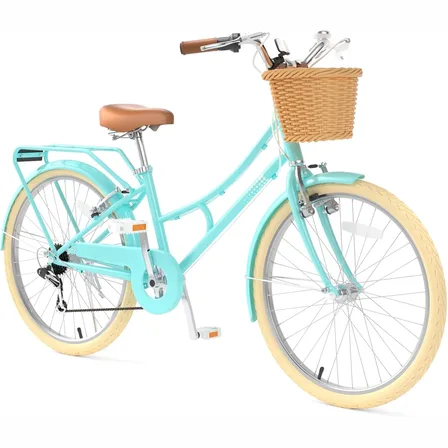
XJD 24-Inch Green Beach Cruiser Bike with U-Brake
This XJD 24-inch beach cruiser in green is made for riders about 4'8" to 5'4" ta…$159.99
$199.99