

How many times should child ride a bike weekly
Most children should ride a bike 3–5 times a week while learning, with short, enjoyable sessions and rest whenever fatigue, soreness or frustration appears.
A practical weekly target
Three to five rides per week gives a beginner frequent chances to remember balance, steering, starting and stopping without making cycling feel compulsory. A confident child riding mainly for recreation may be happy with one to three longer outings instead.
Treat those numbers as planning ranges, not medical rules. The right frequency depends on the child’s confidence, energy, other activity and desire to ride. Ten focused minutes can be more productive than an hour during which attention and control deteriorate.
- New or hesitant rider: aim for 3–5 short practice sessions on a quiet, level area.
- Comfortable recreational rider: schedule 1–3 rides and let interest guide optional extras.
- Returning after a break: begin with 2–3 easy sessions, then add rides only if control and enthusiasm remain steady.
Measure progress, not just ride count
Record the number of rides and approximate minutes, but also note what the child can do comfortably. Useful measures include starting without being pushed, looking ahead while steering, holding a predictable line, stopping where intended and reaching and operating the brakes reliably.
Compare one week with the next. If control improves and the child asks to continue, the schedule is probably manageable. If mistakes increase near the end, shorten the next ride. If soreness, unusual pain or persistent fear appears, pause and address the cause rather than trying to meet a weekly quota.
Check the bicycle before changing frequency
A child who struggles every session may have a fit problem rather than a practice problem. Measure standing height and inseam, then have the child try the actual bicycle. Check stand-over clearance, reach to the handlebar, brake access and whether starts and stops feel controlled. Age is only a starting point.
| Wheel size | XBikes starting point |
|---|---|
| 12 Inch | Ages 3–4; height 34–40 in / 86–102 cm |
| 14 Inch | Ages 3–6; height 37–45 in / 94–114 cm |
| 16 Inch | Ages 4–7; height 40–48 in / 102–122 cm |
| 18 Inch | Ages 5–9; height 43–52 in / 109–132 cm |
| 20 Inch | Ages 7–12; height 48–60 in / 122–152 cm |
| 24 Inch | Ages 10–14; height 54–64 in / 137–163 cm |
| 26 Inch | Youth and adults over 60 in / 153 cm |
These ranges are starting points, not substitutes for an individual fit check. Following American Academy of Pediatrics guidance, let the child try the bicycle and do not choose an oversized model merely to allow room for growth. Measured height, inseam, reach, brake control and current confidence take priority over age.
When the supplied bike is relevant
The Black XJD Kids Bike for Boys – 12, 14 & 16 Inch Sizes is a Training Wheel Bike offered with 12 Inch, 14 Inch and 16 Inch SKU labels. Those three options help families compare an appropriately sized training-wheel bicycle for a young learner whose measurements fall near the listed starting ranges; the final choice still requires trying the bike and checking control.

This product is relevant when training wheels suit the child’s present learning stage and one of its supplied wheel sizes fits after an individual check. It is not automatically appropriate because of wording in its title, nor is it a substitute for an 18, 20, 24 or 26 Inch bicycle when the rider’s measurements and control indicate one of those sizes.
Adjust the schedule from the child’s response
Keep the planned 3–5 learning rides only while technique and mood stay reasonably consistent. Reduce frequency or duration if the child repeatedly loses focus, becomes reluctant before practice, or finishes with declining steering and stopping control. Add time gradually when the child finishes eager to continue and retains skills between sessions.
Separate equipment trouble from tiredness. If something seems loose, damaged, poorly adjusted or difficult to operate, stop using the bicycle. For assembly, maintenance, compatibility, load limits and torque, follow the exact product manual or ask a qualified bicycle mechanic; do not guess at procedures or settings.
Make every counted ride ready and controlled
Choose a traffic-free practice space appropriate to the child’s ability and supervise according to maturity and conditions. A bicycle helmet should fit properly, sit level and have its straps adjusted according to the helmet manufacturer’s instructions, consistent with U.S. Consumer Product Safety Commission guidance.
For next week, put three short rides on the calendar, leave room for up to two optional sessions, and record minutes plus starting, steering, stopping and enthusiasm. At week’s end, keep, shorten or expand that pattern according to the child’s control and willingness—not the calendar alone.
Bikes for your next adventure
-
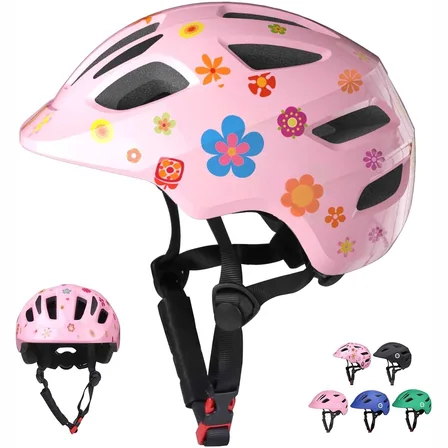
XJD Kids Bike Helmet for Girls, Pink Flowers, Adjustable (XS–S)
The XJD Kids Bike Helmet in Pink Flowers is an adjustable toddler-and-kids helme…$21.24
$24.99 -

Kids Bike Helmet by XJD for Boys & Girls – Black, Blue, Green, Pink, Purple
The XJD Kids Bike Helmet covers a wide 2-to-8-year age range thanks to two head-…$59.99
-

Kids Bike Helmet by XJD for Girls – Pink
The XJD Kids Bike Helmet in Pink is a lightweight multi-sport helmet for girls r…$59.99
$99