

How many miles bike child
There is no single mileage that every child should bike. Choose a route from the child’s fit, control, confidence, terrain and visible energy—not age alone.
What determines a suitable distance?
A child who can comfortably control a correctly fitted bicycle may manage a longer ride than a child of the same age who is still learning. Wheel size helps with fit, but it does not establish how many miles a child can ride.
Before choosing a distance, consider the route surface, hills, traffic exposure, weather and opportunities to stop. A short hilly or rough route can demand more effort and control than a longer, smooth, level route. The accompanying adult should be able to shorten the outing without forcing the child to finish a fixed mileage.
Measure fit before measuring miles
Measure the child’s current height without shoes, then have the child try the bicycle. Check that the child can stand over it, reach the handlebars without stretching, steer with control and operate the brakes comfortably. Do not buy an oversized bicycle solely to allow room for growth.
| Wheel size | Age starting point | Rider-height starting point |
|---|---|---|
| 12 Inch | 3–4 | 34–40 in / 86–102 cm |
| 14 Inch | 3–6 | 37–45 in / 94–114 cm |
| 16 Inch | 4–7 | 40–48 in / 102–122 cm |
| 18 Inch | 5–9 | 43–52 in / 109–132 cm |
| 20 Inch | 7–12 | 48–60 in / 122–152 cm |
| 24 Inch | 10–14 | 54–64 in / 137–163 cm |
| 26 Inch | Youth and adults | Over 60 in / 153 cm |
These ranges are starting points, not guarantees. Where ranges overlap, compare the child’s stand-over clearance, reach, brake control and confidence on each candidate size. A bicycle that is awkward to mount, stop or steer is not made suitable by planning fewer miles.
Set the first ride by observation
For a new rider or an unfamiliar bicycle, choose a short, familiar route close to the starting point. An out-and-back route makes the decision simple: turn around while the child is still riding smoothly and listening well, rather than waiting for exhaustion.
Watch for a slowing pace, repeated steering mistakes, difficulty starting, reduced attention, complaints of discomfort or loss of enthusiasm. Treat those signs as reasons to rest or finish. Do not make a child complete a mileage target once control or concentration is fading.
Increase distance without guessing
- Record the route distance, terrain, weather and number of stops.
- Note whether the child finished with steady steering, reliable stopping and energy remaining.
- Repeat a manageable route until it feels consistently comfortable.
- Increase the next outing modestly, changing only one major challenge—distance, hills or surface—when practical.
This creates an individual baseline instead of relying on another child’s mileage. If the child struggles, shorten the next ride or choose easier terrain. If the ride remains controlled and enjoyable, extend future routes gradually while keeping a convenient return option.
How the supplied 12, 14 and 16 Inch bikes are relevant
The catalog options below help families compare three wheel-size starting points for younger riders. They can support a mileage decision only by helping identify a bicycle the child can control; their titles and available sizes do not prove endurance, range or suitability for a particular route.
 XJD Boys 12/14/16" Training Wheel Bike – Blue
Available in 12, 14 and 16 Inch labels, this Training Wheel Bike is relevant as a fit comparison for younger riders, not as evidence of a particular riding distance.
 Black XJD Kids Bike for Boys – 12, 14 & 16 Inch Sizes
This Training Wheel Bike offers 12, 14 and 16 Inch size labels. Compare them with measured height and an individual control check before using the bicycle for distance-building rides.
 XJD Kids' Training Wheel Bike for Boys & Girls, 12/14/16 Inch – White
With 12, 14 and 16 Inch labels, this Training Wheel Bike provides three supplied size starting points. Its catalog title does not establish fit, endurance or appropriate mileage for a child.
XJD Boys 12/14/16" Training Wheel Bike – Blue, Black XJD Kids Bike for Boys – 12, 14 & 16 Inch Sizes, and XJD Kids' Training Wheel Bike for Boys & Girls, 12/14/16 Inch – White are all categorized as Training Wheel Bikes and offer 12 Inch, 14 Inch and 16 Inch SKU labels.
Compare those sizes against the measured-height ranges, then require an individual fit check. These products are relevant only if a 12, 14 or 16 Inch starting point matches the child. They are not substitutes when the fit check indicates an 18, 20, 24 or 26 Inch bicycle. Any age or gender wording in a product title is a catalog label, not evidence that the bicycle fits a particular child.
Final checks before choosing the miles
- Confirm comfortable stand-over, reach, steering and brake operation.
- Use a properly fitting bicycle helmet that sits level, with straps adjusted according to its manufacturer’s instructions.
- Plan a route with safe stopping places and an easy way to return early.
- Follow the exact bicycle manual for assembly, maintenance, compatibility, load limits and torque information, or use a qualified bicycle mechanic.
For the next ride, measure the child first, choose the wheel size by fit, and select a route that can end while control and energy are still good. Let that observed ride—not age or an arbitrary mileage goal—set the distance for the ride after it.
Bikes for your next adventure
-

Blue XJD Kids Bike Helmet for Boys & Girls
The Blue XJD Kids Bike Helmet is a lightweight, adjustable multi-sport helmet fo…$59.99
$99 -
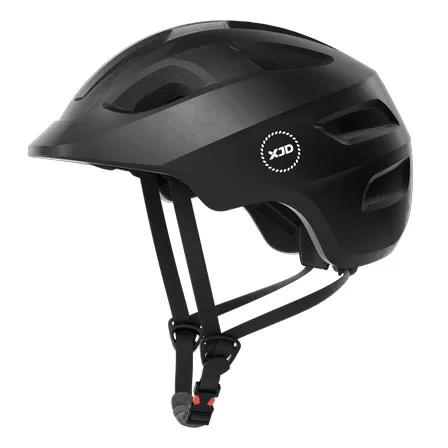
Kids Multi-Sport Bike Helmet by XJD – Black
7 reviews
The XJD Kids Multi-Sport Bike Helmet in Black is a lightweight, adjustable helme…$59.99
$49 -

Kids Bike Helmet by XJD for Boys & Girls – Black, Blue, Green, Pink, Purple
The XJD Kids Bike Helmet covers a wide 2-to-8-year age range thanks to two head-…$59.99