

How old baby in bike trailer
There is no single universal age for putting a baby in a bike trailer. Use the trailer manual’s minimum age, size and support requirements, and ask the child’s healthcare professional if readiness is uncertain.
Age alone does not answer the question
A birthday is not enough to establish trailer readiness. Models differ, so the exact trailer manual must control the decision. Check every stated minimum and maximum, including any limits for age, height, weight, seating position and supported accessories. Do not guess a missing limit or assume that advice for one trailer applies to another.
The bicycle wheel-size age ranges below concern children riding their own bicycles. They do not establish when a baby can ride as a passenger in a trailer.
What to measure and check
Record the child’s current age, standing or lying height as appropriate, and weight, then compare each measurement with the trailer manufacturer’s instructions. Confirm that the child fits the seat and harness exactly as the manual illustrates. The child must be able to maintain the posture and physical control required by that specific trailer throughout the ride; if the manual’s requirements are unclear, contact the manufacturer before use.
- Measure: age, height and weight using current measurements rather than estimates.
- Compare: every measurement and readiness requirement with the exact trailer model’s manual.
- Inspect: harness placement, seating position and any required support or accessory specified by the manufacturer.
- Stop: if the child falls outside a limit, cannot maintain the required position, or the trailer has missing or uncertain instructions.
For assembly, bicycle compatibility, attachment procedure, load limits, maintenance and tightening specifications, follow the trailer and towing-bicycle manuals or use a qualified bicycle mechanic. No general article can safely replace those model-specific directions.
Helmet and first-ride preparation
If the trailer manufacturer requires or permits a helmet, use a bicycle helmet that fits properly, sits level and has its straps adjusted according to the helmet manufacturer’s instructions. Also check that the helmet does not force the child’s head into an unsuitable position against the trailer seat.
Before carrying a child, verify the complete trailer connection and bicycle condition as directed by both manuals. Choose a short initial outing and observe the child’s posture and comfort. End the ride if the child cannot remain correctly positioned or shows distress. Weather exposure, route conditions and ride duration also deserve a conservative parental decision even when all stated limits are met.
Why these kids’ bikes are only future fit comparisons
The supplied catalog products are independent bicycles, not bike trailers or baby-passenger equipment. They do not answer trailer readiness and should not be used as substitutes for a trailer. They are relevant only when comparing a later transition to riding: their available wheel sizes can be checked against XBikes’ starting points, followed by an individual fit check.
 XJD Boys & Girls BMX Bike with Training Wheels, 12/14/16" – Blue
Available in 12 Inch, 14 Inch and 16 Inch labels, this bike offers later independent-riding size comparisons. It is not a trailer or baby-passenger product, and fit must be checked using measured height, inseam, reach, brake control and confidence.
 XJD Pink Beach Cruiser for Girls – Rear Rack & V-Brake
Its 20 Inch, 24 Inch and 26 Inch labels make this a comparison for larger independent riders, not babies in trailers. XBikes size starting points must still be followed by an individual stand-over, reach and brake-control check.
 Girls' Training Wheel Bike by XJD with Basket – Purple
Available in 14 Inch, 16 Inch and 20 Inch labels, this is relevant only to a later move into independent cycling. It does not determine trailer readiness; choose among its sizes using XBikes starting points and an in-person fit check.
XJD Boys & Girls BMX Bike with Training Wheels, 12/14/16" – Blue is available in 12 Inch, 14 Inch and 16 Inch labels. Those sizes span XBikes starting points from ages 3–4 and 34–40 in (86–102 cm) for 12 Inch through ages 4–7 and 40–48 in (102–122 cm) for 16 Inch.
Girls' Training Wheel Bike by XJD with Basket – Purple is available in 14 Inch, 16 Inch and 20 Inch labels. The 20 Inch starting point is ages 7–12 and 48–60 in (122–152 cm), while its smaller labels provide comparison points for shorter riders.
XJD Pink Beach Cruiser for Girls – Rear Rack & V-Brake is available in 20 Inch, 24 Inch and 26 Inch labels. XBikes starts 24 Inch at ages 10–14 and 54–64 in (137–163 cm), and 26 Inch for youth and adults over 60 in (153 cm). These are clearly later independent-riding comparisons, not baby-trailer options.
How to judge an independent bicycle later
XBikes’ age and height ranges are starting points, not purchase guarantees. Measure the rider’s height and inseam, then have the child try the bicycle. Check stand-over clearance, reach, brake control and present confidence. Do not select an oversized bicycle merely to allow room for growth.
Available labels should first be narrowed by measured height, but the final choice depends on real control. A child who cannot comfortably mount, stand over, steer, reach the controls or operate the brakes needs a different fit, regardless of whether age falls inside a suggested range.
Your decision now
Find the exact trailer model and manual, write down the child’s current age, height and weight, and compare every requirement line by line. Proceed only when all limits, posture requirements, helmet directions and attachment instructions are satisfied; otherwise wait, contact the manufacturer or healthcare professional, and do not replace that decision with one of the catalog bicycles.
Bikes for your next adventure
-

Kids Bike Helmet by XJD for Girls – Pink
The XJD Kids Bike Helmet in Pink is a lightweight multi-sport helmet for girls r…$59.99
$99 -

Blue XJD Kids Bike Helmet for Boys & Girls
The Blue XJD Kids Bike Helmet is a lightweight, adjustable multi-sport helmet fo…$59.99
$99 -
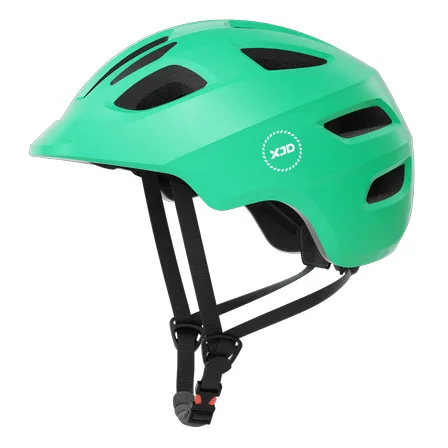
Green XJD Kids Bike Helmet for Boys & Girls
The Green XJD Kids Bike Helmet is a lightweight multi-sport helmet for toddlers …$59.99
$99