

How old baby on back of bike
There is no safe age answer by age alone: carry a baby on the back of a bike only when the child can sit securely, wear a properly fitted helmet, and meet the child-seat manual and local rules.
What determines when a baby can ride behind you
Do not use a birthday as the only test. Before riding, confirm that the child has the head and neck control required by the rear child-seat or trailer manufacturer, can remain stable in the required riding position, and fits every stated height and weight limit. If the manual gives a minimum age, follow it. If the child cannot sit securely for the whole journey or cannot use the required helmet correctly, wait.
Local passenger and helmet laws may set additional requirements. Check the rules where you will ride, because a setup permitted in one location may not be permitted in another.
Measure and compare before fitting a seat
Measure the child's current height and weight, then compare both with the exact child carrier's manual. Check the limits again as the child grows; age does not show whether a harness, foot restraint, or seat still fits.
Also identify the bicycle's exact model, wheel size, rack or frame mounting points, and any manufacturer restrictions. Compare them with the carrier's compatibility instructions. A rear rack by itself does not prove that it can accept a child seat or its load. Never guess about rack capacity, mounting hardware, clearances, fastener torque, or compatibility. Use the bicycle and carrier manuals, or ask a qualified bicycle mechanic.
Check the child and bicycle together
Perform the complete fit check required by the carrier manufacturer before the first ride. The child should be held in the intended position by the supplied restraint system, with feet secured as directed and no clothing, straps, or body parts able to reach the wheel or other moving components.
A bicycle helmet must fit properly, sit level, and have its straps adjusted according to the helmet manufacturer's instructions. A helmet that cannot be fitted correctly is a reason not to ride. Do not add cushions, alter restraints, or improvise mounting parts unless the relevant manual expressly permits them.
The adult rider must also be able to control the bicycle with the added passenger and carrier. Check mounting, dismounting, starting, stopping, turning, and brake operation in a traffic-free area before considering a normal journey. If balance or control feels uncertain, stop and have the setup assessed.
What the supplied bicycle can—and cannot—tell you
The XJD Pink Beach Cruiser for Girls – Rear Rack & V-Brake is offered with 20 Inch, 24 Inch, and 26 Inch SKU labels. Its rear rack makes it a useful catalog comparison point when identifying the parts of a bicycle that require a compatibility check. However, the supplied facts do not give a rack load limit or confirm compatibility with any rear child seat, so it is not evidence that a baby may be carried on it.
This catalog option helps answer the title by showing that wheel size and the presence of a rear rack are separate from passenger readiness: its three sizes concern the rider's fit, while the rack and any carrier must be verified through the exact manuals or by a qualified bicycle mechanic.

If you are choosing among its wheel sizes
Use the adult or youth rider's measured fit—not the baby's age—to compare these options. XBikes lists the following starting points:
| Wheel size | Starting age guide | Rider height guide |
|---|---|---|
| 20 Inch | Ages 7–12 | 48–60 in / 122–152 cm |
| 24 Inch | Ages 10–14 | 54–64 in / 137–163 cm |
| 26 Inch | Youth and adults | Over 60 in / 153 cm |
These are starting points, not a substitute for trying the bicycle. The rider should have suitable stand-over clearance, reach, brake control, and confidence. Do not buy an oversized bicycle merely for growth. None of these wheel-size age bands establishes when a baby is ready to travel as a passenger.
Make the decision in this order
- Confirm that the child has the required head, neck, and seated control.
- Measure the child and compare the results with the carrier's current manual.
- Fit the helmet level and adjust its straps exactly as its manufacturer directs.
- Verify the bicycle, rack, carrier, hardware, load limits, and mounting method from the exact manuals.
- Check local passenger and helmet rules.
- Have a qualified bicycle mechanic inspect anything unclear, then test adult control away from traffic without taking an ordinary trip.
If any one of those checks fails or cannot be verified, the baby is not ready to ride on the back of that bicycle yet. Wait until every requirement is met rather than choosing a date from age alone.
Bikes for your next adventure
-

Flower Pink XJD Girls Bike with Doll Seat & Basket
The XJD Flower Pink girls' bike is made for riders 71–122 cm tall (roughly ages …$69.99
-

Kids Bike Helmet by XJD for Boys & Girls – Black, Blue, Green, Pink, Purple
The XJD Kids Bike Helmet covers a wide 2-to-8-year age range thanks to two head-…$59.99
-
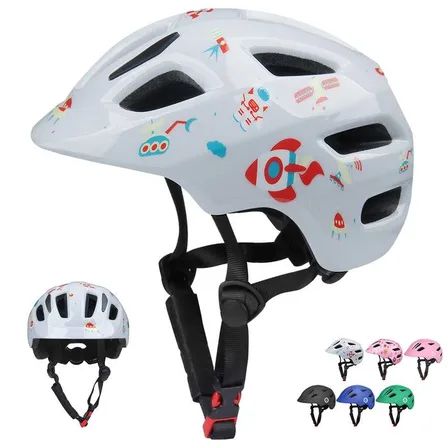
White Astronaut Bike Helmet for Kids by XJD – Toddler to Youth Sizes
4 reviews
The XJD White Astronaut kids' bike helmet is made for toddlers through younger e…$59.99