

How old baby on bike seat
There is no single age that makes every baby ready for a bike seat. Use the seat manual’s minimum-age and developmental rules, measure your child, and obey local law.
What decides whether a baby can ride
Start with the instructions for the exact child seat, bicycle and mounting system. Check the child’s current age, height and weight against every stated limit. If the manual includes developmental requirements, all of them must be met; age alone does not override them.
Also confirm that the seat is compatible with the bicycle and that the bicycle remains within every stated load limit. Those details are not interchangeable between products. If a limit, mounting requirement or compatibility point is missing or unclear, contact the manufacturer or ask a qualified bicycle mechanic rather than estimating.
Local rules may set additional requirements for child passengers. If you are uncertain about a baby’s physical readiness, ask the child’s pediatrician before riding.
A quick decision check
- Read: Find the exact seat manual and bicycle manual. Note all minimum-age, developmental, height, weight, mounting and load conditions.
- Measure: Record the child’s present height and weight; do not rely on clothing size or an old medical record.
- Compare: The child and equipment must satisfy every applicable condition, not merely one of them.
- Inspect: Before each ride, follow the manufacturer’s instructions for the restraint, mounting hardware and bicycle condition.
- Stop if uncertain: Do not ride when the child is below a limit, cannot satisfy a required readiness condition, or the mounting compatibility is unconfirmed.
Helmet fit is part of the decision
A bicycle helmet must fit the child properly, sit level and have its straps adjusted according to the helmet manufacturer’s instructions. A helmet that is merely labeled with a plausible age is not enough. Check the actual fit on the child, and replace or adjust it as directed by its manufacturer.
A properly fitted helmet does not make an unsuitable child seat, an incompatible bicycle or a child below the seat’s requirements acceptable. Treat helmet fit and seat eligibility as separate checks that both must pass.
How the supplied kids’ bikes relate
The three catalog products are training-wheel bicycles for children to ride themselves; they are not baby passenger seats. They help only when comparing a later transition to a child’s own 12-, 14- or 16-inch bicycle. They do not answer the passenger-seat manual, mounting, load or developmental questions.
The catalog options below are useful because each offers the same three listed wheel-size labels, letting a family begin with the child’s measured height before arranging an individual fit check.
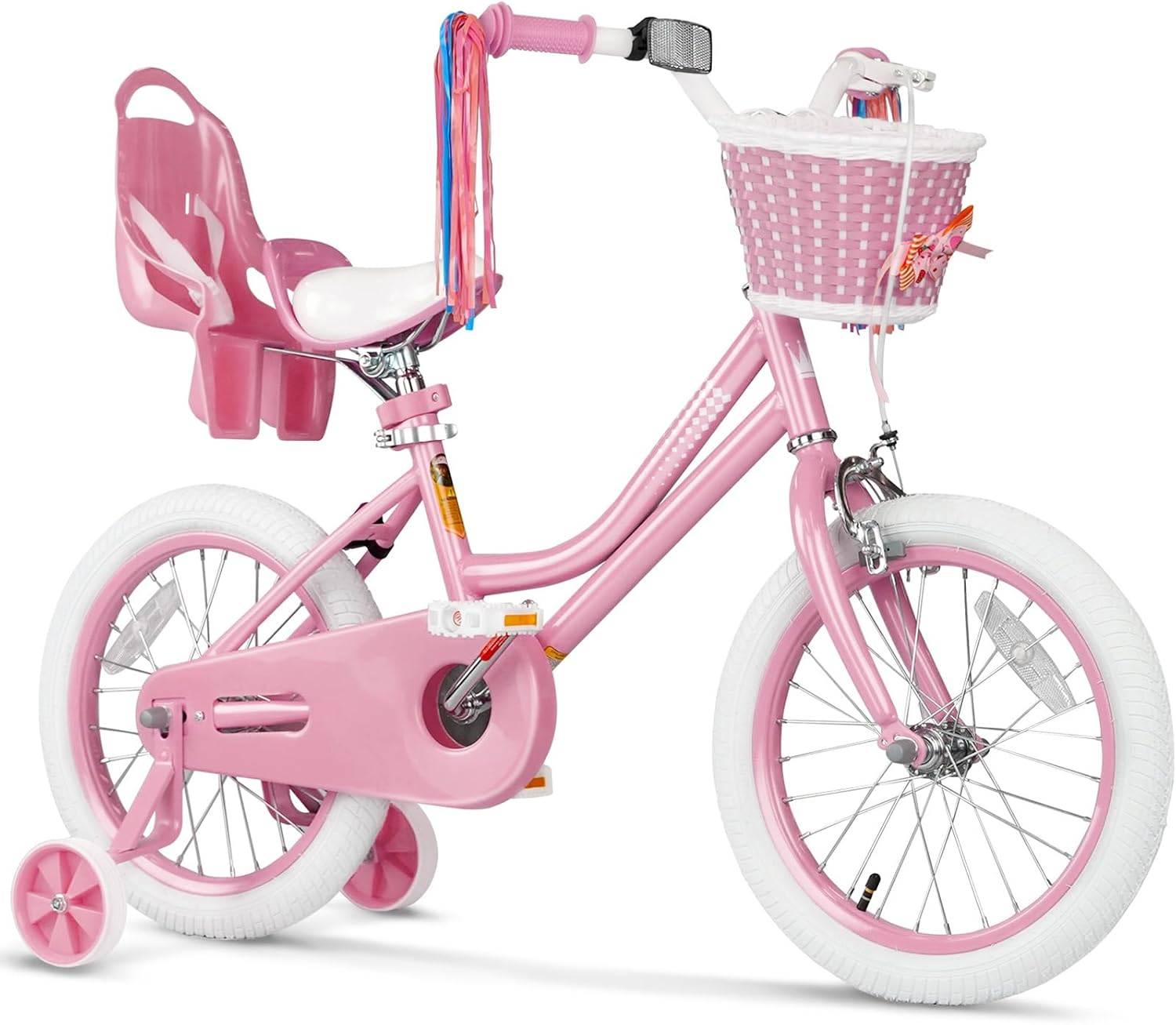 XJD Pink Girls' Bike – Kids 12/14/16 Inch Training Wheel Bicycle
A training-wheel bicycle offered in 12 Inch, 14 Inch and 16 Inch sizes. It is relevant only for a later child-ridden bike fit comparison, not as a baby passenger seat.
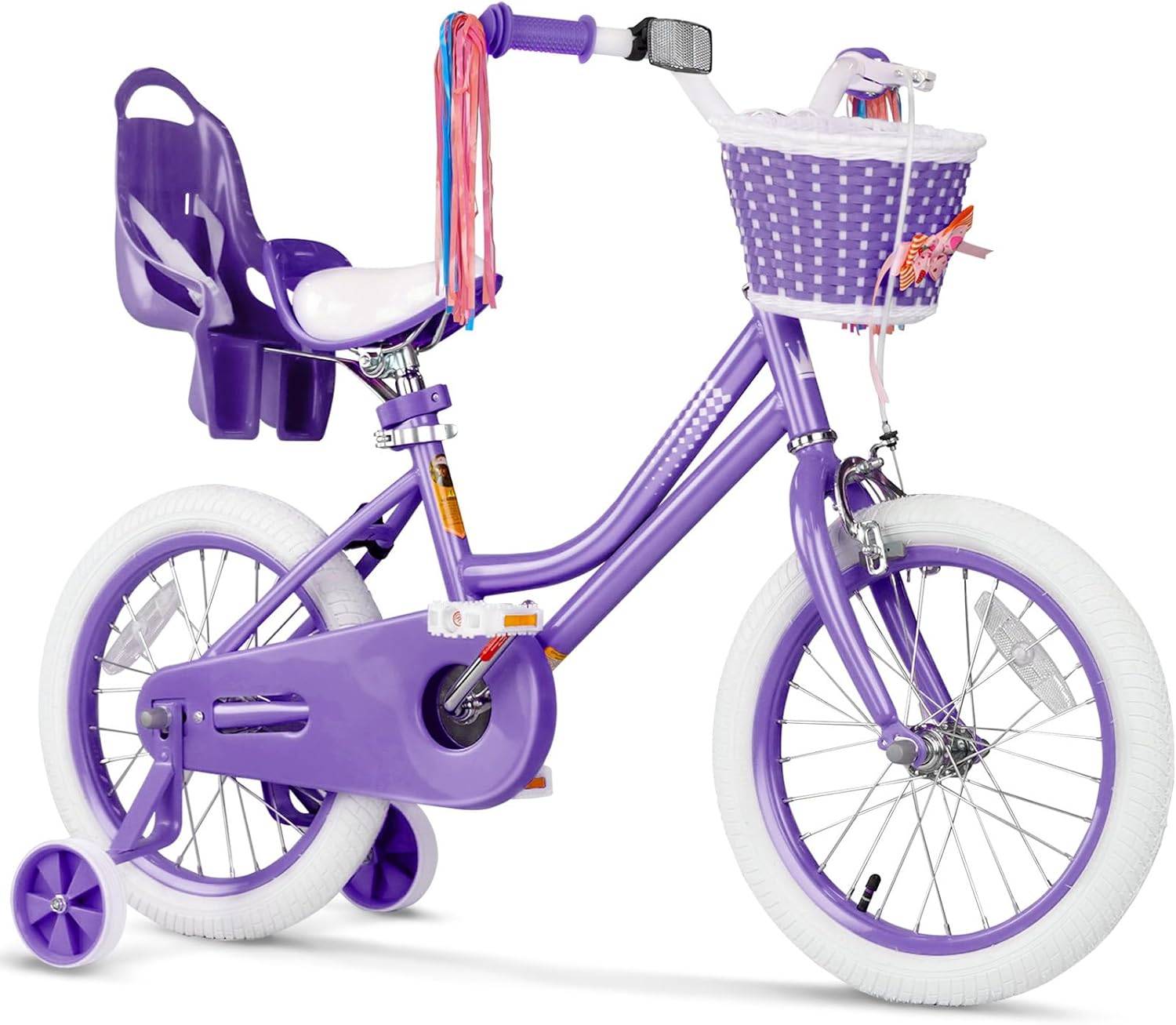 XJD Girls Bike for Kids Ages 3-8, 12/14/16 Inch with Training Wheels – Purple
Offered with training wheels in 12 Inch, 14 Inch and 16 Inch sizes. The age wording in its title is a catalog label, so choose only after measuring and checking individual fit.
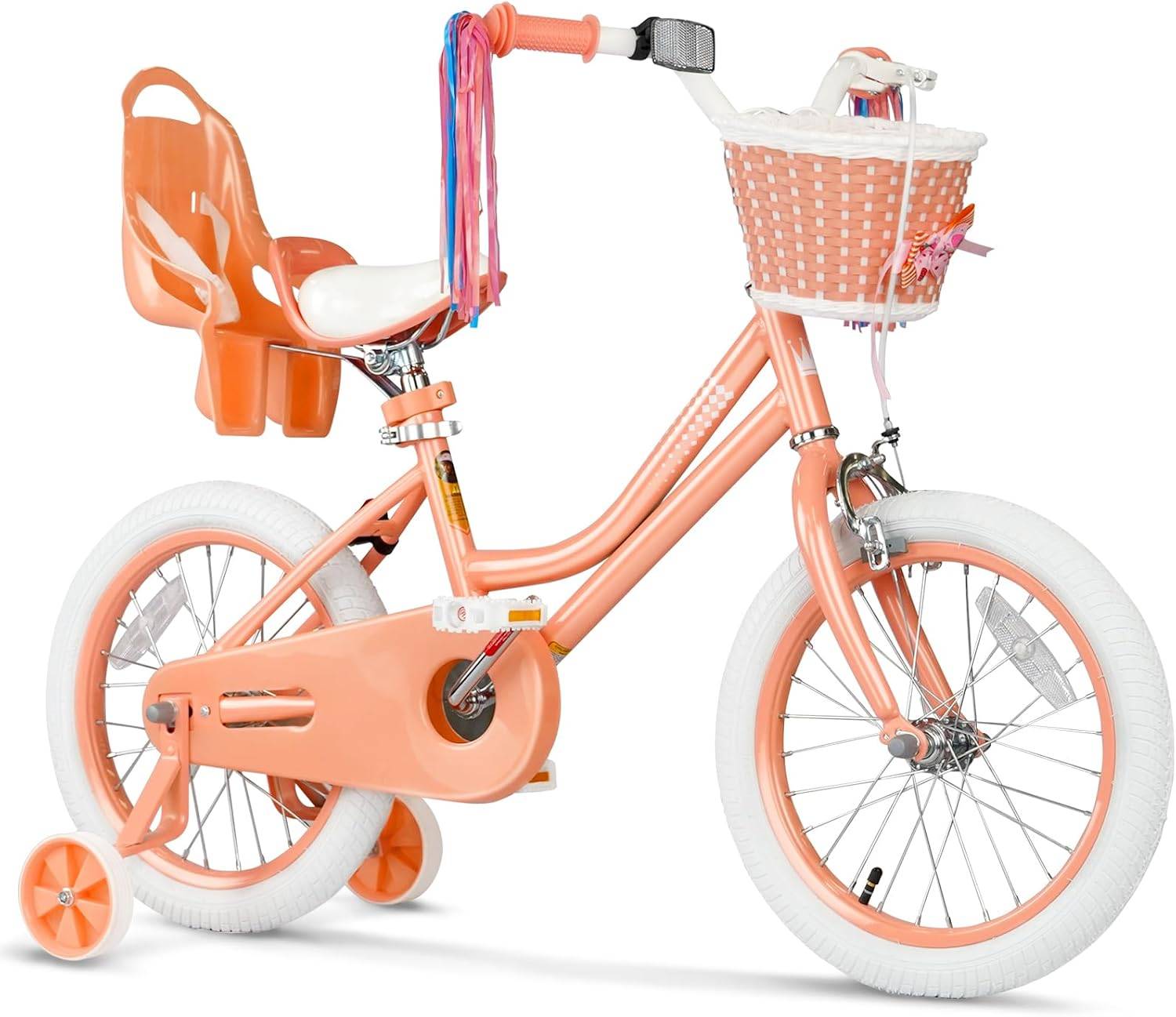 Girls 12/14/16 Inch Kids Bike by XJD with Training Wheels – Peach
A training-wheel kids’ bike available in 12 Inch, 14 Inch and 16 Inch sizes. It can inform a future independent-riding comparison but does not replace or qualify as a baby bike seat.
XJD Pink Girls' Bike – Kids 12/14/16 Inch Training Wheel Bicycle is listed in 12 Inch, 14 Inch and 16 Inch sizes. XJD Girls Bike for Kids Ages 3-8, 12/14/16 Inch with Training Wheels – Purple has those same listed sizes, but “Ages 3-8” is only part of its catalog title and is not fit evidence. Girls 12/14/16 Inch Kids Bike by XJD with Training Wheels – Peach is likewise offered in those three sizes.
Because none of these products is a baby bike seat, they are comparison points for a future child-ridden bicycle, not substitutes for the seat named in the question.
Choosing a later first bicycle
| Wheel size | XBikes age starting point | Rider-height starting point |
|---|---|---|
| 12 Inch | Ages 3–4 | 34–40 in / 86–102 cm |
| 14 Inch | Ages 3–6 | 37–45 in / 94–114 cm |
| 16 Inch | Ages 4–7 | 40–48 in / 102–122 cm |
These ranges are starting points, not permission to buy by age. Measure the rider’s height and inseam, then have the child try the bicycle. Check stand-over clearance, reach, brake control and current confidence. Do not choose an oversized bicycle merely to allow room for growth.
The child should be able to get into position, reach the controls and manage the bicycle without stretching or losing control. For assembly, adjustment, maintenance or torque values, follow the exact product manual or use a qualified bicycle mechanic.
What to do now
If you mean a passenger seat, locate its exact manual today and compare your baby’s age, measured height and weight with every requirement; confirm bicycle compatibility and local law before riding. If any condition cannot be verified, wait. Consider the listed 12-, 14- and 16-inch training-wheel bikes only when the child is ready to ride independently and passes an individual bicycle fit check.
Bikes for your next adventure
-

Kids Bike Helmet by XJD for Boys & Girls – Black, Blue, Green, Pink, Purple
The XJD Kids Bike Helmet covers a wide 2-to-8-year age range thanks to two head-…$59.99
-

Kids Bike Helmet by XJD for Girls – Pink
The XJD Kids Bike Helmet in Pink is a lightweight multi-sport helmet for girls r…$59.99
$99 -

XJD Kids Bike for Girls – Pink, 12/14/16/20 Inch with Training Wheels
The XJD Kids Bike for Girls in Pink is a training-wheel bike built to carry your…$139
$159