

How old before baby can ride in bike seat
Wait until your baby is at least 12 months old, can sit upright unsupported, and can comfortably wear a properly fitted bicycle helmet before using a bike-mounted child seat.
Age is only the first checkpoint
Twelve months is a minimum starting point, not an automatic clearance. Babies develop head, neck and trunk control at different rates. A child who still slumps, cannot remain steadily seated, or cannot support the added weight of a helmet is not ready for a bike seat even after the first birthday.
Before the first ride, compare your child with every minimum age, size and developmental requirement in the exact child-seat manual. If the manual specifies a later age or a minimum or maximum measurement, follow it. Ask your child’s pediatrician before riding if your baby was born prematurely, has delayed motor development, or has a condition affecting posture, muscle control or breathing.
What to measure and compare
Record your child’s current weight and height, then check them against the child seat’s stated limits. Confirm that the harness and foot restraints adjust to your child without improvised padding, knots or modifications. The child should remain centered and upright rather than leaning or sliding within the seat.
- Development: The child sits unsupported and maintains steady head and neck control.
- Helmet fit: The helmet sits level, fits properly and has straps adjusted according to its manufacturer’s instructions.
- Seat limits: The child meets every age, weight and size condition in the exact seat manual.
- Bicycle compatibility: The seat and mounting system are explicitly compatible with the adult bicycle.
- Adult control: The rider can start, steer, brake and stop confidently with the child’s added weight.
If any one of these checks fails, postpone the ride. Do not treat a birthday, an approximate clothing size or another family’s experience as a substitute.
Check the bicycle and installation
A bike-mounted seat changes balance and handling, especially while loading the child, starting and stopping. Install it exactly as its manufacturer directs, including all supplied restraints and retention hardware. Consult both the bicycle manual and seat manual for compatibility, load limits, maintenance and assembly instructions.
Do not guess about mounting points, fasteners or torque. If the manuals are missing, unclear or appear to conflict, contact the manufacturers or have a qualified bicycle mechanic assess the combination. After installation, check that no strap, foot, hand or loose clothing can reach a wheel or other moving part.
Make the first ride a controlled check
Practice handling the fitted seat without the child first, using an appropriate substitute load only if the seat manufacturer permits it. When the child is ready, choose a short ride in a calm, traffic-free setting. Have another adult help stabilize the bicycle while the child is secured.
Stop immediately if the harness shifts, the helmet will not stay level, the child slumps, or the bicycle feels difficult to control. A sleeping child may lose the posture needed to keep the head and body supported, so monitor position throughout the ride rather than assuming the restraints solve every problem.
Why the supplied kids’ bike is not a baby seat
The catalog option below helps define what comes later: it is a child’s training-wheel bicycle, not a bike-mounted passenger seat for a baby. Its available 12-, 14- and 16-inch wheel sizes are comparison points for independent riding after a child reaches the relevant measurements and control skills. It cannot substitute for a compatible child seat on an adult bicycle.
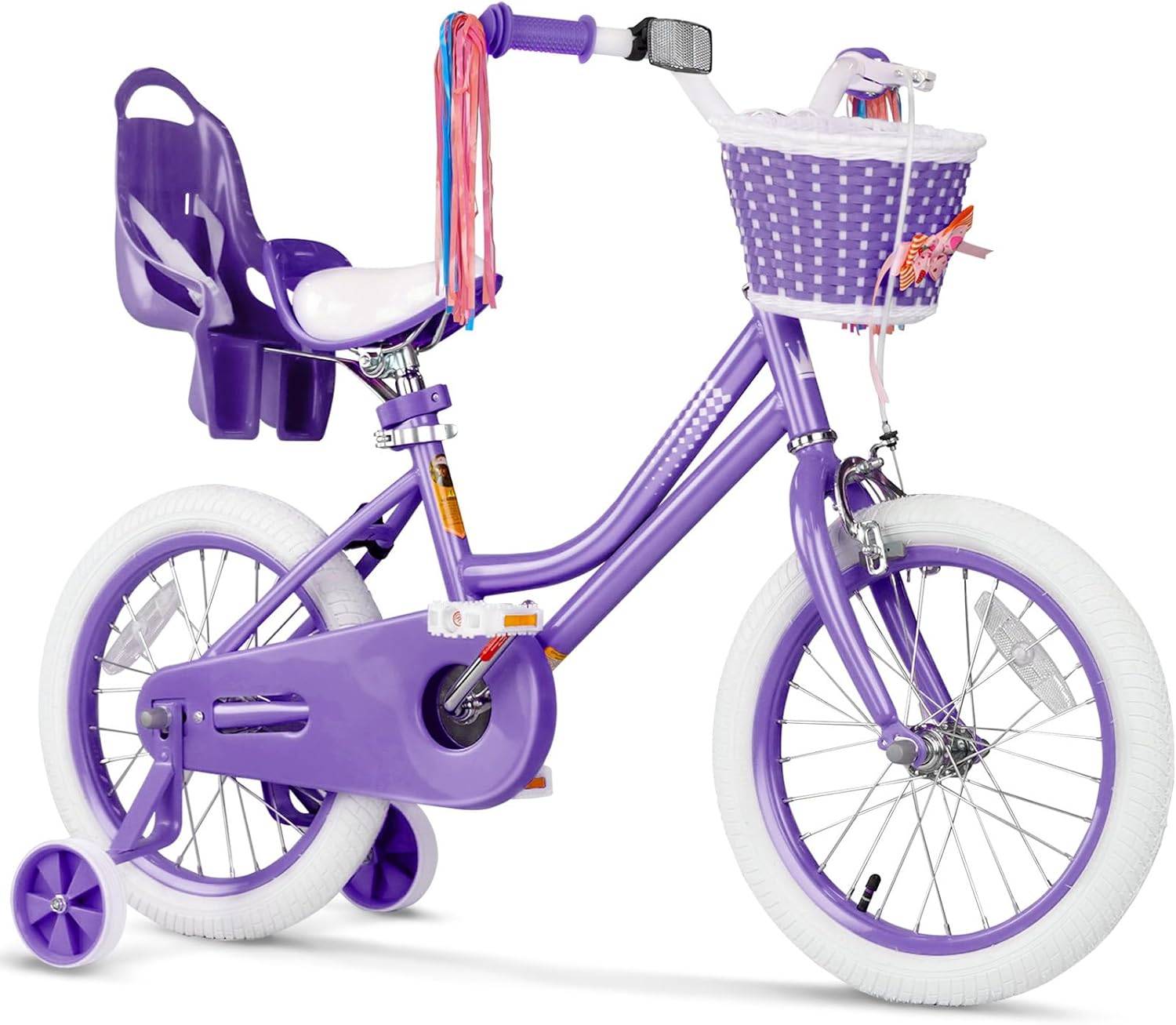
XJD Girls Bike for Kids Ages 3-8, 12/14/16 Inch with Training Wheels – Purple is offered in 12 Inch, 14 Inch and 16 Inch labels. The age wording in that product title is a catalog label, not proof that a particular child fits.
XBikes uses these starting points: 12 Inch for ages 3–4 and heights 34–40 in (86–102 cm); 14 Inch for ages 3–6 and 37–45 in (94–114 cm); and 16 Inch for ages 4–7 and 40–48 in (102–122 cm). When that stage arrives, measure the rider and check stand-over clearance, reach, brake control and confidence. Have the child try the bicycle, and never choose an oversized bike simply for growing room.
Your decision before riding
Use a bike seat only when your baby is at least 12 months old, sits steadily without support, wears a correctly fitted helmet, meets the seat manual’s limits, and rides in a confirmed compatible installation. If even one condition is uncertain, wait and resolve it with the manual, pediatrician or qualified bicycle mechanic before carrying your baby.
Bikes for your next adventure
-

Kids Bike Helmet by XJD for Boys & Girls – Black, Blue, Green, Pink, Purple
The XJD Kids Bike Helmet covers a wide 2-to-8-year age range thanks to two head-…$59.99
-

Kids Bike Helmet by XJD for Girls – Pink
The XJD Kids Bike Helmet in Pink is a lightweight multi-sport helmet for girls r…$59.99
$99 -

XJD Kids Bike for Girls – Pink, 12/14/16/20 Inch with Training Wheels
The XJD Kids Bike for Girls in Pink is a training-wheel bike built to carry your…$139
$159