

How old can a baby ride in a bike trailer
A baby can ride in a bike trailer only after meeting the trailer manufacturer’s minimum age, size, posture and helmet requirements. There is no reliable age-only answer: check the exact manual before the first ride, and do not use the trailer if the manual is missing or the child does not meet every stated limit.
What determines when a baby can ride?
Begin with the instructions for the exact trailer, seat, harness and bicycle combination. Manufacturers may specify minimum or maximum ages, passenger dimensions, load limits, seating requirements and compatible configurations. Those details are product-specific, so a general age recommendation cannot replace them.
If the instructions require a child to sit upright without support, wear a helmet or maintain a particular position, confirm that your baby can do so throughout a ride—not merely for a few seconds at home. When development, neck control or a medical condition creates uncertainty, pause and ask the child’s healthcare professional before riding.
Do not improvise with cushions, inserts, car seats or adapters unless the trailer manual explicitly permits the exact arrangement. An accessory that appears to fit may change harness placement, headroom or passenger protection.
Measure before comparing with the manual
Measure the child on the day you intend to ride. Record the values in the units used by the manual, then compare each one with the manufacturer’s requirements.
- Current age: Use the child’s actual date of birth rather than rounding up to a suggested range.
- Weight: Include clothing and any equipment when the manual tells you to do so. Never estimate or exceed the stated passenger or total load limit.
- Seated height and headroom: Check the child’s position in the seat, including helmet clearance where a helmet is required.
- Shoulder and harness position: Confirm that the supplied restraint adjusts as the manual illustrates, without routing straps differently.
- Posture: Watch for slumping, leaning or loss of head position while secured.
A child who falls outside one requirement is not ready for that trailer, even when another child of the same age can use it.
Perform a stationary fit check
Place the trailer on level ground and follow its assembly and loading sequence exactly. Secure the child using the supplied restraint, then check that straps lie in the documented positions and that the child has the required space around the head and body. Follow the manual for passenger placement, especially if the trailer has more than one seating position.
Inspect the hitch, retention components, tires, wheels and frame using the manufacturer’s checklist. Maintenance intervals, tire pressure, fastener torque and bicycle compatibility vary; use the exact product manual or a qualified bicycle mechanic rather than guessing.
If the child cannot maintain the required position, the harness cannot be adjusted correctly, a helmet contacts the enclosure, or any manual requirement is unclear, stop. Waiting is the appropriate decision.
Helmet fit is a separate requirement
Where riding conditions and the trailer instructions call for a bicycle helmet, choose one that fits the child now. U.S. Consumer Product Safety Commission guidance says a helmet should fit properly, sit level on the head and have its straps adjusted according to the helmet manufacturer’s instructions.
Do not buy an oversized helmet for growth or use extra padding that the helmet maker has not approved. Check the fit with the child seated in the trailer because the enclosure and seat angle can affect clearance. A correctly fitted helmet does not override a trailer’s minimum-age or posture rules.
Where the supplied kids’ bike fits into this decision
The Purple XJD Girls' Bike with Doll Seat & Basket is a Training Wheel Bike offered in 12 Inch, 14 Inch and 16 Inch labels. It is not a bike trailer and provides no evidence that a baby is ready to be a trailer passenger. These options are useful only as later, independent-riding comparison points once the child is developmentally ready to try a bicycle and can complete an individual fit check.

| Catalog size | XBikes starting point |
|---|---|
| 12 Inch | Ages 3–4; height 34–40 in / 86–102 cm |
| 14 Inch | Ages 3–6; height 37–45 in / 94–114 cm |
| 16 Inch | Ages 4–7; height 40–48 in / 102–122 cm |
These bicycle ranges do not establish trailer readiness. When considering the bike later, prioritize measured height, inseam, reach, brake control and current confidence over age. Following American Academy of Pediatrics guidance, have the child try the bicycle, check stand-over and control, and avoid buying an oversized bike merely for growth.
Make the go-or-wait decision
- Find the manual for the exact trailer and confirm bicycle compatibility.
- Write down every stated age, size, load, seating, posture and helmet requirement.
- Measure the child and conduct the stationary fit check exactly as instructed.
- Resolve uncertain assembly, compatibility or maintenance details with the manufacturer’s instructions or a qualified bicycle mechanic.
- Ride only when every requirement is satisfied; otherwise, wait and recheck as the child grows.
For your baby’s first trailer ride, the decisive answer is therefore not a birthday: it is a complete match between the child’s current measurements and abilities and every requirement in that specific trailer’s manual.
Bikes for your next adventure
-

Kids Bike Helmet by XJD for Girls – Pink
The XJD Kids Bike Helmet in Pink is a lightweight multi-sport helmet for girls r…$59.99
$99 -

Blue XJD Kids Bike Helmet for Boys & Girls
The Blue XJD Kids Bike Helmet is a lightweight, adjustable multi-sport helmet fo…$59.99
$99 -
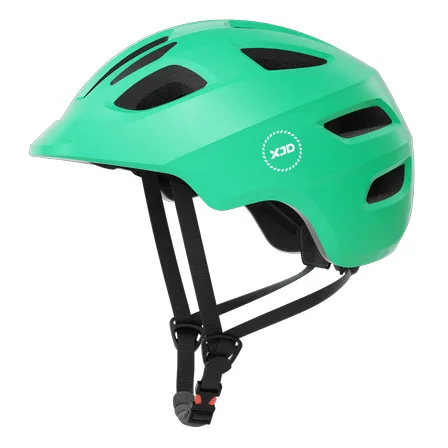
Green XJD Kids Bike Helmet for Boys & Girls
The Green XJD Kids Bike Helmet is a lightweight multi-sport helmet for toddlers …$59.99
$99