

How old child bike trailer
There is no single age that makes every child ready for a bike trailer. Use the trailer manual’s minimum age and limits, then check the child’s posture, helmet fit and comfort.
Age alone cannot answer the question
Bike-trailer requirements vary by model, so the exact trailer manual is the deciding source. Confirm its stated minimum age, permitted seating arrangement and all passenger and load limits. Do not estimate a missing limit or assume that guidance for one trailer applies to another.
A child also needs enough physical control for the seating system specified by the manufacturer. Observe whether the child can maintain the required seated position without slumping and whether the helmet interferes with the seat or head support. If the passenger is an infant, was born prematurely or has a medical or developmental concern, ask the child’s pediatrician before riding.
What to measure and inspect
Before deciding, record the child’s current height and weight, then compare both with the trailer manual. Age is useful only as an initial reference. A child can be within an age label yet be too large for the seat, too tall for adequate clearance or unable to sit as the restraint system requires.
- Height: Measure without shoes and check the child’s head and helmet clearance in the occupied seat.
- Weight: Compare the measured weight with the manual’s individual-passenger and total-load rules.
- Seated posture: Check that the child remains positioned as the manual illustrates throughout a short stationary trial.
- Restraint fit: Use every harness component exactly as directed; do not improvise extensions or routing.
- Helmet fit: The helmet should fit properly, sit level and have its straps adjusted according to its manufacturer’s instructions.
Compare the child with the trailer—not a birthday
First compare the child’s measurements with the exact limits printed for the trailer. Next check posture, restraint fit and helmet clearance while the trailer is stationary. Finally, confirm that the towing bicycle, hitch and attachment method are compatible according to their manuals.
If any manual is missing, the child exceeds a stated limit, the restraint cannot be adjusted correctly or the helmet is pushed out of position by the seat, do not ride. Obtain the correct documentation or ask a qualified bicycle mechanic to inspect compatibility and assembly. Follow the manuals for maintenance, fasteners and any torque requirements.
When a 24-inch bicycle is relevant
A trailer-passenger decision is different from fitting a child to a bicycle. XBikes uses 24-inch bicycles as a starting point for riders ages 10–14 and 54–64 inches (137–163 cm) tall, but measured height, inseam, reach, brake control and current confidence take priority over age. The child should try the bicycle, and an oversized bicycle should not be purchased merely for growth.
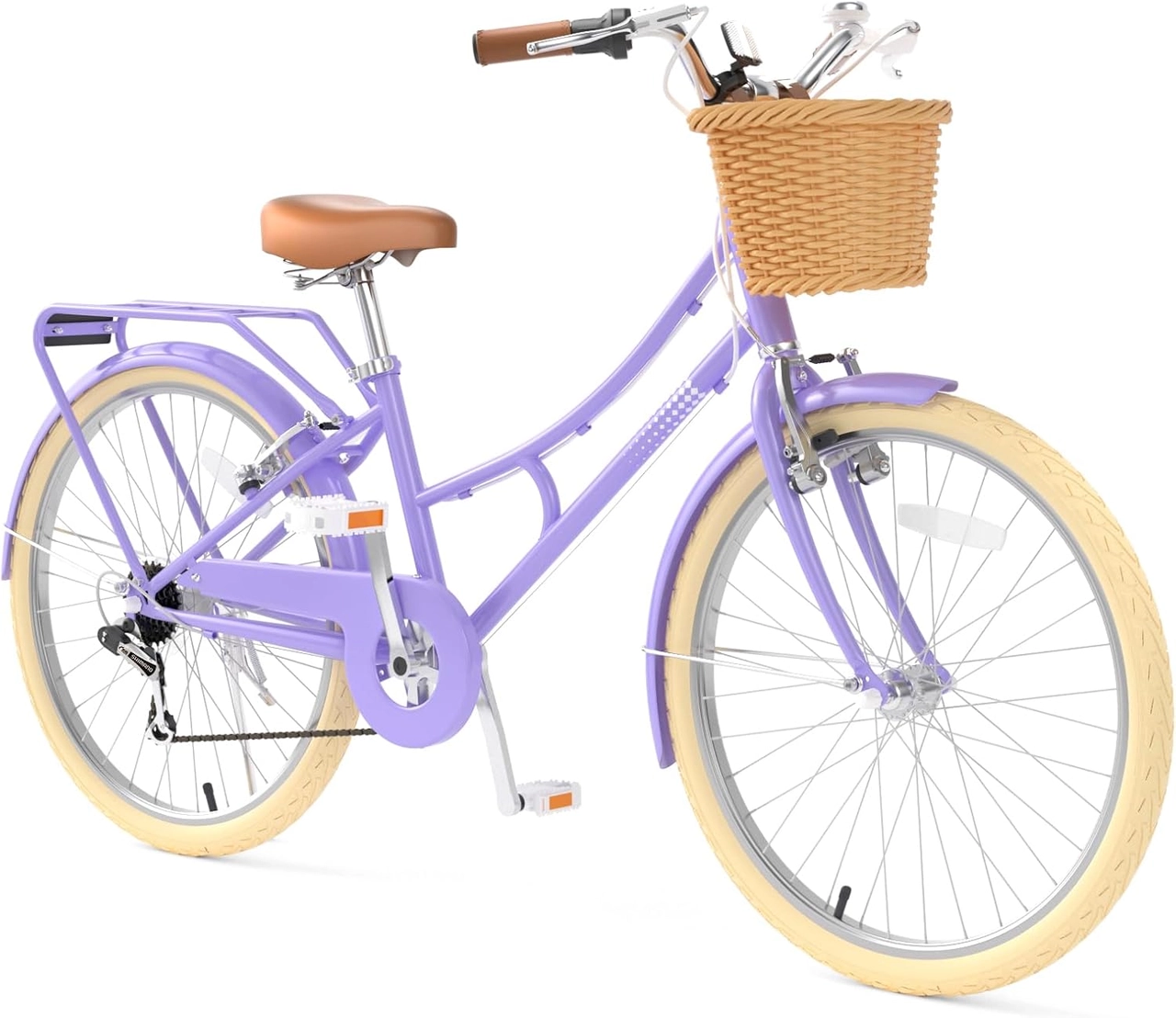
The 24-Inch Purple XJD Beach Cruiser Bike with U-Brake is therefore useful only as a 24-inch bicycle comparison for an older child who may be moving toward independent riding. Its supplied catalog information does not establish trailer compatibility, passenger readiness, hitch compatibility or towing suitability. It is not a substitute for a child bike trailer or for the trailer manufacturer’s instructions.
This catalog option helps clarify the difference between choosing an independently ridden 24-inch bicycle and determining whether a younger passenger meets a particular trailer’s requirements.
If the child may be ready to ride independently
Use the XBikes 24-inch age and height figures only as starting points. Check stand-over clearance, inseam, comfortable reach to the controls, reliable brake operation by the child and confidence starting, steering and stopping. A child below the starting range should not be moved to 24 inches simply because that is the available comparison shown here; another wheel size is not automatically equivalent, and every bicycle still requires an individual fit check.
Independent riding readiness also does not prove that a bicycle can tow a trailer. The towing bicycle, trailer and hitch must all permit the intended setup. When those facts are absent, consult the exact manuals or a qualified bicycle mechanic rather than inferring compatibility from wheel size or category.
Your next decision
- Find the exact trailer model and its manual.
- Measure the child’s current height and weight.
- Compare those measurements with every passenger and load limit in the manual.
- Perform a stationary check of posture, restraint adjustment and helmet clearance.
- Verify the towing bicycle and hitch compatibility from their documentation.
If all stated requirements are met and the child remains correctly positioned, proceed only as the manuals direct. If any limit, fit check or compatibility point is uncertain, postpone the trailer ride until the manufacturer or a qualified bicycle mechanic resolves it.
Bikes for your next adventure
-

Kids Bike Helmet by XJD for Girls – Pink
The XJD Kids Bike Helmet in Pink is a lightweight multi-sport helmet for girls r…$59.99
$99 -

Blue XJD Kids Bike Helmet for Boys & Girls
The Blue XJD Kids Bike Helmet is a lightweight, adjustable multi-sport helmet fo…$59.99
$99 -
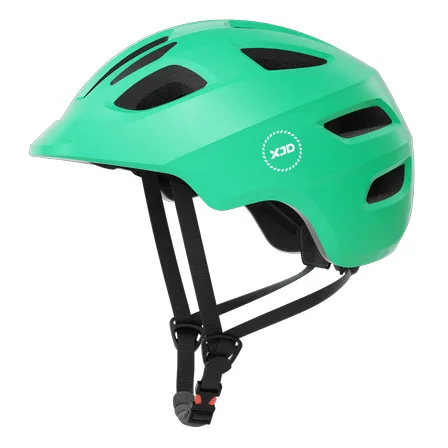
Green XJD Kids Bike Helmet for Boys & Girls
The Green XJD Kids Bike Helmet is a lightweight multi-sport helmet for toddlers …$59.99
$99