

How old does baby have to be for bike seat
A baby is ready for a bicycle child seat only when they can sit unsupported, hold their head steady in a helmet, and meet every requirement in the seat manual.
There is no age-only answer
A birthday by itself cannot establish readiness. Babies develop head, neck and trunk control at different rates, while child-seat requirements may differ by model and location. Check the exact seat manufacturer’s minimum age, size and load limits, as well as applicable local rules. If readiness is uncertain, ask the child’s healthcare professional before riding.
Do not use a bicycle child seat merely because the baby fits inside it. The child must remain upright and stable while wearing a properly fitted bicycle helmet. The helmet should sit level, and its straps should be adjusted according to the helmet manufacturer’s instructions.
What to measure and compare
Before the first ride, record the child’s current measurements and compare them with the manual for the exact child seat—not with a general age recommendation.
- Development: Confirm that the child sits unsupported and maintains steady head control while helmeted.
- Body measurements: Measure the child as directed by the seat manufacturer and check every stated fit and load limit.
- Harness fit: Confirm that the restraint can be adjusted exactly as the manual requires, without bulky clothing interfering.
- Bicycle compatibility: Verify that the seat and bicycle are approved for use together. Follow the manuals for mounting points, hardware, maintenance and load limits.
- Helmet fit: Use a properly fitting bicycle helmet positioned level, with straps secured according to its instructions.
If a required measurement, compatibility statement or installation detail is missing, do not guess. Contact the manufacturer or have a qualified bicycle mechanic inspect the bicycle and seat.
A practical readiness check
- Read the child-seat and bicycle manuals from beginning to end.
- Confirm that the child meets every stated requirement and can maintain the necessary posture while helmeted.
- Install and inspect the seat exactly as instructed. Use a qualified bicycle mechanic if compatibility or assembly is unclear.
- Check that the adult rider can mount, balance, steer, brake and dismount while accounting for the added passenger load.
- Begin only in an appropriate low-risk setting, and stop if the child slumps, cannot hold their head steady or does not remain correctly restrained.
Passing one check does not cancel another. A developmentally ready child still should not ride in a seat whose stated limits or compatibility requirements they do not meet.
Are the supplied XBikes products baby seats?
No. The supplied products are children’s bicycles, not bicycle-mounted passenger seats for babies. They help clarify the difference between carrying a baby and choosing a later independent bicycle: their wheel-size labels provide comparison points only after a child is developmentally ready to ride their own bike.
 Girls' Training Wheel Bike by XJD with Basket – Purple
A training-wheel bicycle offered in 14, 16 and 20 Inch options; useful for comparing later independent-bike sizes, but it is not a bicycle child seat for carrying a baby.
 Black XJD Kids' BMX Bicycle with Training Wheels
A children’s BMX bicycle with training wheels in 12, 14 and 16 Inch options; relevant only as a later independent-riding comparison, not as a baby passenger seat.
Black XJD Kids' BMX Bicycle with Training Wheels is listed in 12, 14 and 16 Inch sizes. Girls' Training Wheel Bike by XJD with Basket – Purple is listed in 14, 16 and 20 Inch sizes. Neither product should be treated as a substitute for a baby passenger seat, and training wheels do not establish rider fit.
When those children’s bikes become relevant
For independent riding, XBikes uses these wheel-size starting points. They are not a substitute for trying the bicycle:
| Wheel size | Starting age | Rider height |
|---|---|---|
| 12 Inch | 3–4 | 34–40 in / 86–102 cm |
| 14 Inch | 3–6 | 37–45 in / 94–114 cm |
| 16 Inch | 4–7 | 40–48 in / 102–122 cm |
| 20 Inch | 7–12 | 48–60 in / 122–152 cm |
Measure the child’s standing height and inseam, then have them try the bicycle. Check stand-over clearance, comfortable reach, reliable brake control and present confidence. Do not buy an oversized bicycle for the child to grow into. When two size ranges overlap, actual control and fit—not age alone—should decide.
What to do next
If you mean a passenger seat, locate its exact manual and compare your baby’s development and measurements with every requirement before installation. If you mean a child’s first independent bicycle, wait until the child reaches the relevant starting range, measure them, and arrange an individual fit check. The two supplied XBikes models become relevant only for that later independent-riding decision, not for carrying a baby.
Bikes for your next adventure
-
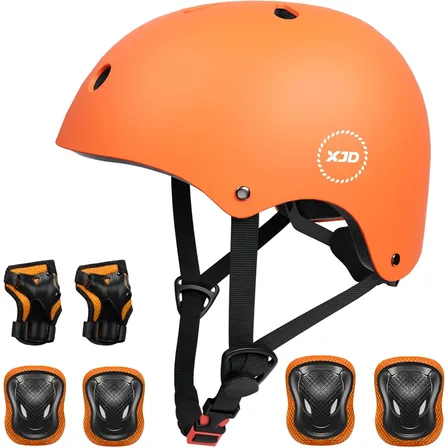
Orange Kids Helmet & Pad Set by XJD – Sizes S & M
The Orange XJD Kids Helmet & Pad Set is built for children around 3 to 8 years o…$24.64
-

XJD Boys 12/14/16" Training Wheel Bike – Blue
The XJD Boys Bike in Blue is a training wheel bike for riders 71–122 cm tall—rou…$169
$199 -

Blue XJD Freestyle BMX Bike, 20-Inch – No Pegs
The XJD 20-Inch Blue Freestyle BMX is an entry-level BMX bike for boys and girls…$189.99