

How old for baby to ride in bike trailer
A baby should not ride in a bike trailer before 12 months. At 12 months or older, proceed only if the child sits unsupported, has enough neck strength to support a properly fitted lightweight bicycle helmet, and meets the trailer maker’s requirements.
Age is the first gate, not the only test
The American Academy of Pediatrics advises that infants younger than 12 months should not be carried on a bicycle. Once a child is at least 12 months old, readiness still depends on physical development. The child needs to sit steadily without support and keep their head controlled while wearing a lightweight helmet.
Do not treat the first birthday as automatic clearance. If your child slumps, cannot remain upright, or struggles with the helmet’s weight, wait. Ask your pediatrician when development or a medical condition makes readiness uncertain.
What to measure and compare
Before riding, check the child and the exact trailer rather than relying on age alone:
- Unsupported sitting: Confirm that the child can remain upright without being propped up.
- Head and neck control: Put on the intended helmet and check that the child can comfortably hold their head upright.
- Helmet fit: The helmet should fit the child now, sit level on the head, and use its straps exactly as the helmet manufacturer directs.
- Trailer limits: Compare the child’s age and measurements with the trailer manual’s minimum-age, height, weight, seating and helmet-clearance requirements.
- Harness fit: Use the trailer’s restraint exactly as its manual specifies. The child should remain properly positioned rather than leaning or sliding.
If any requirement conflicts, follow the more restrictive limit and postpone the ride. Never improvise an insert, restraint or attachment unless the trailer manufacturer expressly permits it.
Prepare the trailer and towing bicycle
Read both manuals before the first trip. Confirm that the trailer is compatible with the towing bicycle and that its hitch, retention system, wheels, restraints and other supplied parts are assembled and secured as directed. Use the stated load limits and maintenance schedule. Because those specifications vary by model, no universal number or fastening procedure should replace the manual.
If the manual is missing, compatibility is unclear, or a component is damaged or difficult to secure, do not ride. Obtain the exact instructions or have a qualified bicycle mechanic inspect the setup.
Make the first ride controlled
- Fit and fasten the child’s helmet, then secure the child using the trailer’s complete restraint system.
- Check that helmet clearance and the child’s seated posture match the trailer instructions.
- Practice towing the trailer without the child so you can feel its width, turning behavior and longer stopping distance.
- Begin with a short ride on a smooth, quiet route in suitable weather.
- Ride slowly, allow extra room for braking and turning, and stop if the child slumps, becomes distressed or cannot hold their head upright.
An adult cyclist should tow a young passenger. Avoid busy roads and conditions that reduce control or visibility. Even a correctly prepared trailer does not remove the risk of injury.
How the supplied kids’ bikes relate
A trailer passenger and a child riding independently are different stages. The supplied products are not bike trailers and are not substitutes for one. They become relevant only when an older child is ready to operate a bicycle and can be individually fitted for stand-over clearance, reach, brake control and confidence.
The Blue XJD Girls Bike with Training Wheels – 12/14/16 Inch and XJD Boys 12/14/16" Training Wheel Bike – Blue are both Training Wheel Bikes offered in 12 Inch, 14 Inch and 16 Inch labels. They help distinguish a baby’s trailer-readiness decision from the later task of selecting a child’s own bicycle.
 Blue XJD Girls Bike with Training Wheels – 12/14/16 Inch
This Training Wheel Bike comes in 12 Inch, 14 Inch and 16 Inch labels. It is relevant only as a later independent-riding option, not as a bike trailer or a substitute for trailer-readiness checks.
 XJD Boys 12/14/16" Training Wheel Bike – Blue
Offered in 12 Inch, 14 Inch and 16 Inch labels, this Training Wheel Bike is a comparison point for a later riding stage. It does not determine whether a baby is ready to travel in a trailer.
If you are planning the next stage
XBikes uses these starting points: 12 Inch for ages 3–4 and heights 34–40 in or 86–102 cm; 14 Inch for ages 3–6 and heights 37–45 in or 94–114 cm; and 16 Inch for ages 4–7 and heights 40–48 in or 102–122 cm. These ranges apply to bicycle selection, not trailer eligibility.
Measure the child’s standing height and inseam, then have them try the bicycle. Prioritize actual stand-over clearance, reach, brake control and current confidence over age. Do not buy an oversized bike merely for growth. Follow the exact product manual for assembly, maintenance and any specifications not supplied here, or use a qualified bicycle mechanic.
Your decision today
If your baby is under 12 months, wait. If they are at least 12 months, verify unsupported sitting, helmet-supported neck control, helmet fit and every trailer-manual limit before riding. A failed check means postponing the trailer ride; the listed training-wheel bikes belong only to a later, individually fitted riding stage.
Bikes for your next adventure
-

Kids Bike Helmet by XJD for Girls – Pink
The XJD Kids Bike Helmet in Pink is a lightweight multi-sport helmet for girls r…$59.99
$99 -

Blue XJD Kids Bike Helmet for Boys & Girls
The Blue XJD Kids Bike Helmet is a lightweight, adjustable multi-sport helmet fo…$59.99
$99 -
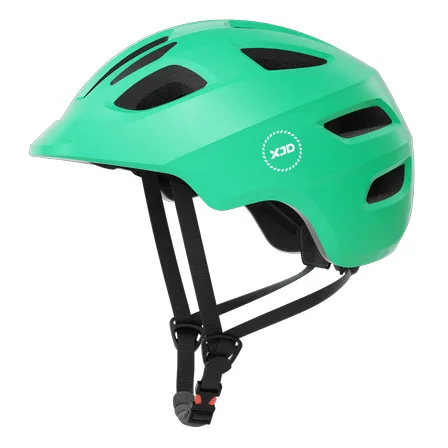
Green XJD Kids Bike Helmet for Boys & Girls
The Green XJD Kids Bike Helmet is a lightweight multi-sport helmet for toddlers …$59.99
$99