

How old should baby be to ride in bike seat
Most babies should not ride in a bicycle child seat before about 12 months old. Wait until your child can sit unsupported, hold their head steady in a helmet, and meet every requirement in the seat and bicycle manuals.
Age is only the first checkpoint
Twelve months is a practical starting point, not automatic clearance. Babies develop at different rates, and a helmet adds weight that the neck must control while the bicycle moves over bumps and around turns. If your child was premature, has delayed head or trunk control, or has another medical concern, ask the child’s clinician before riding.
Also check local rules, because minimum passenger ages can vary. Never use an age recommendation to override the child-seat manufacturer’s minimum age, size limits or developmental requirements.
What to measure and compare
Before the first ride, work through these checks:
- Unsupported sitting: Your child should remain upright without being propped up.
- Head and neck control: With a properly fitted bicycle helmet on, the head should stay steady rather than slump or repeatedly tip.
- Seat fit: Compare your child’s measurements with the child seat’s stated height, weight and harness requirements. Use the exact manual; do not estimate limits.
- Bicycle compatibility: Confirm that the seat is approved for the exact bicycle, mounting position and attachment system. Ask a qualified bicycle mechanic if the manuals do not make compatibility clear.
- Rider control: The adult must be able to start, steer, brake and stop confidently with the passenger load aboard.
A bicycle helmet must fit properly, sit level and have its straps adjusted according to the helmet manufacturer’s instructions. A helmet does not make an underdeveloped child ready for a bike seat.
Do a stationary fit check first
Install the child seat exactly as its manual directs, including all supplied restraints and guards. For unspecified assembly steps, compatibility, load limits or torque settings, follow the exact product manual or use a qualified bicycle mechanic.
While another adult stabilizes the bicycle, place the helmeted child in the seat and fasten the harness as directed. Check that the child remains upright, cannot reach moving parts and has no loose clothing near the wheel. Confirm that the adult can mount, dismount and operate the controls without the seat or child obstructing movement.
If any requirement is uncertain, do not ride. Remove the child and resolve the fit, installation or developmental question first.
How the supplied bicycles relate to this question
The supplied catalog products are independent children’s bicycles, not baby passenger seats. They therefore do not make a baby ready to ride as a passenger and should not be treated as child-seat compatibility evidence. They are useful only as later, nearest-stage comparisons for the time when a child is ready to control a bicycle independently.
 Pink 12/14/16/20" XJD Girls Bike with Training Wheels & Basket
Its 12-, 14-, 16- and 20-inch options are independent children’s bicycle sizes. Even the 12-inch XBikes starting point is ages 3–4 and 34–40 inches, so this is not a baby passenger seat.
 26-Inch XJD Beach Cruiser Bike for Girls – Purple, V-Brake
Its supplied variants are 20, 24 and 26 inches. Those XBikes starting points apply to older independent riders, making this cruiser a future-size comparison rather than equipment for carrying a baby.
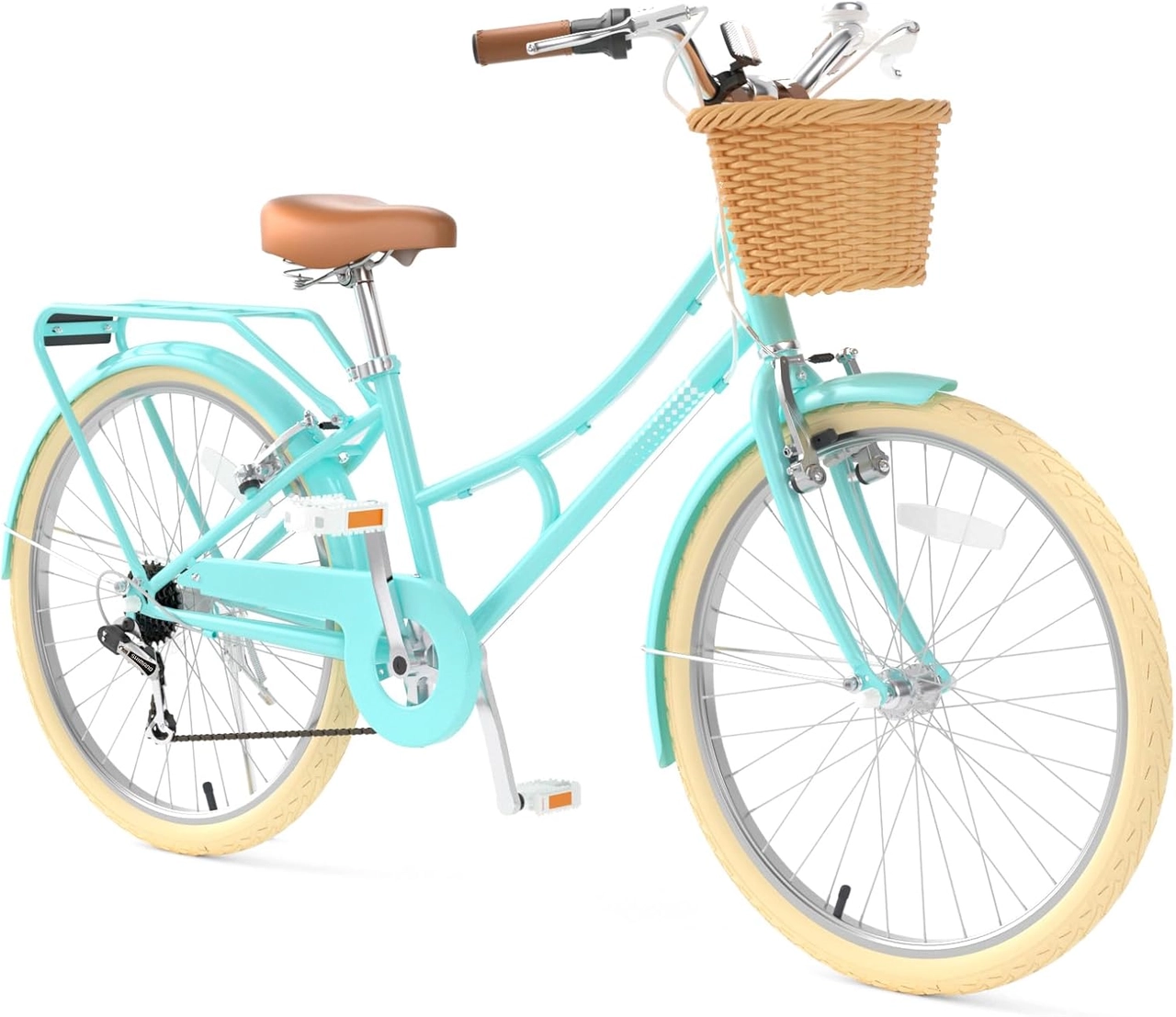 XJD 24-Inch Green Beach Cruiser Bike with U-Brake
Its supplied 24- and 26-inch variants correspond to older youth height starting points. It is relevant only as a later independent-riding comparison and provides no evidence of baby-seat compatibility.
The Pink 12/14/16/20" XJD Girls Bike with Training Wheels & Basket offers catalog options labeled 12 Inch, 14 Inch, 16 Inch and 20 Inch. Under the XBikes starting points, 12 Inch begins at ages 3–4 and rider height 34–40 inches (86–102 cm). That makes even its smallest listed option a later independent-riding product, not a substitute for a baby seat.
The 26-Inch XJD Beach Cruiser Bike for Girls – Purple, V-Brake has 20-, 24- and 26-inch catalog variants in its supplied SKU labels. The XJD 24-Inch Green Beach Cruiser Bike with U-Brake has supplied 24- and 26-inch variants. XBikes starts 20 Inch at ages 7–12 and 48–60 inches (122–152 cm), 24 Inch at ages 10–14 and 54–64 inches (137–163 cm), and 26 Inch for youth and adults over 60 inches (153 cm). These are future-size comparison points, not baby-passenger equipment.
When a child later moves to their own bicycle
For an independent bicycle, measure standing height and inseam, then have the child try the exact bicycle. Compare stand-over clearance, reach, brake control and current confidence; do not choose an oversized bicycle simply to allow room for growth. Age and wheel-size ranges are starting points only.
The immediate decision is simpler: if your baby is under about 12 months, cannot sit unsupported, cannot hold a helmeted head steady, or does not meet the seat manual’s requirements, wait. If every checkpoint is met, verify installation and bicycle compatibility before taking a short first ride in a controlled area.
Bikes for your next adventure
-

Kids Bike Helmet by XJD for Boys & Girls – Black, Blue, Green, Pink, Purple
The XJD Kids Bike Helmet covers a wide 2-to-8-year age range thanks to two head-…$59.99
-

Kids Bike Helmet by XJD for Girls – Pink
The XJD Kids Bike Helmet in Pink is a lightweight multi-sport helmet for girls r…$59.99
$99 -

XJD Kids Bike for Girls – Pink, 12/14/16/20 Inch with Training Wheels
The XJD Kids Bike for Girls in Pink is a training-wheel bike built to carry your…$139
$159