

How old should baby be for bike seat
A baby should use a bicycle child seat only when they can sit unsupported and hold their helmeted head steady for the entire ride. Age alone is not enough.
Do not choose by birthday alone
Many parents want a single minimum age, but readiness depends on development and on the child seat’s instructions. Do not place a baby in a bicycle seat if they slump, cannot maintain an upright posture, or cannot consistently control their head while wearing a properly fitted helmet.
Before riding, compare the child’s development and measurements with the exact child-seat and bicycle manuals. If the manual gives a minimum age, minimum or maximum weight, or another restriction, follow it. When a baby’s readiness is uncertain, ask the child’s pediatrician before carrying them by bicycle.
What to measure and compare
Use this short check before buying or installing a child seat:
- Development: Confirm that the baby sits unsupported and maintains steady head and neck control while helmeted.
- Child measurements: Measure weight and any other dimensions required by the child-seat manufacturer, then stay within every stated limit.
- Bicycle compatibility: Check the bicycle type, frame or rack requirements, mounting points, and permitted child-seat position against both manuals.
- Combined load: Include the child, seat, and anything else carried. Use only the limits stated by the bicycle and seat manufacturers.
- Helmet fit: The helmet should fit properly, sit level, and have its straps adjusted according to its manufacturer’s instructions.
If compatibility, assembly, load limits, or torque settings are unclear, do not improvise. Use the exact product manuals or have a qualified bicycle mechanic inspect and install the setup.
Run a stationary fit check
After correct installation, put the bicycle on level ground and have another adult stabilize it. Secure the child exactly as the seat manual directs. Check that the child remains upright, the harness sits correctly, feet cannot contact moving parts, and no straps or clothing can reach a wheel.
Also check how the bicycle feels with the added load before entering traffic. A child seat changes balance, steering, mounting, stopping, and handling. If the bicycle or seat moves unexpectedly, the child slumps, the helmet is displaced, or any attachment loosens, stop and resolve the problem before riding.
Start only when every check passes
Choose a short, quiet practice area away from traffic. Begin slowly, avoid abrupt turns and stops, and reassess the child after a brief trial. Postpone the ride if the child cannot stay upright, appears uncomfortable, falls asleep and loses stable posture, or outgrows any manual limit.
Recheck the installation and helmet fit before later rides. Never buy or use a larger or differently mounted setup merely to allow room for growth; the equipment must fit and function correctly now.
How the supplied bikes relate
The supplied XBikes products are children’s bicycles, not baby passenger seats. They become relevant later, when a child is ready to control and ride a bicycle independently. They do not establish when a baby is ready for a child seat and should not be treated as child-seat substitutes.
The Pink 12/14/16/20" XJD Girls Bike with Training Wheels & Basket provides 12-, 14-, 16-, and 20-inch catalog choices. The Blue XJD Freestyle BMX Bike, 20-Inch – No Pegs is a 20-inch kids’ BMX bicycle. These options help distinguish passenger-seat readiness from the later decision of fitting a child to their own bike.
They are comparison points for independent riding only; neither supplied product is identified as a baby bicycle seat.
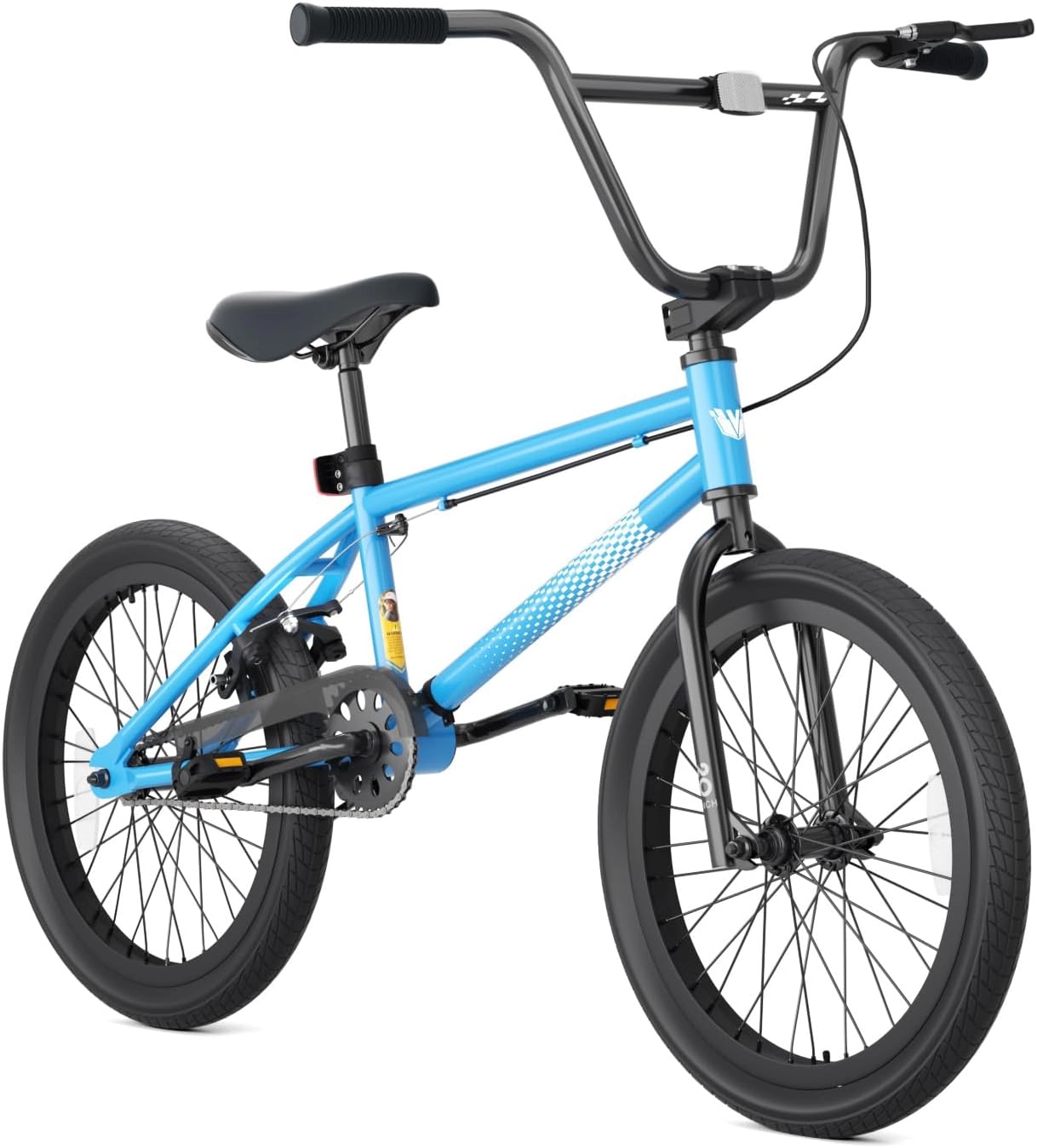 Blue XJD Freestyle BMX Bike, 20-Inch – No Pegs
A 20-inch kids’ BMX bicycle with no pegs, relevant only as a later independent-riding comparison rather than as a baby passenger seat.
 Pink 12/14/16/20" XJD Girls Bike with Training Wheels & Basket
Available in 12-, 14-, 16-, and 20-inch options with training wheels and a basket; relevant to later independent bicycle fitting, not baby child-seat readiness.
When a child moves to their own bicycle
For that later decision, measure the rider rather than relying only on age. XBikes uses these starting points:
| Wheel size | Starting age | Rider height |
|---|---|---|
| 12 Inch | 3–4 | 34–40 in / 86–102 cm |
| 14 Inch | 3–6 | 37–45 in / 94–114 cm |
| 16 Inch | 4–7 | 40–48 in / 102–122 cm |
| 18 Inch | 5–9 | 43–52 in / 109–132 cm |
| 20 Inch | 7–12 | 48–60 in / 122–152 cm |
| 24 Inch | 10–14 | 54–64 in / 137–163 cm |
| 26 Inch | Youth and adults | Over 60 in / 153 cm |
These are starting points, not a fit decision. Have the child try the bicycle and check measured height, inseam, stand-over clearance, reach, brake control, and present confidence. Do not buy an oversized bicycle for future growth.
Your next decision
If your baby cannot yet sit unsupported and keep their helmeted head steady, wait. If they can, verify every child-seat limit and bicycle compatibility requirement in the exact manuals, confirm helmet and harness fit, and practice stationary before deciding to ride.
Bikes for your next adventure
-

Kids Bike Helmet by XJD for Boys & Girls – Black, Blue, Green, Pink, Purple
The XJD Kids Bike Helmet covers a wide 2-to-8-year age range thanks to two head-…$59.99
-

Kids Bike Helmet by XJD for Girls – Pink
The XJD Kids Bike Helmet in Pink is a lightweight multi-sport helmet for girls r…$59.99
$99 -

XJD Kids Bike for Girls – Pink, 12/14/16/20 Inch with Training Wheels
The XJD Kids Bike for Girls in Pink is a training-wheel bike built to carry your…$139
$159