

How old should your child be to ride a bike
Most children can start riding a pedal bike when they are physically ready and can control a correctly fitted bicycle; age alone should not decide.
Start with readiness, not a birthday
The practical question is whether your child can sit securely, steer, stop and follow simple directions. Confidence matters too: a hesitant child may need more time even when a size chart suggests a suitable wheel size.
XBikes lists a 12-inch bike as a starting point for ages 3–4 and heights of 34–40 inches (86–102 cm). That is a screening range, not a promise that every three-year-old is ready. Measure your child and have them try the bicycle before deciding.
Measure before comparing wheel sizes
Measure your child’s standing height without shoes. Also measure inseam from the floor to the crotch while the child stands naturally. Use height to identify possible wheel sizes, then use inseam, reach and control to check the actual bicycle.
| Wheel size | Age starting point | Rider height |
|---|---|---|
| 12 Inch | 3–4 | 34–40 in / 86–102 cm |
| 14 Inch | 3–6 | 37–45 in / 94–114 cm |
| 16 Inch | 4–7 | 40–48 in / 102–122 cm |
| 18 Inch | 5–9 | 43–52 in / 109–132 cm |
| 20 Inch | 7–12 | 48–60 in / 122–152 cm |
| 24 Inch | 10–14 | 54–64 in / 137–163 cm |
| 26 Inch | Youth and adults | Over 60 in / 153 cm |
Overlapping ranges are intentional. When two sizes appear possible, do not automatically choose the larger one for growth. The correct choice is the bike your child can mount, balance, steer and stop with control now.
Perform an individual fit check
Have your child try the exact bicycle rather than relying on the wheel label. Check these points:
- Stand-over: the child can straddle the bicycle securely rather than being forced onto tiptoes or against the frame.
- Reach: the child can hold the handlebars and steer without stretching, locking the elbows or losing a stable seated position.
- Brake control: the child can comfortably reach and operate the bicycle’s braking controls, whatever system the exact model uses.
- Starting and stopping: the child can get moving and come to a controlled stop without an adult holding the bike.
- Confidence: the child remains attentive and willing rather than frightened or unable to respond to directions.
An oversized bicycle can make mounting, steering and stopping harder. Do not buy a size that fits only in the future. If the fit or setup remains uncertain, follow the exact product manual or ask a qualified bicycle mechanic.
Where the supplied training-wheel bikes are relevant
The three catalog options are relevant when your measured comparison points toward 12, 14 or 16 inches and you specifically want a training-wheel bicycle. XJD Pink Girls' Bike – Kids 12/14/16 Inch Training Wheel Bicycle, XJD Girls Bike for Kids Ages 3-8, 12/14/16 Inch with Training Wheels – Purple, and Girls 12/14/16 Inch Kids Bike by XJD with Training Wheels – Peach each offer those three wheel-size labels. This makes them useful side-by-side options for the same size range; color and exact title distinguish them in the supplied facts.
 XJD Pink Girls' Bike – Kids 12/14/16 Inch Training Wheel Bicycle
Relevant when an individual fit check points to a 12, 14 or 16 Inch training-wheel bike; the supplied catalog distinguishes this XJD option by its pink title.
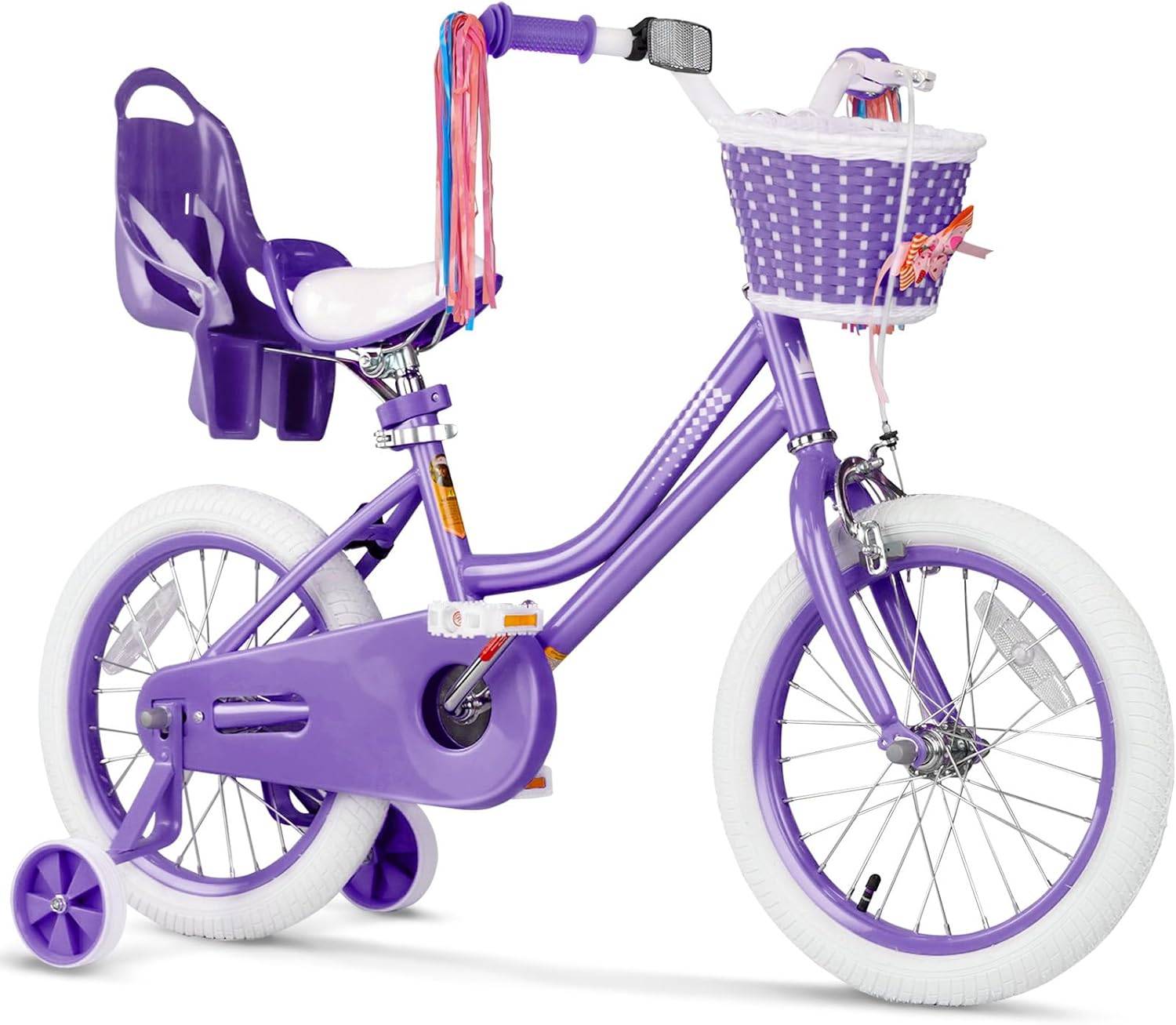 XJD Girls Bike for Kids Ages 3-8, 12/14/16 Inch with Training Wheels – Purple
Offers supplied 12, 14 and 16 Inch training-wheel size labels. Treat “Ages 3-8” in its exact title only as a catalog label, not proof of fit.
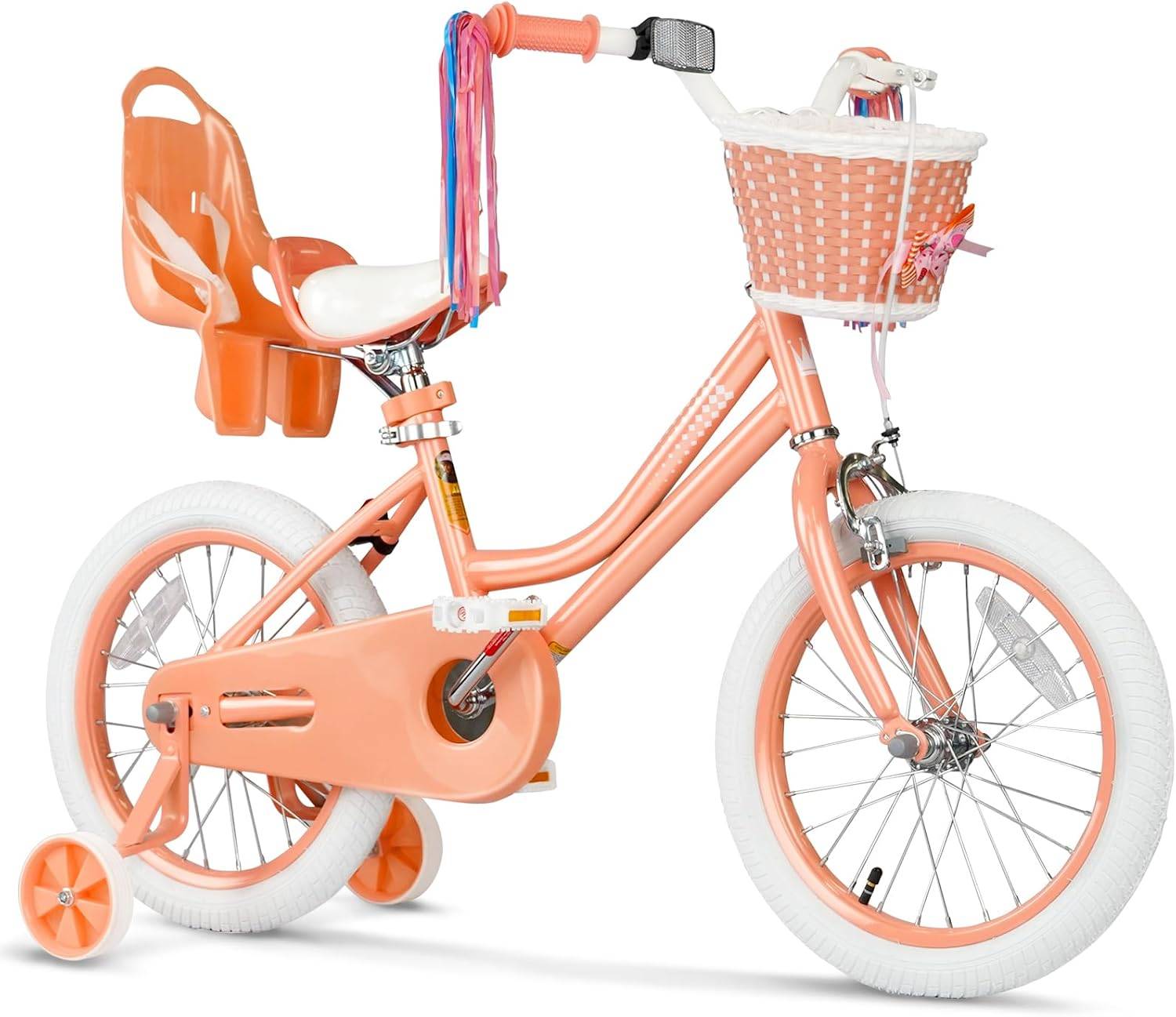 Girls 12/14/16 Inch Kids Bike by XJD with Training Wheels – Peach
A peach-titled XJD training-wheel comparison option offered in the supplied 12, 14 and 16 Inch labels; confirm measured height, inseam, reach and brake control.
The “Ages 3-8” wording in the purple model’s exact title is a catalog label, not fit evidence. Apply the XBikes ranges instead: 12 Inch for ages 3–4 and 34–40 inches, 14 Inch for ages 3–6 and 37–45 inches, or 16 Inch for ages 4–7 and 40–48 inches—then confirm the individual fit.
These products are not relevant substitutes if your measurements and fit check point to 18, 20, 24 or 26 inches. They are also not automatically appropriate merely because your child falls within an age band. Training wheels do not correct poor reach, inadequate stand-over clearance or an inability to operate the brakes.
Prepare for the first ride
Choose a level area away from traffic and obstacles, and supervise closely. A bicycle helmet must fit properly, sit level on the head and have its straps adjusted according to the helmet manufacturer’s instructions. Clothing and footwear should not interfere with pedaling or moving parts.
Before riding, confirm that the bicycle is assembled and adjusted as its exact manual directs. For maintenance, assembly details, load limits, compatibility or torque settings not provided here, use that manual or a qualified bicycle mechanic rather than guessing.
Make the decision
Measure height and inseam today, shortlist the matching wheel range, and let your child try the exact bike. Choose it only if stand-over, reach, braking and confidence all work now. If they do not, wait or compare another size—your child’s birthday is never a reason to force the fit.
Bikes for your next adventure
-

Kids Bike Helmet by XJD for Boys & Girls – Black, Blue, Green, Pink, Purple
The XJD Kids Bike Helmet covers a wide 2-to-8-year age range thanks to two head-…$59.99
-

Kids Bike Helmet by XJD for Girls – Pink
The XJD Kids Bike Helmet in Pink is a lightweight multi-sport helmet for girls r…$59.99
$99 -

XJD Kids Bike for Girls – Pink, 12/14/16/20 Inch with Training Wheels
The XJD Kids Bike for Girls in Pink is a training-wheel bike built to carry your…$139
$159