

How old should a kid learn to ride a bike
There is no single correct age for learning to ride a bike. XBikes sizing starts at age 3, but measured fit, control and confidence matter more than age.
When is a child ready to learn?
Use age only as an initial sizing clue. A child is ready to begin when an appropriately sized bicycle lets them stand over it, reach the controls and operate the brakes, and steer without being stretched or overwhelmed. Have the child try the bicycle before deciding.
Confidence matters too. A hesitant child may need a slower introduction, while an eager child still needs a bike that physically fits. Do not move to an oversized bicycle merely to allow room for growth: extra size can make starting, stopping and controlling the bike harder.
Measure first, then use age as a cross-check
Measure the child's standing height and inseam in the shoes they will normally wear while riding. Compare height with the XBikes starting points below, then confirm the individual fit in person. Inseam helps you assess stand-over clearance, but no universal clearance number is supplied here; check the exact bicycle manual or ask a qualified bicycle mechanic when uncertain.
| Wheel size | Age starting point | Rider height |
|---|---|---|
| 12 Inch | Ages 3–4 | 34–40 in / 86–102 cm |
| 14 Inch | Ages 3–6 | 37–45 in / 94–114 cm |
| 16 Inch | Ages 4–7 | 40–48 in / 102–122 cm |
| 18 Inch | Ages 5–9 | 43–52 in / 109–132 cm |
| 20 Inch | Ages 7–12 | 48–60 in / 122–152 cm |
| 24 Inch | Ages 10–14 | 54–64 in / 137–163 cm |
| 26 Inch | Youth and adults | Over 60 in / 153 cm |
Overlapping ranges are intentional starting points, not proof that either size fits. If a child's height falls into two rows, compare stand-over position, reach, brake operation and current confidence on the actual bicycles. Never choose from age alone.
What to check during the bike trial
A useful trial answers practical questions that a birthday cannot:
- Can the child stand over the bicycle without the frame preventing a stable stance?
- Can they reach the handlebar naturally without locking their arms or leaning excessively?
- Can they reach and operate the brakes with control?
- Can they start, steer, slow and stop while remaining composed?
- Does the bicycle support their present ability rather than a hoped-for future fit?
If any answer is no, compare another wheel size or setup. For assembly, adjustments, torque, load limits, maintenance or compatibility, follow the exact product manual or use a qualified bicycle mechanic.
Where the supplied training-wheel bikes fit
The two supplied catalog options are relevant when a child is learning with training wheels and their measured fit points toward one of the listed wheel sizes. They help you compare available size labels, but the words in a product title are not evidence that the bicycle fits a particular child.
 XJD Kids Bike for Girls – Pink, 12/14/16/20 Inch with Training Wheels
A Training Wheel Bikes option with 12 Inch, 14 Inch, 16 Inch and 20 Inch SKU labels, relevant for comparing several wheel-size starting points after measuring and trial fitting.
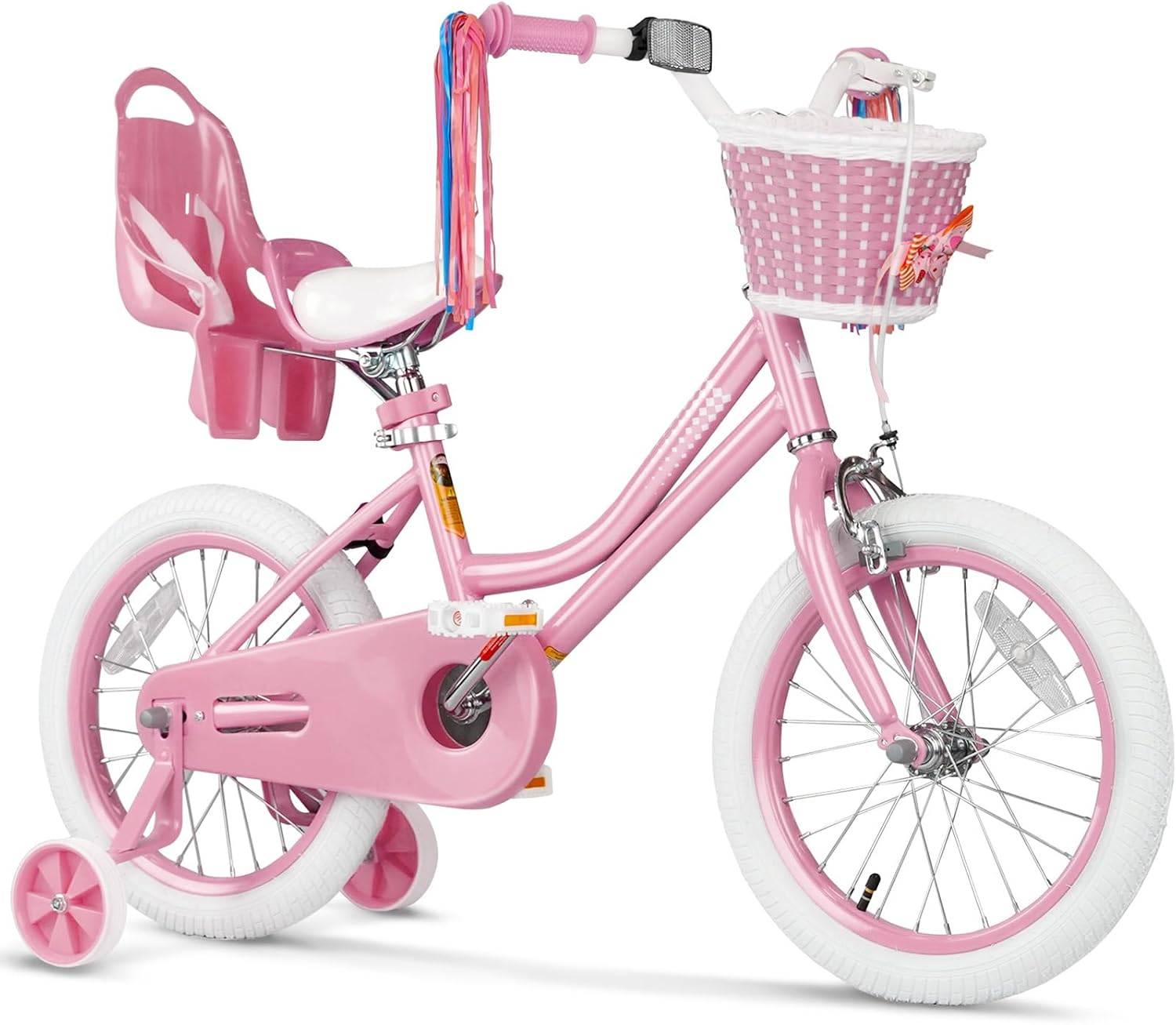 XJD Pink Girls' Bike – Kids 12/14/16 Inch Training Wheel Bicycle
A Training Wheel Bikes option with 12 Inch, 14 Inch and 16 Inch SKU labels, relevant when the rider’s measurements, reach, brake control and confidence support one of those sizes.
XJD Kids Bike for Girls – Pink, 12/14/16/20 Inch with Training Wheels is cataloged under Training Wheel Bikes and has 12 Inch, 14 Inch, 16 Inch and 20 Inch SKU labels. Its wider listed size span makes it a comparison point across several XBikes age-and-height starting ranges.
XJD Pink Girls' Bike – Kids 12/14/16 Inch Training Wheel Bicycle is also cataloged under Training Wheel Bikes, with 12 Inch, 14 Inch and 16 Inch SKU labels. Compare it only when the child's measurements and trial indicate one of those sizes.
Neither supplied product lists an 18 Inch, 24 Inch or 26 Inch option. If the fit check indicates one of those exact sizes, these products are nearest-size comparison points only, not substitutes; a neighboring wheel size is not equivalent.
Training wheels do not determine readiness
Training wheels describe the supplied products, but they do not replace correct sizing or a supervised learning process. First confirm that the child can comfortably control the bicycle. Then follow that model's manual for installation, adjustment and removal because no product-specific procedure is supplied here.
Practice in a suitable area away from traffic and other hazards, with attentive adult supervision. Keep early sessions manageable and stop if fatigue or frustration reduces control. Progress should follow the child's demonstrated balance and confidence rather than a deadline based on age.
Make the decision now
- Record the child's height and inseam.
- Use the table to identify a starting wheel size.
- Have the child try that size and any overlapping candidate.
- Compare stand-over position, reach, brake control and confidence.
- Reject an oversized bike, even if it promises longer use.
Before every ride, provide a bicycle helmet that fits properly, sits level, and has its straps used according to the helmet manufacturer's instructions. The right age to learn is therefore the age at which your child is willing and can control a correctly fitted bicycle—not simply the age printed on a chart or product title.
Bikes for your next adventure
-

Blue XJD Girls Bike with Training Wheels – 12/14/16 Inch
If you're shopping for a first pedal bike for a daughter roughly 3 to 8 years ol…$149
$169 -

XJD Kids Bike for Girls – Pink, 12/14/16/20 Inch with Training Wheels
The XJD Kids Bike for Girls in Pink is a training-wheel bike built to carry your…$139
$159 -
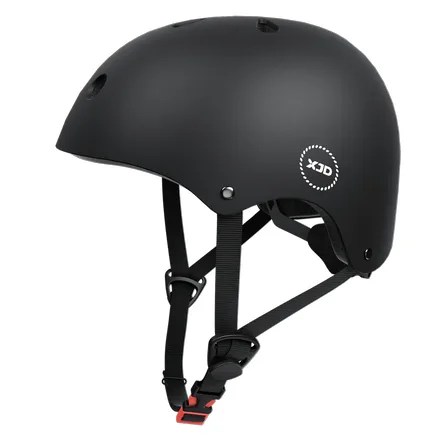
7-in-1 Kids Helmet & Protective Gear Set from XJD – Black or Blue
If you're outfitting one kid (or a couple of siblings) for biking, scootering, o…$59.99