

How old to ride in child bike seat
There is no single age at which every child can ride in a child bike seat. Use the seat manual’s minimum age, maximum load and fit rules, then confirm that the child meets every requirement before riding.
What decides whether a child is ready?
Age is only a starting question. A child must satisfy the instructions for the exact rear- or front-mounted seat, the bicycle, and any mounting hardware. Check local rules too, because passenger requirements can differ by location.
Do not guess when a manual gives a minimum age or developmental requirement. The child must have the stability and control specified by the seat manufacturer throughout the ride, including while wearing a properly fitted bicycle helmet. If the child cannot consistently maintain the position required by the manual, wait.
Measure and compare these limits
Before installation, find the model information for the child seat and compare the child and bicycle with the stated limits. Record current measurements rather than relying on clothing size or an estimate from the child’s age.
- Child’s weight: Compare it with every minimum or maximum stated for the seat and mounting system.
- Child’s seated fit: Check that the harness, foot supports and any required head clearance adjust as the manual describes.
- Bicycle compatibility: Confirm the bicycle, frame or rack accepts that exact seat and mounting method.
- Combined load: Include the child, seat and anything else the relevant manual tells you to count.
- Helmet fit: The helmet should sit level and its straps should be adjusted according to the helmet manufacturer’s instructions.
If a limit, compatible mounting point or required measurement is missing, contact the manufacturer or ask a qualified bicycle mechanic. Do not infer compatibility from appearance, wheel size or the fact that a clamp seems to fit. Follow the exact manuals for assembly, fasteners, torque, maintenance and load limits.
Do a stationary check before the first ride
Install the seat exactly as directed, then test the setup with the bicycle stationary and supported by an adult. Confirm that the harness and foot restraints fit as specified, nothing can reach the wheel or other moving parts, and the child’s helmet does not force the head into an unsuitable position.
The adult rider must also be able to mount, dismount, steer and operate the brakes with the changed balance. If the bicycle feels difficult to control, the seat shifts, or any fit requirement cannot be met, do not ride. Recheck fit as the child grows and after any adjustment or removal of the seat.
When these XBikes products are relevant
The supplied catalog items are complete children’s bicycles, not identified child passenger seats. They therefore do not answer passenger-seat age, load or mounting compatibility. They become useful only when comparing whether a child may be ready for an independently ridden bicycle. These particular options show 12-, 14-, 16-, 24- and 26-inch wheel-size starting points.
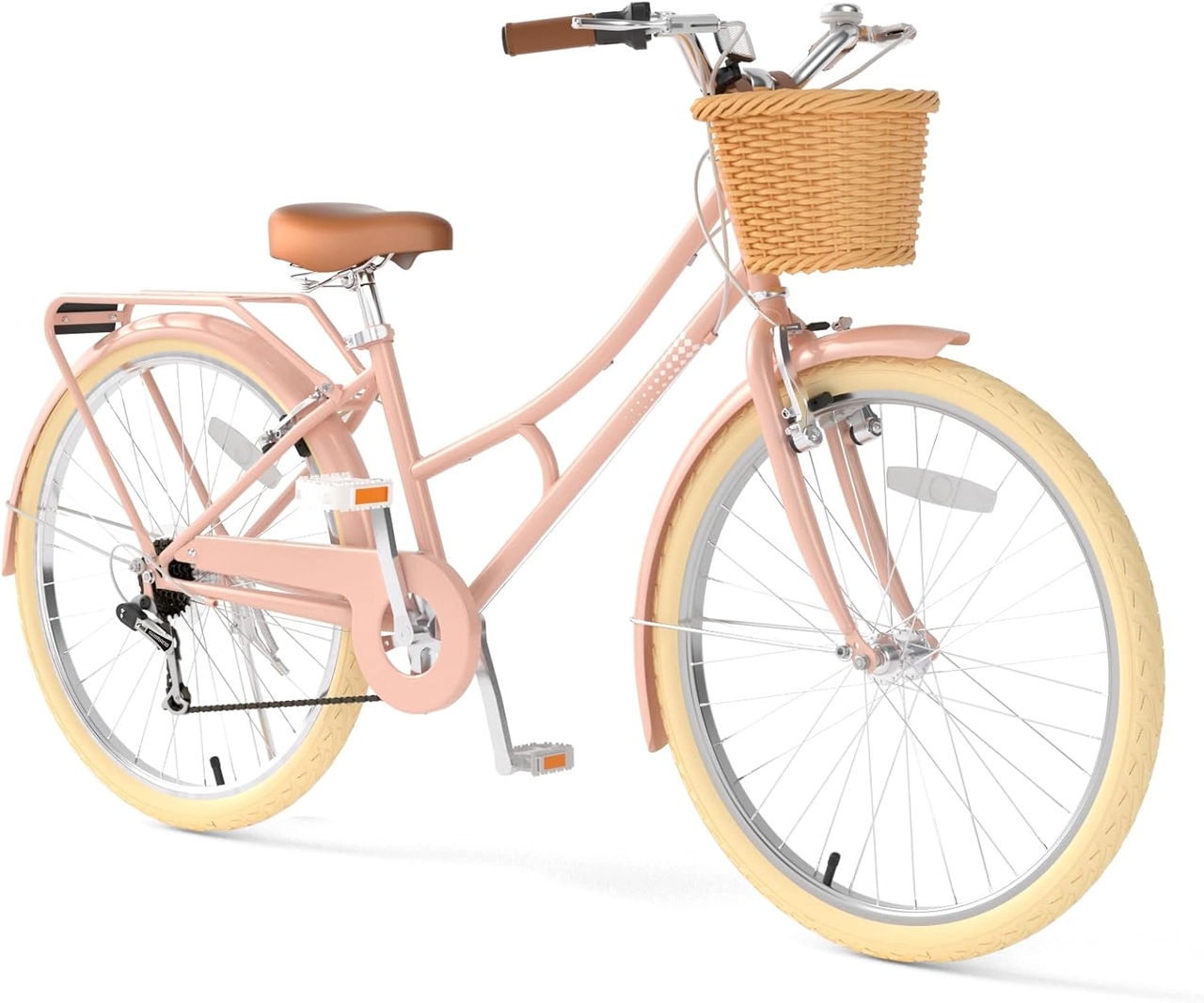 Pink XJD Beach Cruiser Bike, 24"/26", U-Brake
A 24- or 26-inch independently ridden bicycle comparison for taller youth or adults; it is not identified as a child passenger seat and provides no passenger-seat compatibility evidence.
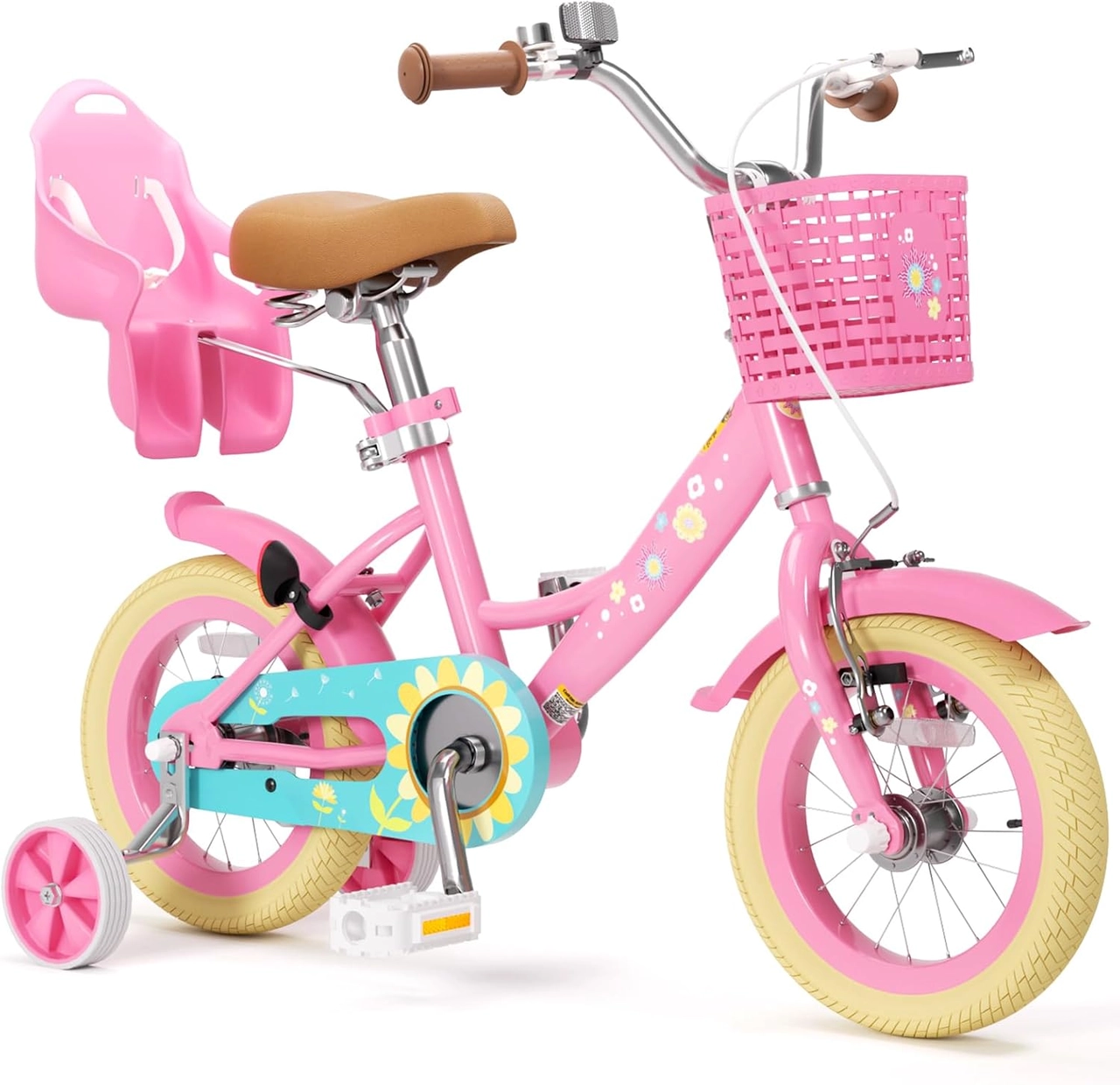 Flower Pink XJD Girls Bike with Doll Seat & Basket
Available in 12-, 14- and 16-inch sizes for comparing an independently ridden child’s measured fit. Its catalog doll seat does not establish child passenger-seat suitability.
 Purple XJD Girls' Bike with Doll Seat & Basket
Its 12-, 14- and 16-inch options illustrate children’s bicycle size starting points. It is not supplied as a child passenger seat or evidence of mounting compatibility.
The Flower Pink XJD Girls Bike with Doll Seat & Basket and Purple XJD Girls' Bike with Doll Seat & Basket are listed in 12 Inch, 14 Inch and 16 Inch sizes. XBikes starting points are: 12 Inch for ages 3–4 and heights 34–40 in (86–102 cm); 14 Inch for ages 3–6 and 37–45 in (94–114 cm); and 16 Inch for ages 4–7 and 40–48 in (102–122 cm).
The Pink XJD Beach Cruiser Bike, 24"/26", U-Brake is listed in 24 Inch and 26 Inch sizes. The 24 Inch starting point is ages 10–14 and heights 54–64 in (137–163 cm). The 26 Inch starting point is youth and adults over 60 in (153 cm).
These ranges are bicycle-fit starting points, not child-seat rules and not proof that a particular bicycle fits. They must never be used to approve a passenger-seat installation.
If the child is moving to an independent bike
Measure standing height and inseam, then have the child try the exact bicycle. Check stand-over clearance, reach, brake control and present confidence. Do not select an oversized bicycle merely to allow room for growth. Age and wheel size cannot replace an individual fit check.
The next decision is simple: for a passenger seat, locate its exact manual and verify every child, load and bicycle requirement before riding. If the manual is unavailable or any requirement fails, do not use the seat; consider an individually fitted child bicycle only when the child is ready to ride independently.
Bikes for your next adventure
-

Kids Bike Helmet by XJD for Boys & Girls – Black, Blue, Green, Pink, Purple
The XJD Kids Bike Helmet covers a wide 2-to-8-year age range thanks to two head-…$59.99
-

Kids Bike Helmet by XJD for Girls – Pink
The XJD Kids Bike Helmet in Pink is a lightweight multi-sport helmet for girls r…$59.99
$99 -

XJD Kids Bike for Girls – Pink, 12/14/16/20 Inch with Training Wheels
The XJD Kids Bike for Girls in Pink is a training-wheel bike built to carry your…$139
$159