

How should a 20 inch bike fit
A 20-inch bike should fit only if the child can stand over it comfortably, reach the controls without stretching, and start, stop and steer with confidence.
Start with height, then check the actual bike
XBikes uses 20-inch wheels as a starting point for riders ages 7–12 and 48–60 inches (122–152 cm) tall. Height is more useful than age, but neither proves that a particular frame fits. Frame shape, saddle position and handlebar placement can make two bicycles with the same wheel size feel different.
Do not choose a larger bicycle simply to leave room for growth. The American Academy of Pediatrics advises having the child try the bicycle and checking stand-over clearance, control and brake reach. A bike that is difficult to manage now is not made suitable by the expectation that the rider will grow into it.
Measure the rider
Measure without shoes and record the results rather than relying on clothing size or an earlier measurement.
- Height: Have the child stand straight against a wall and measure from the floor to the top of the head. Compare the result with the 48–60 inch (122–152 cm) starting range.
- Inseam: Measure from the floor to the crotch with the feet slightly apart. Use this measurement to assess clearance over the exact frame, not against an assumed clearance number.
- Reach and hand control: These must be checked while the child is seated on the bicycle. Body proportions and hand size cannot be determined from height alone.
If the rider falls outside the starting height range, compare adjacent sizes rather than forcing a 20-inch choice. XBikes lists 18-inch bikes for 43–52 inches (109–132 cm), 24-inch bikes for 54–64 inches (137–163 cm), and 26-inch bikes for youth and adults over 60 inches (153 cm).
Check a 20-inch bike in person
Have the child wear the shoes normally used for riding. With the bicycle upright, ask the child to straddle the frame with both feet on the ground. There should be comfortable clearance rather than contact or a need to lean the bicycle sharply.
Next, seat the rider and check that the handlebar can be held without locking the elbows, reaching excessively or crowding the knees. The child should be able to look ahead, steer through a controlled turn and keep a stable body position.
Check every fitted brake control. The child must be able to reach and operate it without losing a secure grip or shifting the hand into an awkward position. Then assess starting and stopping in a clear, traffic-free area under close adult supervision. Difficulty mounting, repeated wobbling, strained steering or inability to stop predictably means the fit or setup needs attention.
Compare the relevant catalog options
These catalog choices are useful because each includes a 20-inch option or configuration, allowing parents to compare the requested wheel size across BMX, training-wheel and beach-cruiser categories. Category and wheel label narrow the search; they do not replace the individual fit checks above.
 Blue XJD Freestyle BMX Bike, 20-Inch – No Pegs
A 20-inch option in the Kids' BMX Bikes category. Its supplied SKU label is Default, so confirm the child’s stand-over clearance, reach, brake control and confidence on the exact bicycle.
 Pink 12/14/16/20" XJD Girls Bike with Training Wheels & Basket
This Training Wheel Bikes listing offers 12-, 14-, 16- and 20-inch labels. Choose the 20 Inch label for this comparison, then verify fit individually rather than relying on wheel size or training wheels.
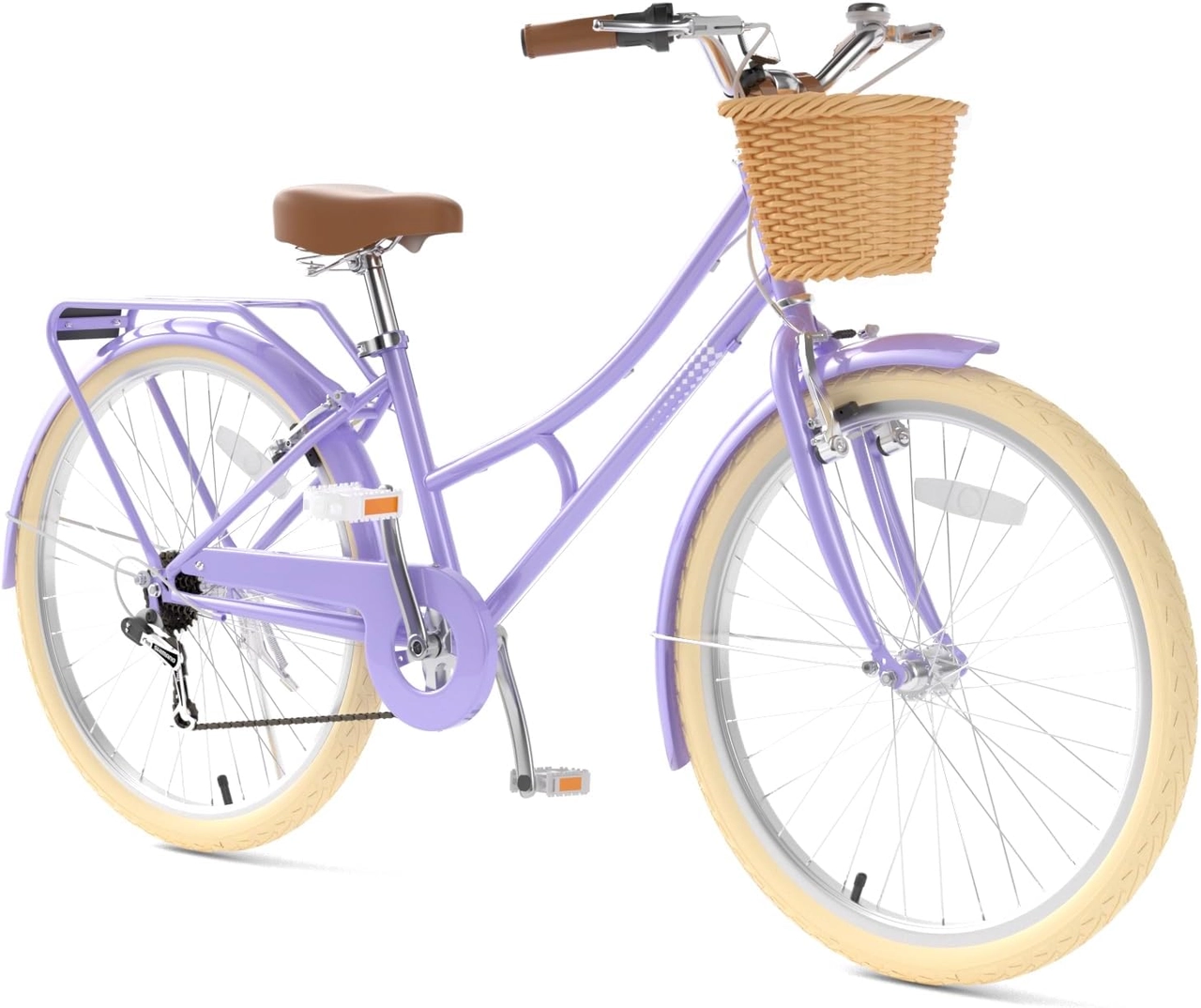 26-Inch XJD Beach Cruiser Bike for Girls – Purple, V-Brake
This Beach Cruiser Bikes listing includes Mint Green / 20 Inch and Pink / 20 Inch labels, as well as larger options. Confirm the selected label because the exact product title names a 26-inch purple configuration.
- Blue XJD Freestyle BMX Bike, 20-Inch – No Pegs is listed in Kids' BMX Bikes and has a Default SKU label. Its title identifies the requested 20-inch wheel size, but no alternate size is supplied for direct comparison.
- Pink 12/14/16/20" XJD Girls Bike with Training Wheels & Basket is listed in Training Wheel Bikes. Its supplied labels include 12 Inch, 14 Inch, 16 Inch and 20 Inch, so select the 20 Inch label when evaluating it for this question.
- 26-Inch XJD Beach Cruiser Bike for Girls – Purple, V-Brake is listed in Beach Cruiser Bikes. Despite the exact product title, its supplied SKU labels include Mint Green / 20 Inch and Pink / 20 Inch, alongside 24- and 26-inch choices. Confirm the precise color and wheel-size label rather than inferring size from the title alone.
These products belong to different catalog categories, so none should be treated as interchangeable solely because a 20-inch configuration is present.
Know when 20 inches is the wrong choice
Move away from a 20-inch bike if the child cannot stand over the frame comfortably, cannot reach the handlebar or brakes naturally, or lacks enough control to start, steer and stop. Also compare another size when the child is near or beyond the height boundaries, especially where the XBikes ranges overlap.
Training wheels do not correct a frame that is too large, an excessive reach or inaccessible brake controls. Likewise, confidence does not make an undersized or cramped bicycle fit correctly. If normal adjustments cannot produce a comfortable position, follow the exact product manual or ask a qualified bicycle mechanic to assess the setup. Use the manual for assembly, maintenance, compatibility, load limits and torque requirements.
Make the final fit decision
Repeat the stand-over, seated reach, brake-control and riding checks after any permitted adjustment. A properly fitting helmet is also essential: the U.S. Consumer Product Safety Commission says it should sit level, fit properly and have its straps used according to the manufacturer’s instructions.
Choose the 20-inch configuration only when the measured rider is a plausible match and the exact bicycle passes every hands-on check. If the child stretches, feels crowded or cannot control it confidently, compare the adjacent wheel sizes and retest instead of buying for age or future growth.
Bikes for your next adventure
-

Kids Bike Helmet by XJD for Boys & Girls – Black, Blue, Green, Pink, Purple
The XJD Kids Bike Helmet covers a wide 2-to-8-year age range thanks to two head-…$59.99
-

Kids Bike Helmet by XJD for Girls – Pink
The XJD Kids Bike Helmet in Pink is a lightweight multi-sport helmet for girls r…$59.99
$99 -

XJD Kids Bike for Girls – Pink, 12/14/16/20 Inch with Training Wheels
The XJD Kids Bike for Girls in Pink is a training-wheel bike built to carry your…$139
$159