

How tall for 26 inch bike
A 26-inch bike generally suits a rider taller than 60 inches (153 cm), but height alone is not enough: measure inseam and confirm safe control.
Who fits a 26-inch bike?
XBikes uses 26-inch wheels as a starting point for youth and adults over 60 inches (153 cm). This is not a guaranteed fit because wheel size does not reveal the frame’s stand-over height, saddle range or reach.
Use the rider’s measured height first, not an age estimate. Then have the rider try the exact bicycle. A 26-inch bike is appropriate only when the rider can stand over it comfortably, reach the controls without stretching and handle the bicycle with confidence.
Do not choose an oversized bicycle simply to leave room for growth. If a rider is close to the 60-inch threshold but cannot meet the hands-on checks below, compare a smaller wheel option instead.
Measure height and inseam
- Measure total height: Have the rider stand without shoes against a wall, looking straight ahead. Mark the top of the head and measure from the floor.
- Measure inseam: With feet slightly apart, place a firm, level book between the legs to represent the saddle contact point. Measure vertically from the floor to the top edge of the book.
- Compare the result: A measured height over 60 inches (153 cm) places the rider in the XBikes 26-inch starting range. Keep the inseam measurement available when checking the exact bicycle’s stand-over clearance and saddle adjustment.
Do not convert inseam into a frame-size number without the bicycle manufacturer’s own geometry guidance. Frames with the same wheel size can fit differently.
Perform the individual fit check
Ask the rider to wear the shoes normally used for cycling and try the fully assembled bicycle in a controlled area. Check each point before deciding:
- Stand-over: The rider should be able to straddle the bicycle without the frame pressing uncomfortably into the body.
- Starting and stopping: The rider must be able to mount, start, stop and dismount without losing control.
- Reach: Hands should reach the handlebar naturally, without locking the elbows or leaning excessively forward.
- Brake control: The rider must reach and operate the brake controls reliably while maintaining a secure grip.
- Confidence: Steering, low-speed balance and turns should feel manageable rather than intimidating.
If any check fails, do not assume practice will compensate for a poor fit. Recheck adjustments according to the exact product manual, compare a smaller bicycle, or ask a qualified bicycle mechanic for help.
Compare nearby wheel-size ranges
| Wheel size | XBikes starting point | How to use it |
|---|---|---|
| 20 Inch | Ages 7–12; 48–60 in / 122–152 cm | Compare when the rider is below the 26-inch height threshold or needs easier control. |
| 24 Inch | Ages 10–14; 54–64 in / 137–163 cm | Compare directly when the rider falls within this overlapping height range. |
| 26 Inch | Youth and adults over 60 in / 153 cm | Try when the measured height qualifies, then verify inseam, reach, brakes and confidence. |
The overlap matters: a rider between 60 and 64 inches (153–163 cm) may fall within both the 24-inch and 26-inch starting points. That does not make the sizes equivalent. The better choice is the exact bicycle on which the rider passes every fit and control check.
A relevant 20-, 24- and 26-inch comparison
The XJD Pink Beach Cruiser for Girls – Rear Rack & V-Brake is relevant because its supplied options include 20 Inch, 24 Inch and the requested 26 Inch. Those labels let a family compare nearby wheel sizes within one catalog listing, although the exact bicycle still requires an individual fit check.
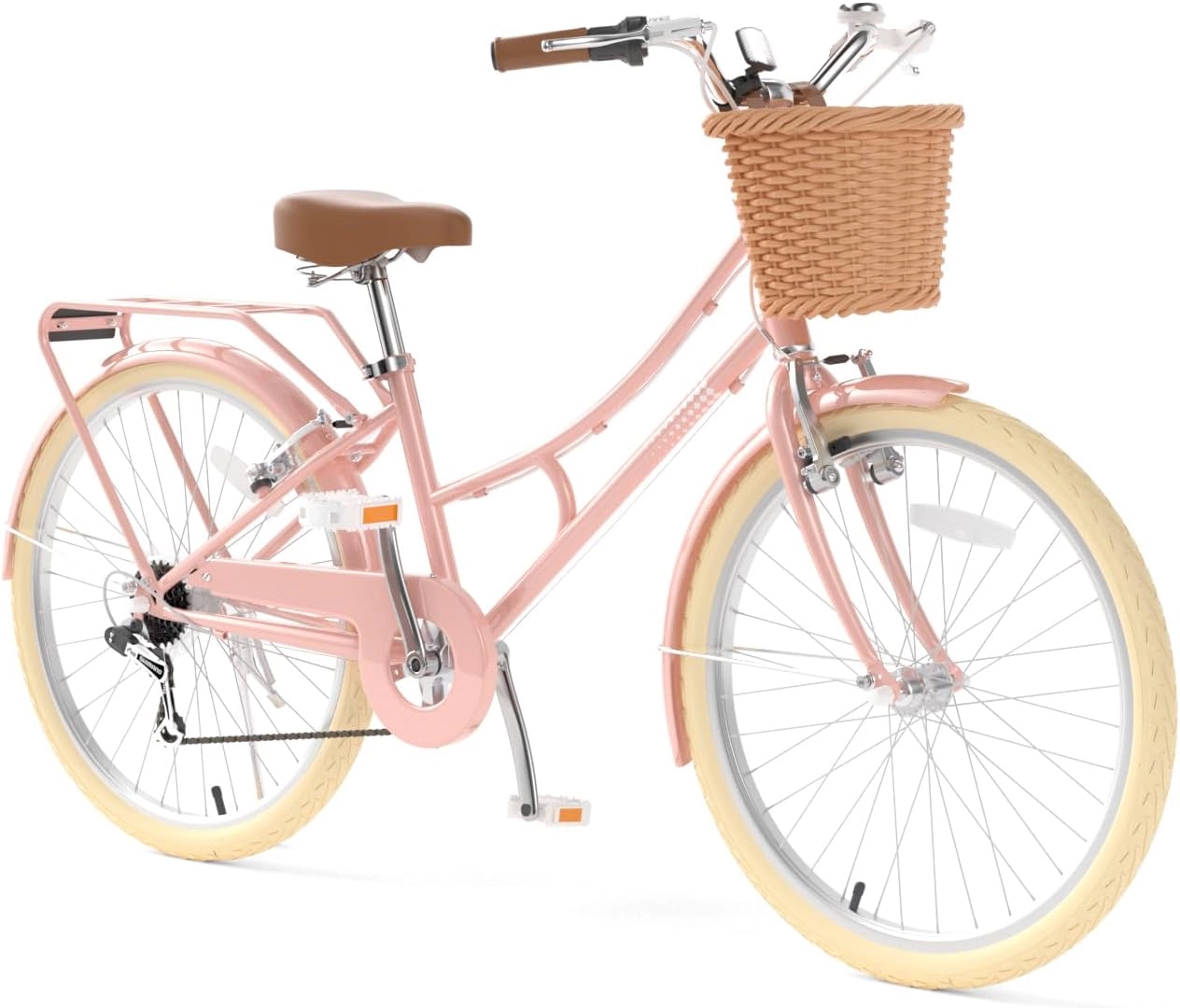
For a rider over 60 inches (153 cm), the 26 Inch option is the title-relevant starting point. The 24 Inch option is useful for comparison because its XBikes range extends to 64 inches (163 cm), while the 20 Inch option corresponds to 48–60 inches (122–152 cm). Do not select from a label alone; verify that the chosen configuration and its adjustments match the rider using the product manual or a qualified bicycle mechanic.
Safety before the first ride
Once the size is chosen, follow the exact product manual for assembly, adjustment, maintenance, compatibility, load limits and torque. If any instruction is unclear or the bicycle cannot be set up correctly, use a qualified bicycle mechanic.
The rider also needs a properly fitting bicycle helmet. It should sit level and its straps should be adjusted according to the helmet manufacturer’s instructions. Recheck bicycle control in a low-risk area before riding around traffic or other hazards.
Make the 26-inch decision
Start with 26 inches only if the rider measures over 60 inches (153 cm). Then approve that exact bicycle only after the rider comfortably clears the frame, reaches and operates the brakes, steers confidently, and starts and stops under control. If not, compare the 24-inch option rather than buying a 26-inch bike for future growth.
Bikes for your next adventure
-
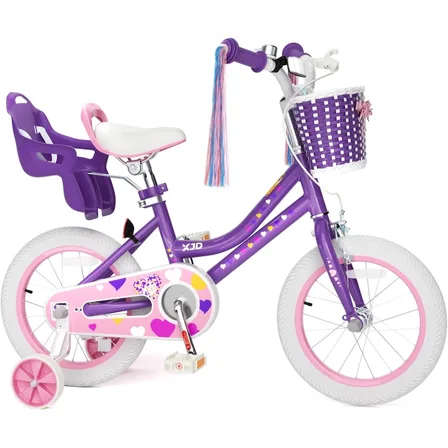
Purple XJD Girls' Bike with Doll Seat & Basket
For girls 71–122 cm tall (about ages 3–7), this XJD girls' bike in Purple pairs …$75.99
$99.99 -

Blue XJD Girls Bike with Training Wheels – 12/14/16 Inch
If you're shopping for a first pedal bike for a daughter roughly 3 to 8 years ol…$149
$169 -

XJD Boys 12/14/16" Training Wheel Bike – Blue
The XJD Boys Bike in Blue is a training wheel bike for riders 71–122 cm tall—rou…$169
$199