

How tall for a 26 inch bike
A 26-inch bike is a starting point for riders over 60 inches (153 cm) tall. Measure the rider and confirm stand-over, reach and brake control before choosing it.
Start with height, not age
Under the XBikes wheel-size starting points, a 26-inch bicycle is intended for youth and adults taller than 60 inches (153 cm). That threshold answers the height question, but it does not guarantee that every 26-inch frame will fit every rider above it. Wheel size and frame fit are related, but they are not the same measurement.
Age alone should not decide the purchase. Growth rates and body proportions vary, so two riders of the same age and height may need different frames or adjustments. Do not choose an oversized bicycle simply to leave room for growth; the rider needs control now.
Measure the rider correctly
- Height: Have the rider stand barefoot against a wall, looking straight ahead, with heels on the floor. Mark the top of the head and measure from the floor.
- Inseam: While the rider stands with feet slightly apart, measure from the floor to the crotch. Use this when checking clearance over the bicycle.
- Reach: On the actual bike, check whether the rider can hold the handlebars without stretching, locking the elbows or leaning awkwardly.
Record height and inseam in either inches or centimetres. For the wheel-size decision, compare measured height with the 26-inch starting point; for the final decision, compare the rider directly with the particular bicycle.
Compare 26 inches with the nearby sizes
| Wheel size | XBikes starting point | What it means here |
|---|---|---|
| 20 Inch | Ages 7–12; 48–60 in / 122–152 cm | A smaller-size reference for a rider who has not passed the 26-inch height threshold. |
| 24 Inch | Ages 10–14; 54–64 in / 137–163 cm | Its height range overlaps the transition toward 26 inches, so a hands-on fit comparison is important. |
| 26 Inch | Youth and adults over 60 in / 153 cm | The requested starting point, subject to an individual fit check. |
The overlap does not make 24-inch and 26-inch bicycles equivalent. A rider just over 60 inches may control one frame better than another, while a rider below the threshold should not be moved up merely because a larger bicycle appears to offer longer use.
Perform the fit check on the bicycle
Have the rider try the exact bicycle. With the rider straddling it, confirm there is comfortable stand-over clearance rather than contact with the frame. Then place the rider in the normal riding position and assess whether mounting, starting, steering and stopping feel controlled.
- The rider should reach the handlebars without excessive stretching.
- Hands should operate the brakes confidently from the normal grip position.
- The rider should be able to steer without the bicycle feeling unwieldy.
- Feet and body position should allow a controlled start and stop.
- Current confidence matters: hesitation or loss of control is a reason to compare a smaller option.
If fit depends on assembly, adjustment or a detail not stated in the catalog, follow the exact product manual or ask a qualified bicycle mechanic. Do not improvise torque settings, compatibility rules or adjustment procedures.
How the supplied bikes help with the decision
The three catalog options are relevant because each has a 26 Inch SKU label, and each also offers at least one smaller wheel-size label for comparison. They let a shopper compare the requested size with 24 Inch—and, for two models, 20 Inch—without treating those sizes as interchangeable.
 Pink XJD Beach Cruiser Bike, 24"/26", U-Brake
Available in 24 Inch and 26 Inch labels, this model provides a direct nearby-size comparison for a rider approaching the 26-inch height starting point.
 XJD Kids Beach Cruiser Bicycle, Rear Rack & V-Brakes, Mint Green
Its 20 Inch, 24 Inch and 26 Inch labels make this model relevant for comparing wheel-size options after measuring the rider and checking individual fit.
 XJD Pink Beach Cruiser for Girls – Rear Rack & V-Brake
Offered with 20 Inch, 24 Inch and 26 Inch labels, this bicycle helps compare smaller options with the requested 26-inch size without treating them as equivalent.
Pink XJD Beach Cruiser Bike, 24"/26", U-Brake is listed with 24 Inch and 26 Inch options. It is useful when the rider is near the transition and needs those two wheel labels compared through an actual fit check.
XJD Kids Beach Cruiser Bicycle, Rear Rack & V-Brakes, Mint Green is offered in 20 Inch, 24 Inch and 26 Inch labels. That range provides three catalog comparison points for riders whose measured height or confidence makes the appropriate size uncertain.
XJD Pink Beach Cruiser for Girls – Rear Rack & V-Brake also has 20 Inch, 24 Inch and 26 Inch labels. Use the exact 26 Inch version only if the rider clears the height starting point and can control that particular bicycle.
Make the final 26-inch decision
Choose a 26-inch bike only when the rider is over 60 inches (153 cm) and the hands-on check confirms comfortable stand-over, natural reach, accessible brake operation and confident control. If any of those checks fails, compare the appropriate smaller size instead of expecting the rider to grow into the bike.
Before riding, add a properly fitted bicycle helmet. It should sit level and its straps should be used according to the helmet manufacturer’s instructions. The immediate next step is simple: measure height and inseam, then have the rider try the exact 26-inch model before deciding.
Bikes for your next adventure
-
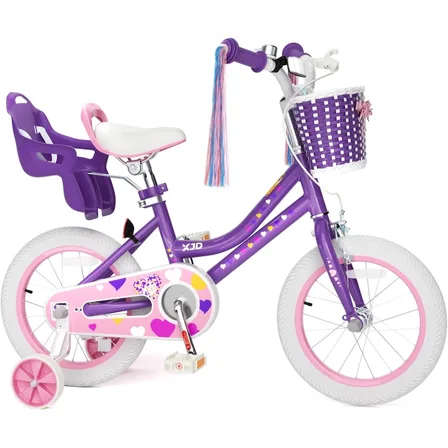
Purple XJD Girls' Bike with Doll Seat & Basket
For girls 71–122 cm tall (about ages 3–7), this XJD girls' bike in Purple pairs …$75.99
$99.99 -

Blue XJD Girls Bike with Training Wheels – 12/14/16 Inch
If you're shopping for a first pedal bike for a daughter roughly 3 to 8 years ol…$149
$169 -
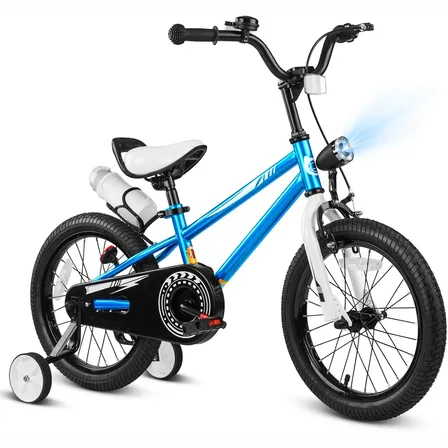
XJD Boys 12/14/16" Training Wheel Bike – Blue
The XJD Boys Bike in Blue is a training wheel bike for riders 71–122 cm tall—rou…$169
$199