

How tall should you be for a 21 inch bike
There is no single verified height for a 21 inch bike. First confirm what “21 inch” measures, then check the child’s height, inseam, reach and control on the actual bicycle.
First identify what 21 inches refers to
A “21 inch” label might describe a wheel size, a frame measurement or another manufacturer-specific designation. Those measurements are not interchangeable. Ask the seller or check the exact bicycle manual and size chart before comparing the label with the rider.
The XBikes starting-point table does not include a 21-inch size, so it cannot supply a defensible height range for one. Do not average the ranges for nearby wheel sizes or assume that a 21-inch label fits halfway between them. Bicycle geometry, saddle adjustment and the meaning of the label can differ.
Measure the rider before deciding
Take measurements while the child is wearing the shoes normally used for riding.
- Standing height: Have the child stand straight against a wall, with feet flat, and measure from the floor to the top of the head.
- Inseam: Have the child stand with feet slightly apart. Place a firm, thin book between the legs, raise it gently to simulate the saddle, and measure vertically from the floor to the top edge.
- Reach: On the bicycle, check whether the child can hold the handlebars without locking the elbows, stretching the torso or losing a comfortable steering position.
- Brake control: If the bicycle has hand-operated brakes, confirm that the child can reach and operate them while keeping a secure grip.
Record height and inseam in inches or centimetres. Compare them with the manufacturer’s chart for that exact bicycle, but treat the chart only as a screening tool. The physical fit check decides whether the bicycle is manageable.
Use known wheel sizes as reference points
If “21 inch” is being presented as a wheel size, these XBikes ranges show the nearest listed reference sizes. They do not establish a 21-inch range.
| Wheel size | Starting age | Starting rider height |
|---|---|---|
| 20 Inch | 7–12 | 48–60 in / 122–152 cm |
| 24 Inch | 10–14 | 54–64 in / 137–163 cm |
Use measured height before age. Where these ranges overlap, the child’s inseam, reach, braking ability and current confidence are more useful than the birthday alone. If “21 inch” instead identifies the frame, neither row converts that frame measurement into a child-height recommendation; consult the exact manufacturer chart and arrange a trial fit.
What a successful fit check looks like
Have the child try the complete bicycle in a controlled area with adult supervision. Following guidance from the American Academy of Pediatrics through HealthyChildren, do not buy an oversized bicycle merely to leave room for growth.
- The child should be able to straddle the bicycle with appropriate clearance rather than being forced onto tiptoes.
- Starting, stopping and getting off should feel controlled.
- Turning the handlebars should not pull the child off balance.
- Feet should reach the pedals without obvious overextension or cramped movement.
- Any brake controls should be reachable and usable without releasing the handlebar grip.
If the child looks stretched, cannot stop confidently, struggles to steer or cannot mount and dismount under control, the bicycle is too demanding in its current setup. Do not treat rapid growth as a reason to accept those problems. For assembly, adjustment limits, compatibility or torque, follow the exact product manual or use a qualified bicycle mechanic.
How the supplied catalog option relates
The Blue XJD Girls Bike with Training Wheels – 12/14/16 Inch is offered in 12 Inch, 14 Inch and 16 Inch labels. These are smaller comparison points that can help a parent recognize how wheel-size labels change across children’s bicycles. None is a 21-inch option, so they are not substitutes for the size named in the title.

For context, the XBikes starting ranges are 34–40 in / 86–102 cm for 12 Inch, 37–45 in / 94–114 cm for 14 Inch, and 40–48 in / 102–122 cm for 16 Inch. Those ranges apply to their stated wheel sizes only. Choose among these catalog options only if the child’s measurements and individual trial fit point to one of those smaller sizes.
Make the 21-inch decision
Before buying, obtain written confirmation of what the 21-inch measurement means and the maker’s fit range for that exact model. Then compare the child’s measured height and inseam, conduct the stand-over, reach, steering and brake checks, and reject the bicycle if control is uncertain. Finish by fitting a bicycle helmet that sits level and uses its straps according to the helmet manufacturer’s instructions, as advised by the U.S. Consumer Product Safety Commission.
Bikes for your next adventure
-
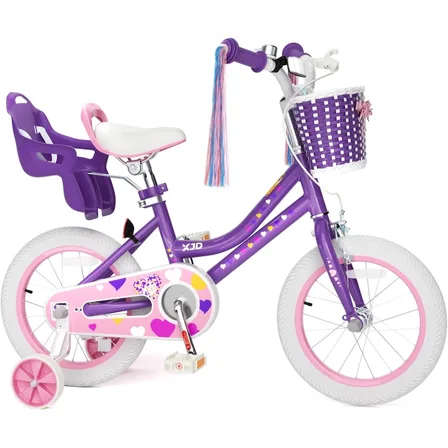
Purple XJD Girls' Bike with Doll Seat & Basket
For girls 71–122 cm tall (about ages 3–7), this XJD girls' bike in Purple pairs …$75.99
$99.99 -

Blue XJD Girls Bike with Training Wheels – 12/14/16 Inch
If you're shopping for a first pedal bike for a daughter roughly 3 to 8 years ol…$149
$169 -

XJD Boys 12/14/16" Training Wheel Bike – Blue
The XJD Boys Bike in Blue is a training wheel bike for riders 71–122 cm tall—rou…$169
$199