

How tall to ride 20 inch bike
A 20-inch bike generally suits a child who is 48–60 inches (122–152 cm) tall, often around ages 7–12, but measured fit and control decide.
Start with height, then measure inseam
Measure the child without shoes, standing straight against a wall. Record total height from the floor to the top of the head. For inseam, have the child stand with feet slightly apart and measure from the floor to the crotch. Keep both measurements available when checking the bicycle or its exact size chart.
Height places the rider within the XBikes starting range; inseam helps determine whether the frame offers suitable clearance. Because frame shapes vary, wheel diameter alone cannot confirm that a particular 20-inch bike fits.
| Starting point | What it means |
|---|---|
| 20-inch wheel | 48–60 in / 122–152 cm rider height |
| Typical age reference | Ages 7–12 |
| Final decision | Check stand-over, reach, brakes and confidence on the actual bike |
Check the child on the actual bike
Have the child straddle the frame with both feet planted securely on the ground. There should be comfortable stand-over clearance rather than contact with the frame. Then place the child on the saddle and confirm that starting, stopping and putting a foot down feel controlled.
Next, watch the riding position. The child should reach the handlebar without stretching, locking the elbows or leaning awkwardly. Ask them to operate every fitted brake control and verify that they can reach and use it reliably. A child who falls within the height range can still need another size or frame shape if reach or control is poor.
Follow the bicycle’s exact product manual for saddle and handlebar adjustment, assembly, maintenance, compatibility, load limits and torque. If anything is unclear or cannot be adjusted correctly, use a qualified bicycle mechanic.
Do not size up just for growth
A 20-inch bike is too tall when the child cannot stand over it comfortably, reach the controls, steer steadily, start without struggling or stop with confidence. Do not choose an oversized bicycle simply to extend its useful life. The American Academy of Pediatrics advises having the child try the bicycle and checking stand-over, control and brake reach.
If the rider is below 48 inches (122 cm), compare smaller starting points rather than assuming a 20-inch model will work: 16-inch bikes start at 40–48 inches (102–122 cm), while 18-inch bikes start at 43–52 inches (109–132 cm). These ranges overlap because an individual fit check matters more than age alone.
If the child is near or above 60 inches (152 cm), compare the actual fit with the 24-inch starting range of 54–64 inches (137–163 cm). A different wheel size is not automatically better; use measured height, inseam, reach, brake control and present confidence to decide.
How the supplied 20-inch options are relevant
Both catalog products are training-wheel bikes offered with a 20 Inch SKU, so they are relevant when the child needs that style and passes the individual 20-inch fit check. Their smaller SKU labels also make them useful comparison options when the measured rider is not ready for 20-inch wheels.
 Girls' Training Wheel Bike by XJD, 12–20 Inch Wheels – Blue
A Training Wheel Bikes option with a 20 Inch SKU for riders who pass the individual fit check; 12 Inch, 14 Inch and 16 Inch labels also support smaller-size comparisons.
 XJD Girls' Bike with Training Wheels, 12/14/16/20 Inch – Purple
Listed in Training Wheel Bikes with 12 Inch, 14 Inch, 16 Inch and 20 Inch SKUs. Its 20 Inch version is relevant only after checking the child’s measurements and control.
Girls' Training Wheel Bike by XJD, 12–20 Inch Wheels – Blue is listed in Training Wheel Bikes and has 12 Inch, 14 Inch, 16 Inch and 20 Inch options. XJD Girls' Bike with Training Wheels, 12/14/16/20 Inch – Purple is also listed in Training Wheel Bikes with the same four available size labels.
Those facts establish available wheel-size labels and catalog category only. They do not establish frame clearance, reach, brake access, assembly details or suitability for one particular child. Select the exact SKU deliberately, then perform the same physical fit check; do not treat the presence of training wheels as proof that the frame fits.
Make the decision in this order
- Measure the child’s standing height and inseam.
- Use 48–60 inches (122–152 cm) as the starting height range for 20-inch wheels; treat ages 7–12 only as a secondary reference.
- Have the child straddle and sit on the exact bicycle.
- Confirm comfortable stand-over clearance, natural handlebar reach, reliable brake operation, steady steering, starting and stopping.
- Reject the 20-inch bike if control is strained, even when age or height appears to match.
Before riding, provide a bicycle helmet that fits properly, sits level and has straps adjusted according to its manufacturer’s instructions, as directed by the U.S. Consumer Product Safety Commission. The practical answer is simple: choose 20 inches only when the child falls near the stated height range and can comfortably control the exact bike today.
Bikes for your next adventure
-
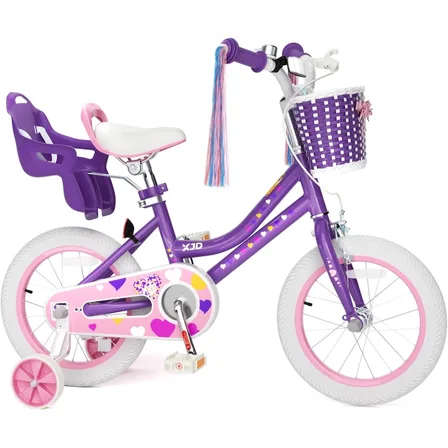
Purple XJD Girls' Bike with Doll Seat & Basket
For girls 71–122 cm tall (about ages 3–7), this XJD girls' bike in Purple pairs …$75.99
$99.99 -

Blue XJD Girls Bike with Training Wheels – 12/14/16 Inch
If you're shopping for a first pedal bike for a daughter roughly 3 to 8 years ol…$149
$169 -
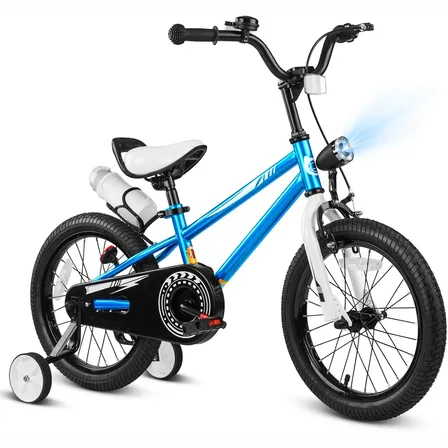
XJD Boys 12/14/16" Training Wheel Bike – Blue
The XJD Boys Bike in Blue is a training wheel bike for riders 71–122 cm tall—rou…$169
$199