

How tall should you be for a 26 inch bike
A 26-inch bike is a starting point for riders over 60 inches (153 cm) tall, but height alone cannot confirm fit. Measure the rider, then check stand-over space, reach, brake control and confidence on the exact bicycle.
What height fits a 26-inch bike?
XBikes classifies 26-inch wheels for youth and adults over 60 inches (153 cm). That is a screening threshold, not a guarantee: wheel size does not reveal the frame’s stand-over height, seat range or distance to the handlebar.
Age should not override measurements. If a rider is near the threshold, compare the actual 26-inch bicycle with a 24-inch model. The XBikes starting point for 24-inch wheels is ages 10–14 and heights of 54–64 inches (137–163 cm), so the ranges overlap around the transition. An individual fit check decides which size gives better control.
Measure the rider before choosing
- Standing height: Have the rider stand barefoot against a wall, looking straight ahead. Mark the top of the head and measure vertically from the floor.
- Inseam: With feet slightly apart, place a firm book between the legs so it represents a bicycle saddle. Measure from the floor to the book’s top edge.
- Current-bike reference: If the rider already has a bicycle, note whether they can start, stop, turn and use the brakes confidently. Record where the current fit feels cramped or difficult.
Compare standing height with the XBikes 60-inch starting point. Then compare the inseam with the exact bicycle’s stand-over and saddle information in its product manual. If those dimensions are unavailable or unclear, use a qualified bicycle mechanic rather than estimating.
Perform an exact-bike fit check
Have the rider try the assembled bicycle in a controlled area. The American Academy of Pediatrics advises trying the bike, checking stand-over and brake reach, and avoiding an oversized bicycle bought merely for future growth.
- Stand-over: With both feet flat on the ground, the rider should be able to straddle the frame without being crowded by it.
- Reach: The rider should hold the handlebar without stretching, locking the elbows or losing a balanced riding position.
- Brake control: The rider must comfortably reach and operate the brake controls while maintaining a secure grip.
- Starting and stopping: They should mount, set off, steer at low speed and stop without the bicycle feeling unmanageable.
- Confidence: Hesitation caused by the bike feeling tall, long or difficult to control is a reason to compare a smaller size.
Follow the exact product manual for assembly, adjustments, compatibility and maintenance. If the setup cannot be confirmed from that manual, ask a qualified bicycle mechanic.
How the supplied 24- and 26-inch options help
These catalog bicycles are useful because each offers a 26-inch SKU, while their smaller SKUs provide direct comparison points when a rider is close to the height threshold. A shared wheel-size label still does not prove identical frame fit.
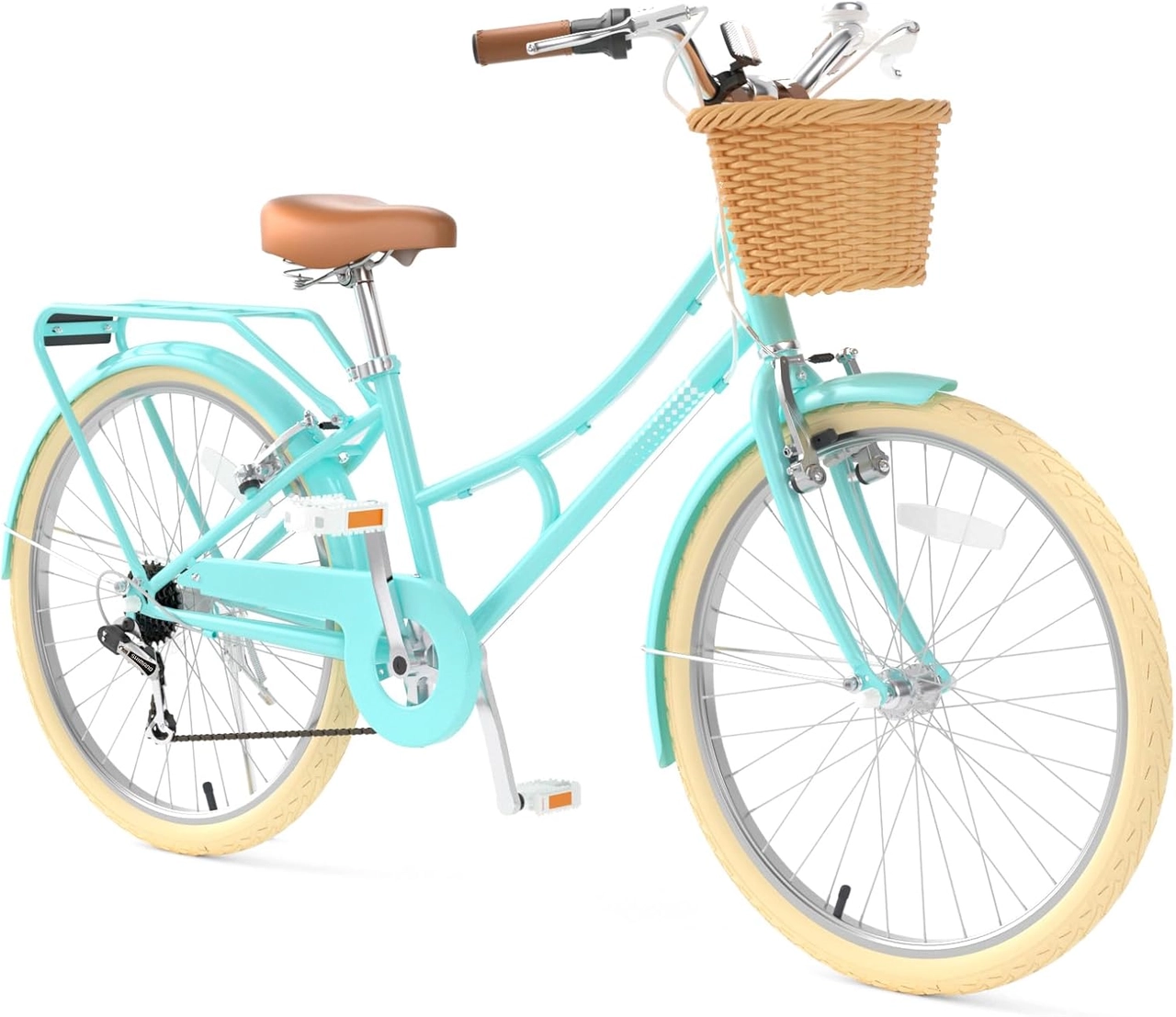 XJD 24-Inch Green Beach Cruiser Bike with U-Brake
Includes a Pink / 26 Inch SKU relevant to the query, plus two 24-inch SKU labels for size comparison. The supplied catalog facts also identify a U-brake.
 Pink XJD Beach Cruiser Bike, 24"/26", U-Brake
Offers both 24-inch and 26-inch SKU labels, allowing a rider near the transition to compare the exact bicycles. The supplied catalog identifies a U-brake.
 XJD Kids Beach Cruiser Bicycle, Rear Rack & V-Brakes, Mint Green
Offers 20-inch, 24-inch and 26-inch SKU labels, making it useful for comparing wheel-size options. Supplied facts identify a rear rack and V-brakes.
XJD 24-Inch Green Beach Cruiser Bike with U-Brake
Despite its title, the supplied SKU labels include Green / 24 Inch, Pink / 24 Inch and Pink / 26 Inch. The 26-inch choice is specifically the pink SKU, while the two 24-inch choices can help a borderline rider compare sizes. Its supplied catalog fact identifies a U-brake.
Pink XJD Beach Cruiser Bike, 24"/26", U-Brake
This beach cruiser has supplied 24-inch and 26-inch SKU labels, making it relevant for an on-bike comparison across the transition. The catalog identifies a U-brake, but fit still depends on the individual rider’s stand-over, reach and ability to operate it.
XJD Kids Beach Cruiser Bicycle, Rear Rack & V-Brakes, Mint Green
This model has supplied 20-inch, 24-inch and 26-inch SKU labels. That range can clarify whether 26 inches feels manageable or whether a smaller wheel-size version gives better control. The supplied facts identify a rear rack and V-brakes; they do not establish rider fit.
When a 26-inch bike is not the right choice
Do not choose 26 inches solely because the rider is over 60 inches tall. It is unsuitable if the rider cannot straddle the exact frame comfortably, reaches too far, struggles to operate the brakes, or cannot start and stop with present confidence. Do not buy extra size simply to allow room for growth.
A properly fitted bicycle helmet is also essential. U.S. Consumer Product Safety Commission guidance says the helmet should fit properly, sit level and have its straps used according to the manufacturer’s instructions.
Make the decision
If the rider measures over 60 inches (153 cm), try the exact 26-inch bicycle and complete every control check. If any check fails—or the rider is around the 24/26-inch overlap—compare a 24-inch version and choose the size the rider can control now.
Bikes for your next adventure
-
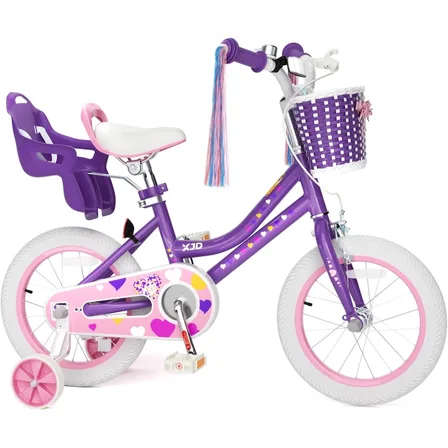
Purple XJD Girls' Bike with Doll Seat & Basket
For girls 71–122 cm tall (about ages 3–7), this XJD girls' bike in Purple pairs …$75.99
$99.99 -

Blue XJD Girls Bike with Training Wheels – 12/14/16 Inch
If you're shopping for a first pedal bike for a daughter roughly 3 to 8 years ol…$149
$169 -

XJD Boys 12/14/16" Training Wheel Bike – Blue
The XJD Boys Bike in Blue is a training wheel bike for riders 71–122 cm tall—rou…$169
$199