

How to carry toddler on bike
To carry a toddler on a bike, use a purpose-built child seat or bicycle trailer that is compatible with your bicycle, child and route—never a rack, handlebar or improvised carrier. Check both manuals, measure fit, stay within every stated limit and have uncertain installation inspected by a qualified bicycle mechanic.
Measure before choosing a carrier
Start with the toddler’s current height and weight, then check the carrier maker’s minimums and maximums. Confirm that your child meets every developmental requirement in that carrier’s manual, including any requirement about sitting posture or head control. A helmet does not change those eligibility rules.
Next, identify the bicycle’s exact model, frame size and wheel size. Note the available mounting points and measure any frame tube, rack or axle area named in the carrier instructions. Compare those measurements with the carrier’s compatibility specification rather than judging by appearance.
- For a frame- or rack-mounted seat: verify the permitted mounting location, required clearance, rack compatibility where applicable and the bicycle manufacturer’s allowed loads.
- For a trailer: verify the hitch and axle compatibility, required clearances and all bicycle and trailer load limits.
- For either: account for the child, carrier and anything else being carried when checking limits.
If a manual does not confirm compatibility, contact the manufacturer or ask a qualified bicycle mechanic. Do not invent a mounting method, substitute hardware or guess at torque.
Compare a child seat with a trailer
A child seat keeps the toddler on the bicycle, so the added load directly changes balance, mounting, stopping and handling. Before buying, check whether you can hold the loaded bicycle steady while getting on and off and whether the seat leaves enough room for pedalling, steering and operating the brakes.
A trailer places the child behind the bicycle and needs more room for turns, passing obstacles and storage. Check the complete bike-and-trailer width and length against the doors, paths, barriers and turns on your usual route. Its hitch must match the bicycle exactly as its manual requires.
Neither format is automatically right for every family. Choose only after comparing verified compatibility, the child’s eligibility, your bicycle’s limits, route conditions and your ability to control the complete setup.
Install and check the setup
Follow the exact bicycle and carrier manuals for assembly, attachment, restraints, maintenance and torque. If instructions are missing, parts do not align or the mount shifts, stop and use a qualified bicycle mechanic.
- Inspect the bicycle and carrier for loose, damaged or missing parts.
- Secure the carrier and every retention or backup feature exactly as directed.
- Keep straps, clothing and feet away from wheels, spokes and other moving parts.
- Fit the toddler’s restraints according to the carrier instructions.
- With another adult stabilising the child where needed, check steering, pedals, brakes and clearances before moving.
Recheck attachment and restraint points before each ride. Stop using the setup if handling changes unexpectedly or any component loosens.
Fit the helmet and practise first
Use a bicycle helmet that fits the toddler properly. It should sit level, with its straps adjusted according to the helmet manufacturer’s instructions. Replace guesswork about helmet position or strap routing with the supplied instructions.
Practise loading, unloading, starting, stopping and turning without the child first, using a representative load only if the carrier manual permits it. Then make the first occupied ride short and away from traffic. Choose a route that avoids hazards your combined setup cannot comfortably negotiate, and adjust speed for the changed balance, width and stopping response.
Why the supplied kids’ bikes are different
The supplied catalog products are training-wheel bicycles for a child to ride, not equipment for carrying a toddler on an adult bicycle. They become relevant only when a child is ready to ride independently and passes an individual fit and control check. Their listed sizes can help compare that later transition, but they cannot replace a compatible child seat or trailer.
 XJD Kids' Training Wheel Bike for Boys & Girls, 12/14/16 Inch – White
A future independent-riding comparison offered in 12 Inch, 14 Inch and 16 Inch sizes; it is a training-wheel bike, not a carrier for transporting a toddler.
 Girls' Training Wheel Bike by XJD, 12–20 Inch Wheels – Blue
A training-wheel bicycle offered in 12 Inch, 14 Inch, 16 Inch and 20 Inch sizes. It is relevant to later independent riding, not as a toddler-carrying solution.
XJD Kids' Training Wheel Bike for Boys & Girls, 12/14/16 Inch – White is offered in 12 Inch, 14 Inch and 16 Inch options. Girls' Training Wheel Bike by XJD, 12–20 Inch Wheels – Blue is offered in 12 Inch, 14 Inch, 16 Inch and 20 Inch options. Those facts describe wheel-size choices only; they do not establish an individual child’s fit or readiness.
When a toddler is ready for their own bike
| Wheel size | XBikes starting point |
|---|---|
| 12 Inch | Ages 3–4; height 34–40 in / 86–102 cm |
| 14 Inch | Ages 3–6; height 37–45 in / 94–114 cm |
| 16 Inch | Ages 4–7; height 40–48 in / 102–122 cm |
| 20 Inch | Ages 7–12; height 48–60 in / 122–152 cm |
These are starting points, not a substitute for trying the bicycle. Measure the child’s standing height and inseam, then check stand-over clearance, reach, brake control and current confidence on the actual bike. Do not buy an oversized bicycle merely for growth. Age alone does not prove fit, and wording in a product title is a catalog label rather than fit evidence.
Make the decision
If the goal is carrying your toddler now, select a purpose-built seat or trailer only after the child, bicycle, carrier and route all pass their manual-based checks. Treat the two supplied training-wheel bikes solely as future independent-riding comparisons; if compatibility or installation remains uncertain, pause and take the bicycle and carrier to a qualified mechanic before carrying the child.
Bikes for your next adventure
-

XJD Kids Bike for Girls – Pink, 12/14/16/20 Inch with Training Wheels
The XJD Kids Bike for Girls in Pink is a training-wheel bike built to carry your…$139
$159 -
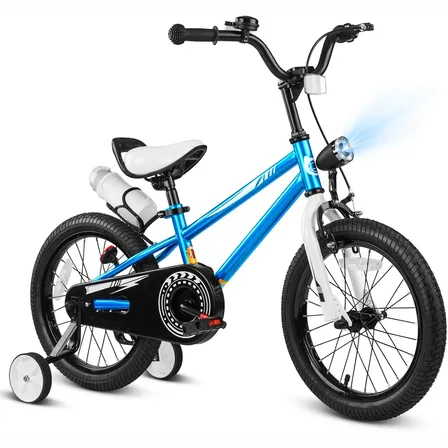
XJD Boys 12/14/16" Training Wheel Bike – Blue
The XJD Boys Bike in Blue is a training wheel bike for riders 71–122 cm tall—rou…$169
$199 -
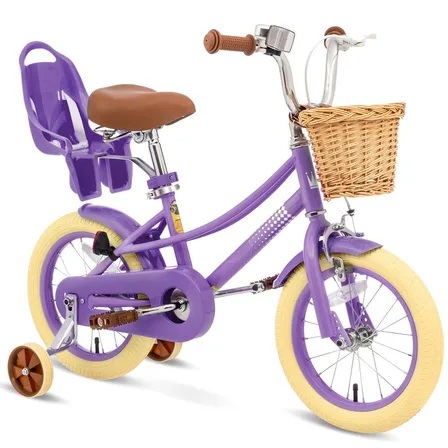
XJD Girls' Bike with Training Wheels, 12/14/16/20 Inch – Purple
The XJD girls' bike with training wheels in Purple is built to grow with your ri…$139
$159