

How to find the right size bike for a toddler
Measure your toddler’s height and inseam, then compare height with XBikes’ wheel-size starting points. Choose only a bike they can straddle, reach and control during an in-person fit check—never size up just for growth.
Measure the rider before choosing a wheel size
Have your child wear the shoes they will normally use for riding. Measure standing height from the floor to the top of the head. For inseam, measure from the floor to the crotch while the child stands upright.
Record both measurements rather than relying on age or clothing size. Height gives you a useful wheel-size starting point; inseam helps you assess stand-over and whether the child can get on, stop and stand comfortably. Bike geometry can differ even when two models carry the same wheel-size label.
Compare measured height with the XBikes chart
For most toddlers, the relevant starting points are 12 Inch and 14 Inch. A 16 Inch bike enters the comparison only when the child is at least 40 in / 102 cm tall and can pass the complete fit check.
| Wheel-size label | Age starting point | Rider-height starting point |
|---|---|---|
| 12 Inch | 3–4 | 34–40 in / 86–102 cm |
| 14 Inch | 3–6 | 37–45 in / 94–114 cm |
| 16 Inch | 4–7 | 40–48 in / 102–122 cm |
Use the measured height before age. Where ranges overlap, compare both sizes in person if possible; the larger label is not automatically the better choice. A child below 34 in / 86 cm falls outside these supplied bicycle starting points, so the listed 12, 14 and 16 Inch catalog options should not be selected from this chart alone.
Run the fit check with your toddler
Have the child try the exact bicycle. Keep the bike supported while checking these points:
- Stand-over: Ask the child to straddle the bike. They should be able to stand securely without the frame preventing a comfortable stance.
- Starting and stopping: Confirm they can get into a riding position, put a foot down and stop without struggling against the bike’s size.
- Reach: With hands in the riding position, the child should not have to stretch, lock their arms or lean excessively to steer.
- Brake control: If the exact model has hand-operated controls, verify that the child can reach and operate them while maintaining control. Follow the product manual for its specific braking system.
- Confidence: Watch for controlled steering and a relaxed posture. A technically plausible size is still unsuitable if the child appears overwhelmed by it.
Do not buy an oversized bicycle simply so the child can grow into it. If neither candidate allows comfortable stand-over, reach, stopping and control, do not choose either one yet.
How the supplied 12, 14 and 16 Inch options relate
The three catalog bicycles below are relevant because each is offered with 12 Inch, 14 Inch and 16 Inch SKU labels, letting you compare the same toddler-relevant starting sizes identified above. Their supplied categories differ, but a category or accessory does not establish fit.
 Purple XJD Girls' Bike with Doll Seat & Basket
A Training Wheel Bike offered in 12 Inch, 14 Inch and 16 Inch labels. Compare the rider’s measured height with the XBikes starting points, then verify stand-over, reach, brake control and confidence on the exact bike.
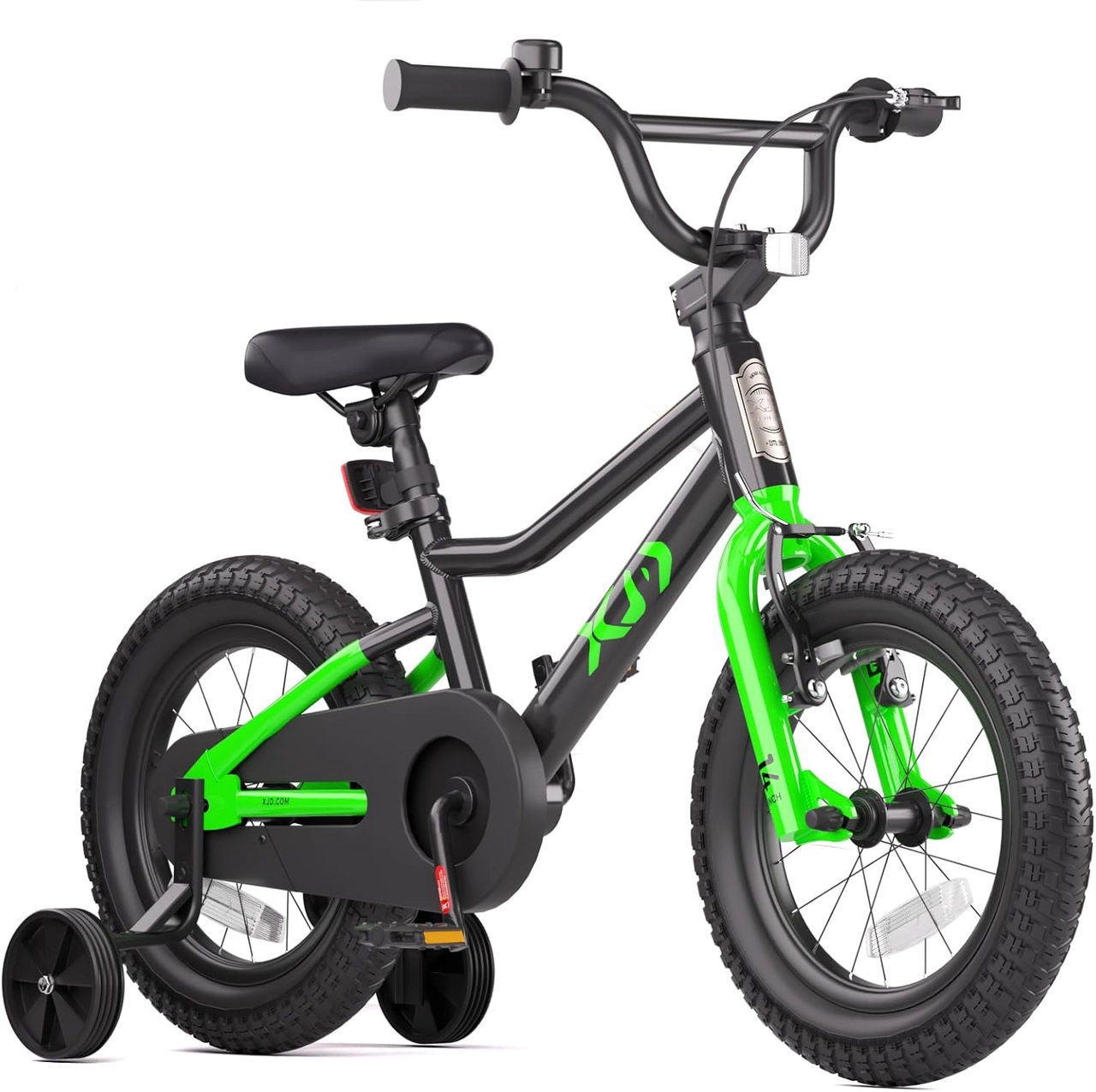 Black XJD Kids' BMX Bicycle with Training Wheels
This Kids' BMX Bike is available with 12 Inch, 14 Inch and 16 Inch labels. Its training wheels do not replace an individual fit check based on measured height, inseam, reach, braking and present riding confidence.
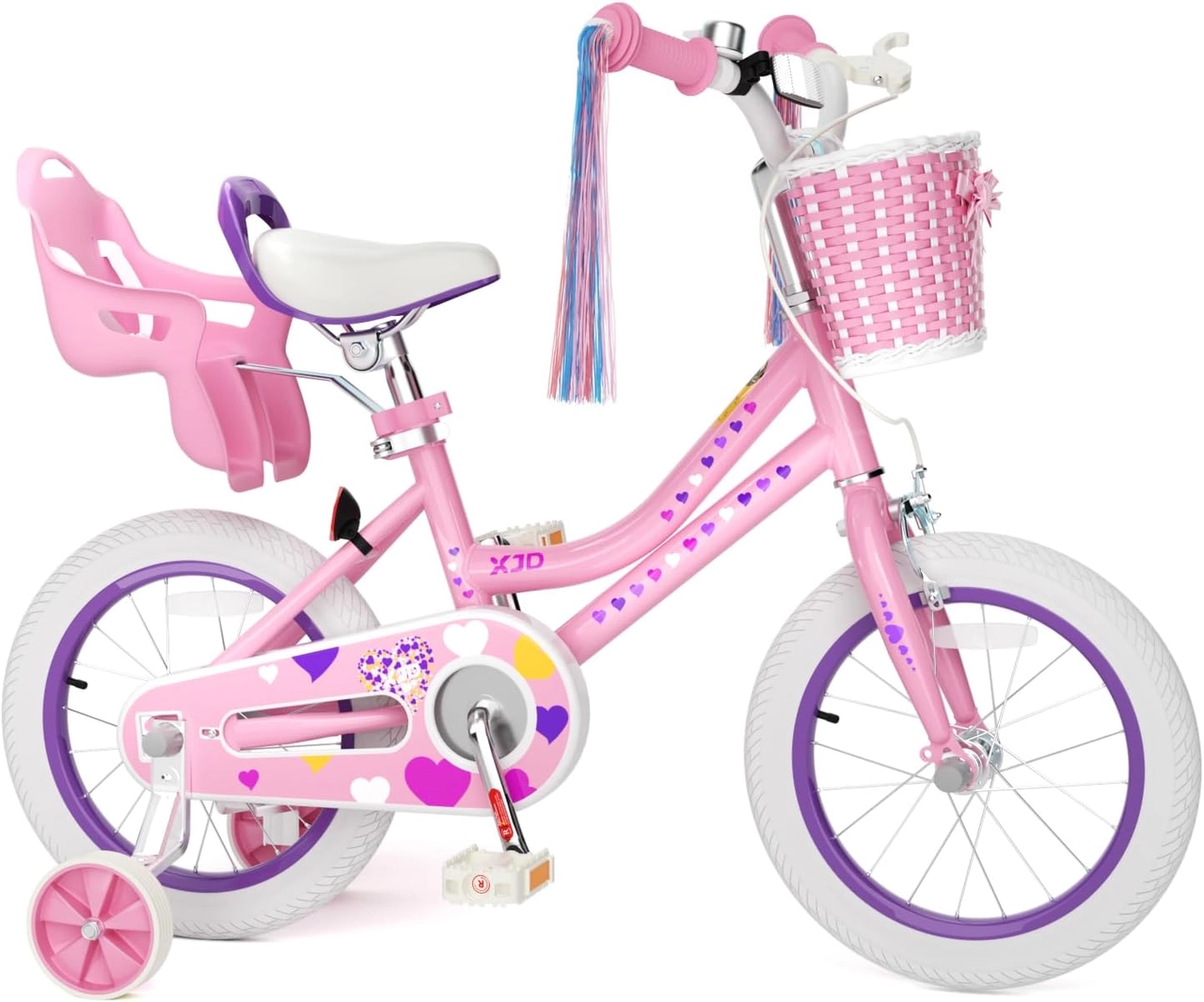 Pink Girls' 12/14/16" Bike by XJD – Basket & Doll Seat
A Training Wheel Bike with supplied 12 Inch, 14 Inch and 16 Inch options. It is relevant when the toddler’s measured height enters one of those ranges and the exact bicycle passes the complete fit check.
Purple XJD Girls' Bike with Doll Seat & Basket is categorized as a Training Wheel Bike and is offered in 12 Inch, 14 Inch and 16 Inch labels. Pink Girls' 12/14/16" Bike by XJD – Basket & Doll Seat has the same supplied size labels and is also categorized as a Training Wheel Bike.
Black XJD Kids' BMX Bicycle with Training Wheels is categorized as a Kids' BMX Bike and likewise has 12 Inch, 14 Inch and 16 Inch labels. Training wheels mentioned in a title or category do not compensate for poor stand-over, excessive reach or limited brake control. Select among these products only after matching the child’s height to a starting label and checking the exact bike.
Make the final size decision
First shortlist by measured height: 12 Inch at 34–40 in / 86–102 cm, 14 Inch at 37–45 in / 94–114 cm, or 16 Inch at 40–48 in / 102–122 cm. Next, use inseam, stand-over, reach, brake control and current confidence to decide between overlapping sizes.
Before riding, use a properly fitting bicycle helmet that sits level, with straps adjusted according to its manufacturer’s instructions. For assembly, adjustment, maintenance, compatibility, load limits or torque, follow the exact bicycle manual or ask a qualified bicycle mechanic.
The right toddler bike is therefore the smallest suitable candidate that matches measured height and lets the child straddle, reach, stop and steer confidently today. If a supplied model cannot meet every one of those checks, leave it out of the decision regardless of its age or wheel-size label.
Bikes for your next adventure
-
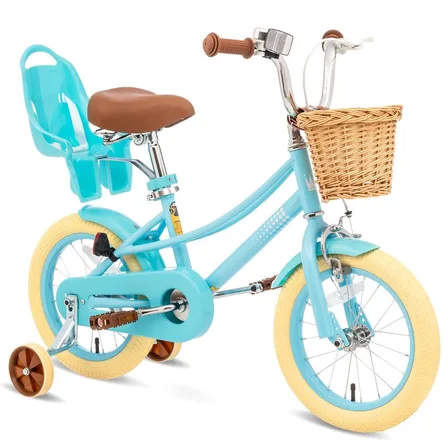
Girls' Training Wheel Bike by XJD, 12–20 Inch Wheels – Blue
This XJD girls' training wheel bike in Blue covers one of the widest fit ranges …$139
$159 -
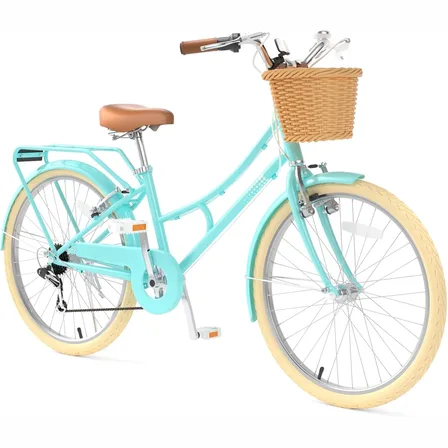
XJD 24-Inch Green Beach Cruiser Bike with U-Brake
This XJD 24-inch beach cruiser in green is made for riders about 4'8" to 5'4" ta…$159.99
$199.99 -

Kids Bike Helmet by XJD for Boys & Girls – Black, Blue, Green, Pink, Purple
The XJD Kids Bike Helmet covers a wide 2-to-8-year age range thanks to two head-…$59.99