

How to go bike riding with a baby
To go bike riding with a baby, first confirm that your baby is developmentally ready for the chosen carrier or trailer, then verify fit, bicycle compatibility, installation and helmet fit before a quiet practice ride.
Choose how your baby will ride
A baby should travel in a purpose-built child bicycle seat or bicycle trailer, not on an adult’s lap, in a front pack or in an improvised seat. Before buying either system, read its manual for the minimum passenger requirements, permitted bicycle types, load limit and required protective equipment. If your baby does not meet every requirement, wait.
A child seat keeps the passenger close but adds weight directly to the bicycle and can affect mounting, balance and handling. A trailer changes the bicycle’s width, length and turning path. Compare those handling differences with your route, storage space and ability to stabilize the bicycle while loading your child.
Because readiness depends on individual development as well as the restraint system, ask your child’s pediatrician if you are uncertain about head and neck control or whether riding is appropriate. Follow applicable local passenger and helmet rules.
Measure and compare before buying
Write down the baby’s current weight and any other measurements requested by the carrier or trailer manufacturer. Compare them directly with the exact manual; do not estimate, round up for growth or assume that two similarly shaped products have the same limits.
For the adult bicycle, identify its exact model and frame size. Check the transport system’s instructions for compatible frame or rack mounting points, bicycle construction, wheel clearance and any restrictions. Confirm that the restraint can be adjusted snugly for your baby and that a correctly fitted helmet does not force the head into an awkward position.
If compatibility, assembly, load limits or torque values are absent from the documentation, use a qualified bicycle mechanic. Do not invent a mounting method or substitute hardware.
Fit the helmet and transport system
Use a bicycle helmet that fits the baby properly and is allowed by the transport system’s instructions. The U.S. Consumer Product Safety Commission advises that a helmet sit level and that its straps be adjusted according to the helmet manufacturer’s directions. A helmet that tips backward, slides around or cannot be secured correctly is not ready for a ride.
Install the seat or trailer exactly as its manual specifies. Check that all restraints, buckles, guards and attachment points work as intended. Make sure loose clothing, straps, feet and hands cannot reach wheels or moving parts. Repeat the manufacturer’s pre-ride checks every time, including any checks required after folding, storage or removing the system.
Practise before carrying your baby
- Test the bicycle and empty transport system in a traffic-free area.
- Add a non-living practice load only if the product manual permits it, staying within its stated limits.
- Practise starting, stopping, turning, mounting and dismounting while keeping full control.
- With your baby secured, begin with a short ride on a smooth, familiar route away from busy traffic.
- Stop if the attachment shifts, handling feels uncertain or your baby appears uncomfortable.
Ride more slowly than usual and allow extra room for braking and turns. Avoid routes whose surface, gradient, traffic or width exceeds what you can confidently manage with the added passenger system.
When the supplied kids’ bikes are relevant
The supplied BMX bikes do not transport a baby and are not substitutes for a child seat or trailer. They become relevant later, when a child is ready to ride independently, because their 12, 14 and 16 Inch options provide future comparison points for measured fit.
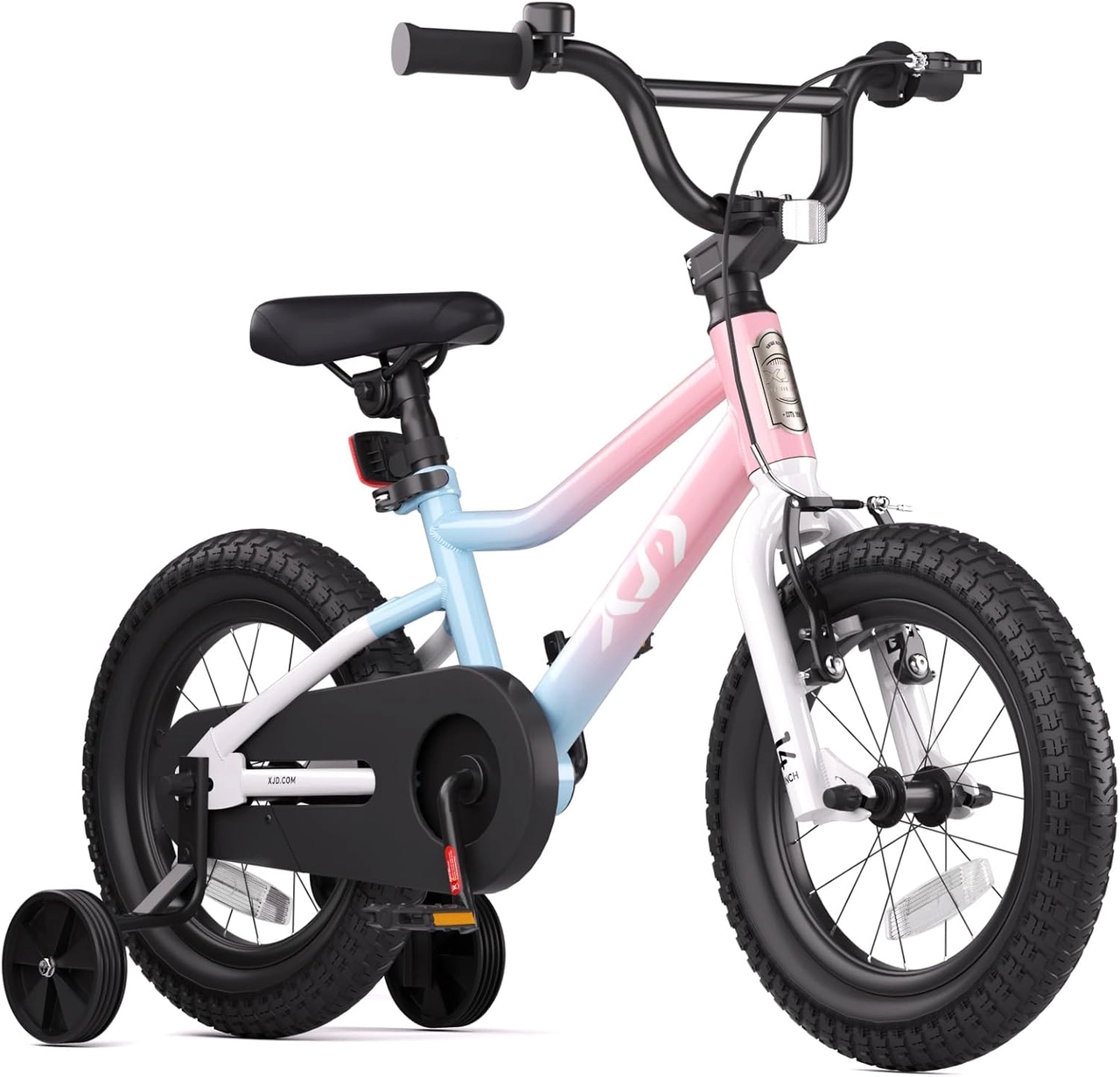 XJD Girls BMX Bike 12/14/16 Inch with Training Wheels – Pink Blue
A future independent-riding comparison option, not baby transport. It is a Kids’ BMX Bike offered in 12, 14 and 16 Inch SKU labels, with training wheels stated in its exact catalog title.
 XJD Boys & Girls BMX Bike with Training Wheels, 12/14/16" – Blue
Relevant only when the child is ready to ride independently, not as a baby carrier. This Kids’ BMX Bike has 12, 14 and 16 Inch SKU labels and training wheels stated in its exact catalog title.
The XJD Girls BMX Bike 12/14/16 Inch with Training Wheels – Pink Blue and the XJD Boys & Girls BMX Bike with Training Wheels, 12/14/16" – Blue are both catalogued as Kids’ BMX Bikes. Each is offered with 12 Inch, 14 Inch and 16 Inch SKU labels. On the supplied facts, wheel-size availability and title wording do not establish that either bicycle fits a particular child.
Use measured fit when independent riding begins
| Wheel size | Starting age | Rider height |
|---|---|---|
| 12 Inch | 3–4 | 34–40 in / 86–102 cm |
| 14 Inch | 3–6 | 37–45 in / 94–114 cm |
| 16 Inch | 4–7 | 40–48 in / 102–122 cm |
These XBikes figures are starting points, not permission to move a baby onto a bicycle. When the child is old enough and ready to ride, measure standing height and inseam, then have the child try the bicycle. Prioritize comfortable stand-over clearance, manageable reach, reliable brake control and current confidence over age alone. Following American Academy of Pediatrics guidance, do not buy an oversized bicycle merely for growth.
For today’s ride, proceed only after your baby meets the transport system’s exact requirements, the system is confirmed compatible and correctly installed, the helmet fits level and securely, and you can control the loaded bicycle during practice. If any one of those checks fails, postpone the ride.
Bikes for your next adventure
-

Flower Pink XJD Girls Bike with Doll Seat & Basket
The XJD Flower Pink girls' bike is made for riders 71–122 cm tall (roughly ages …$69.99
-
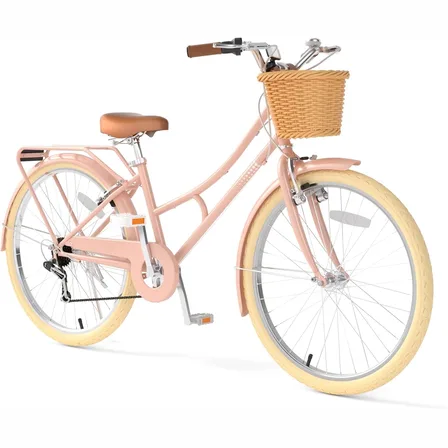
Pink XJD Beach Cruiser Bike, 24"/26", U-Brake
The XJD Pink Beach Cruiser Bike is a single-speed cruiser built for older kids a…$159.99
-
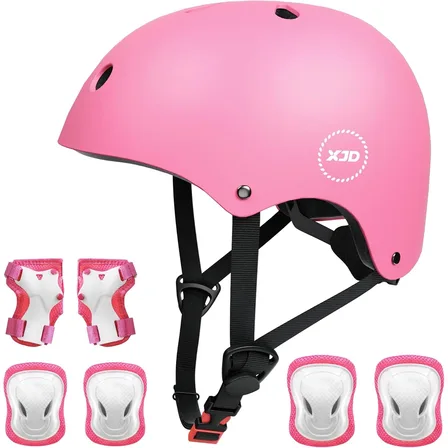
XJD Kids Helmet & Protective Gear Set for Girls, Pink
The XJD Kids Helmet & Protective Gear Set in Pink is a complete safety kit for g…$24.64