

How to measure a kid for a bike
Measure your child’s standing height and inside leg, then check stand-over clearance, reach, brake access and control on the actual bike.
Take the two key body measurements
Have the child wear the shoes they will normally ride in and stand upright against a wall. Measure from the floor to the top of the head for standing height.
For the inside leg, place a firm, straight object between the legs so it sits where a bicycle saddle would. Measure vertically from the floor to the top of that object. This inseam measurement helps you judge whether the child can stand over the bicycle comfortably; it is not the same as trouser sizing.
Record both measurements in inches or centimetres. Standing height provides a wheel-size starting point, while inseam helps confirm whether the particular frame fits.
Compare measured height with wheel size
| Wheel size | Age starting point | Rider height |
|---|---|---|
| 12 Inch | Ages 3–4 | 34–40 in / 86–102 cm |
| 14 Inch | Ages 3–6 | 37–45 in / 94–114 cm |
| 16 Inch | Ages 4–7 | 40–48 in / 102–122 cm |
| 18 Inch | Ages 5–9 | 43–52 in / 109–132 cm |
| 20 Inch | Ages 7–12 | 48–60 in / 122–152 cm |
| 24 Inch | Ages 10–14 | 54–64 in / 137–163 cm |
| 26 Inch | Youth and adults | Over 60 in / 153 cm |
Use age only as a rough starting point. Where height ranges overlap, do not automatically choose the larger wheel. Compare both candidates in person and prioritize the child’s measured height, inseam, reach, brake control and current confidence.
Check the child on the actual bicycle
A chart narrows the search, but frame shapes and adjustment ranges can differ. Have the child try the exact bicycle rather than assuming every bike with the same wheel label fits identically.
- Stand-over: Ask the child to straddle the bicycle with both feet flat on the ground. They should be able to stand comfortably without the frame pressing into them.
- Saddle position: With the saddle adjusted according to the product manual, check that mounting, starting and stopping feel controlled rather than precarious.
- Reach: Seated in a normal riding position, the child should reach the handlebar without stretching, locking the arms or leaning excessively.
- Brake access: If the bicycle has hand controls, confirm the child can reach and operate them confidently while maintaining a secure grip.
- Low-speed control: Watch a supervised start, turn and stop. A technically possible fit is not suitable if the child cannot control the bicycle with current skills.
Do not buy an oversized bicycle solely to leave room for growth. A bike that is difficult to stand over, steer or stop is not corrected by the expectation that the rider will grow into it.
How the supplied XBikes options help
The three catalog options provide direct comparison points when measurements suggest a 12 Inch, 14 Inch or 16 Inch bicycle. The Flower Pink XJD Girls Bike with Doll Seat & Basket and Purple XJD Girls' Bike with Doll Seat & Basket are Training Wheel Bikes offered in those three sizes. The Black XJD Kids' BMX Bicycle with Training Wheels is a Kids' BMX Bike, also offered in 12 Inch, 14 Inch and 16 Inch sizes. Their shared size labels make it easier to compare the same wheel-size starting points across the supplied styles, but the child must still try the exact bike.
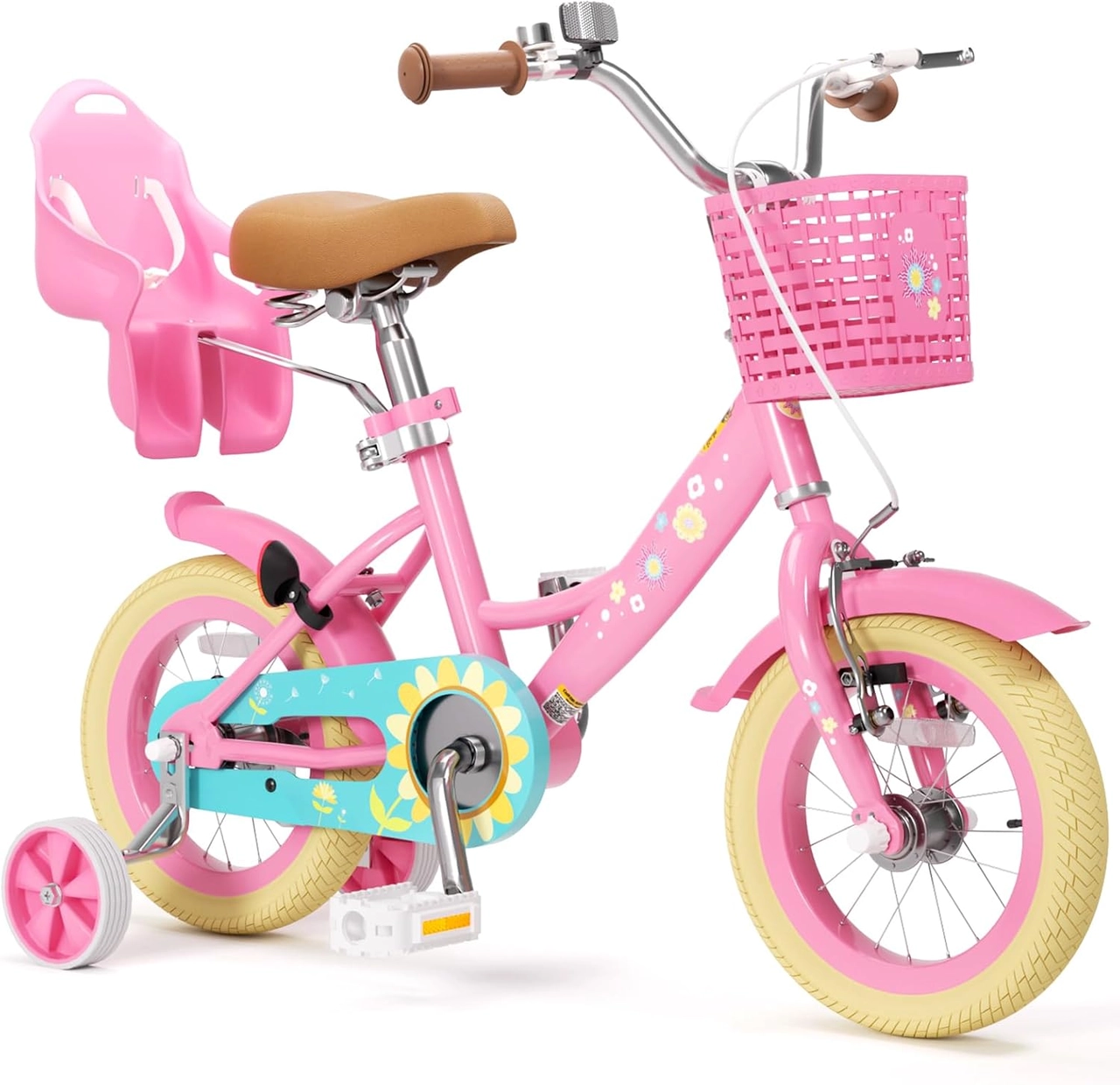 Flower Pink XJD Girls Bike with Doll Seat & Basket
A Training Wheel Bike offered in 12 Inch, 14 Inch and 16 Inch labels, useful when the child’s measurements point to one of those wheel-size starting ranges.
 Purple XJD Girls' Bike with Doll Seat & Basket
This Training Wheel Bike is available in 12 Inch, 14 Inch and 16 Inch labels, giving parents three relevant sizes to compare through an individual fit check.
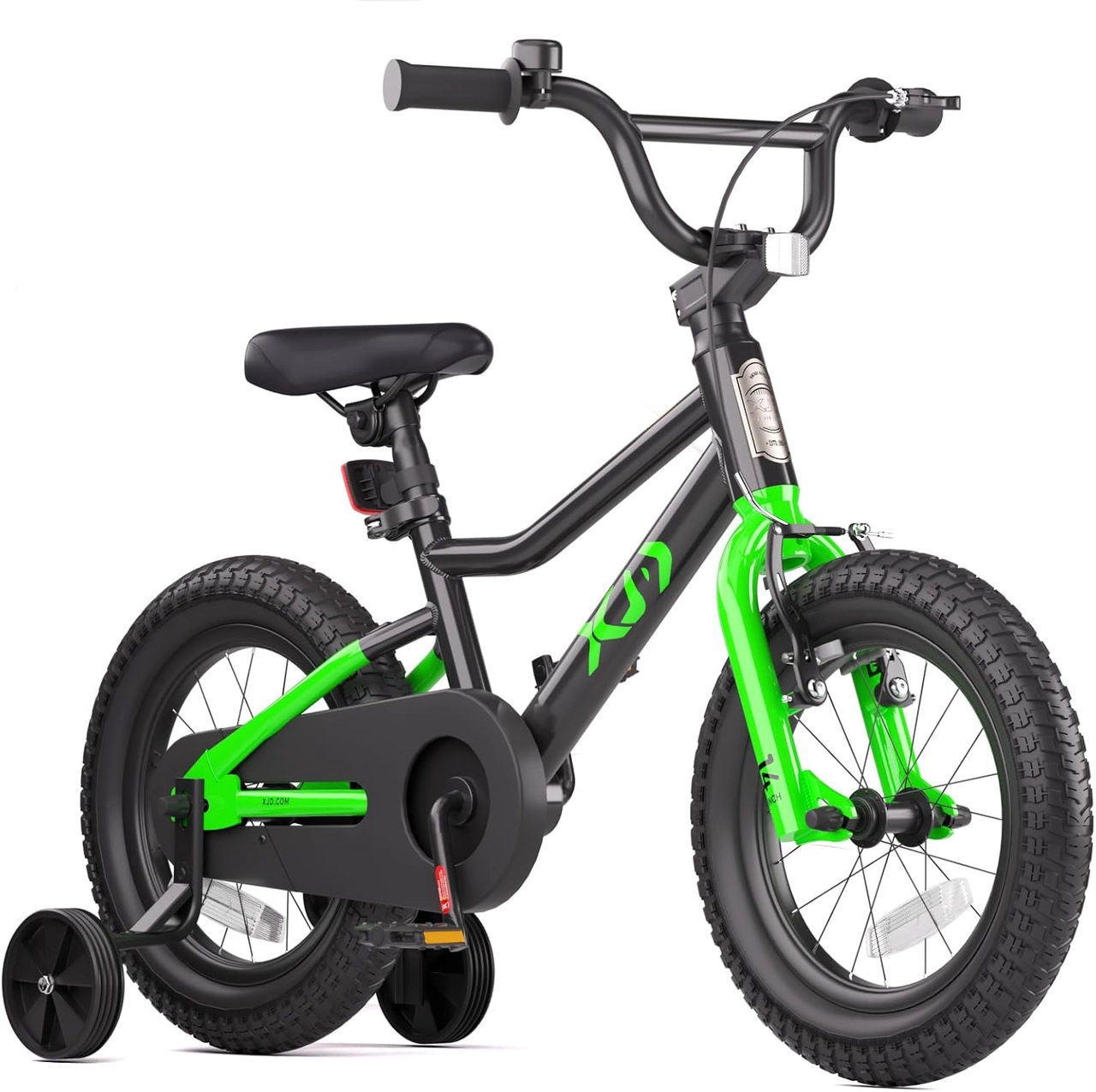 Black XJD Kids' BMX Bicycle with Training Wheels
A Kids' BMX Bike with Training Wheels offered in 12 Inch, 14 Inch and 16 Inch labels; relevant for comparing those sizes after measuring height and inseam.
These products are not relevant when the measurements and individual fit check point to 18 Inch, 20 Inch, 24 Inch or 26 Inch. In that situation, they are smaller comparison points only, not substitutes for the indicated size. Do not treat a neighboring wheel size as equivalent.
Make the final fit decision
Choose the smallest suitable candidate only after the child can straddle it comfortably, reach the handlebar and any brake controls, and demonstrate controlled starting, turning and stopping. If two wheel sizes match the height chart, the successful hands-on control check should decide between them.
Before riding, provide a properly fitted bicycle helmet. It should sit level, and its straps should be adjusted according to the helmet manufacturer’s instructions. Follow the exact bicycle manual for assembly, adjustment, maintenance, load limits, compatibility and torque; if anything is unclear, use a qualified bicycle mechanic.
Take the height and inseam measurements to the bike, test the matching wheel-size candidates, and leave with the size the child can control now—not one chosen for future growth.
Bikes for your next adventure
-
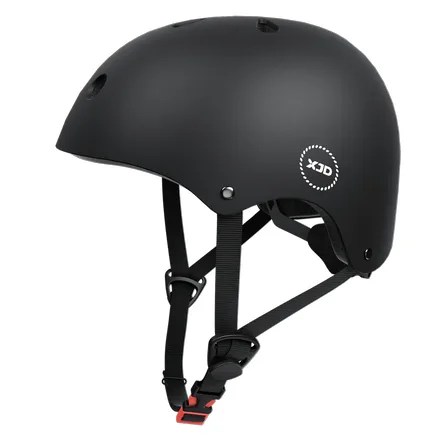
7-in-1 Kids Helmet & Protective Gear Set from XJD – Black or Blue
If you're outfitting one kid (or a couple of siblings) for biking, scootering, o…$59.99
-
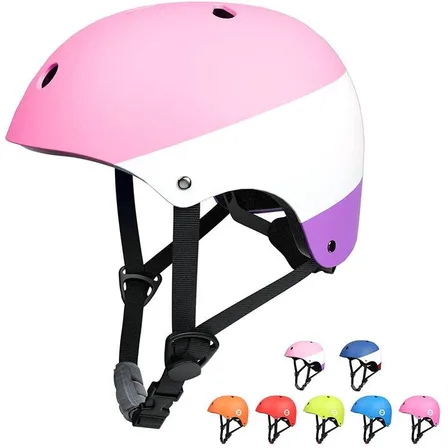
XJD Kids Bike Helmet for Boys & Girls, B White / Pink White
The XJD Kids Bike Helmet covers a wide age range — suggested for ages 2 through …$59.99
-

Blue XJD Girls Bike with Training Wheels – 12/14/16 Inch
If you're shopping for a first pedal bike for a daughter roughly 3 to 8 years ol…$149
$169