

How to size a bike for a teenager
To size a bike for a teenager, measure the rider’s height and inseam, use height to choose a starting wheel size, then confirm stand-over clearance, reach, brake control and confidence on the actual bike.
Measure the teenager before comparing bikes
Measure total height without shoes, standing straight against a wall. Then measure inseam: have the rider stand with feet slightly apart and measure from the floor to the crotch. Record both measurements in inches or centimetres.
Height provides the XBikes wheel-size starting point. Inseam helps you judge whether the teenager can stand over the bike comfortably and get on and off without struggling. Because frame geometry can differ even when wheel labels match, neither measurement replaces trying the actual bicycle.
Use height to find the starting wheel size
| Wheel size | XBikes starting age | Rider height |
|---|---|---|
| 20 Inch | 7–12 | 48–60 in / 122–152 cm |
| 24 Inch | 10–14 | 54–64 in / 137–163 cm |
| 26 Inch | Youth and adults | Over 60 in / 153 cm |
These are starting points, and the height ranges overlap. Prioritize measured height over age: teenagers of the same age can need different sizes. A rider between ranges should compare the relevant sizes in person instead of assuming the larger one will be suitable.
Do not buy an oversized bicycle simply to leave growing room. American Academy of Pediatrics guidance emphasizes trying the bicycle and checking stand-over, control and brake reach. A bike that is too large now can make starting, stopping and steering harder.
Check fit on the actual bicycle
With the teenager wearing their usual riding shoes, perform these checks:
- Stand-over: Ask the rider to straddle the bicycle with both feet flat on the ground. The bike should not press uncomfortably into the rider, and they should be able to dismount promptly.
- Pedalling position: Adjust the saddle only within the limits stated in the product manual. While seated, the rider should pedal without rocking their hips or feeling cramped.
- Reach: The rider should hold the handlebar without locking their elbows, stretching their torso excessively or losing a stable seated position.
- Brake control: They must be able to reach and operate the brake controls comfortably while maintaining their grip and steering control.
- Low-speed control: In a traffic-free area, confirm that they can start, ride straight, turn, brake and put a foot down confidently.
If the bicycle cannot satisfy all five checks through adjustments permitted by its manual, try a different size or frame. Use a qualified bicycle mechanic when setup, compatibility or assembly is uncertain.
How the supplied 24-inch and 26-inch bikes help
The supplied catalog options are useful comparison points because both cover wheel sizes commonly relevant around the transition from a 24-inch youth bike to a 26-inch bike. Their labels narrow the sizes to try, but they do not establish fit without the checks above.
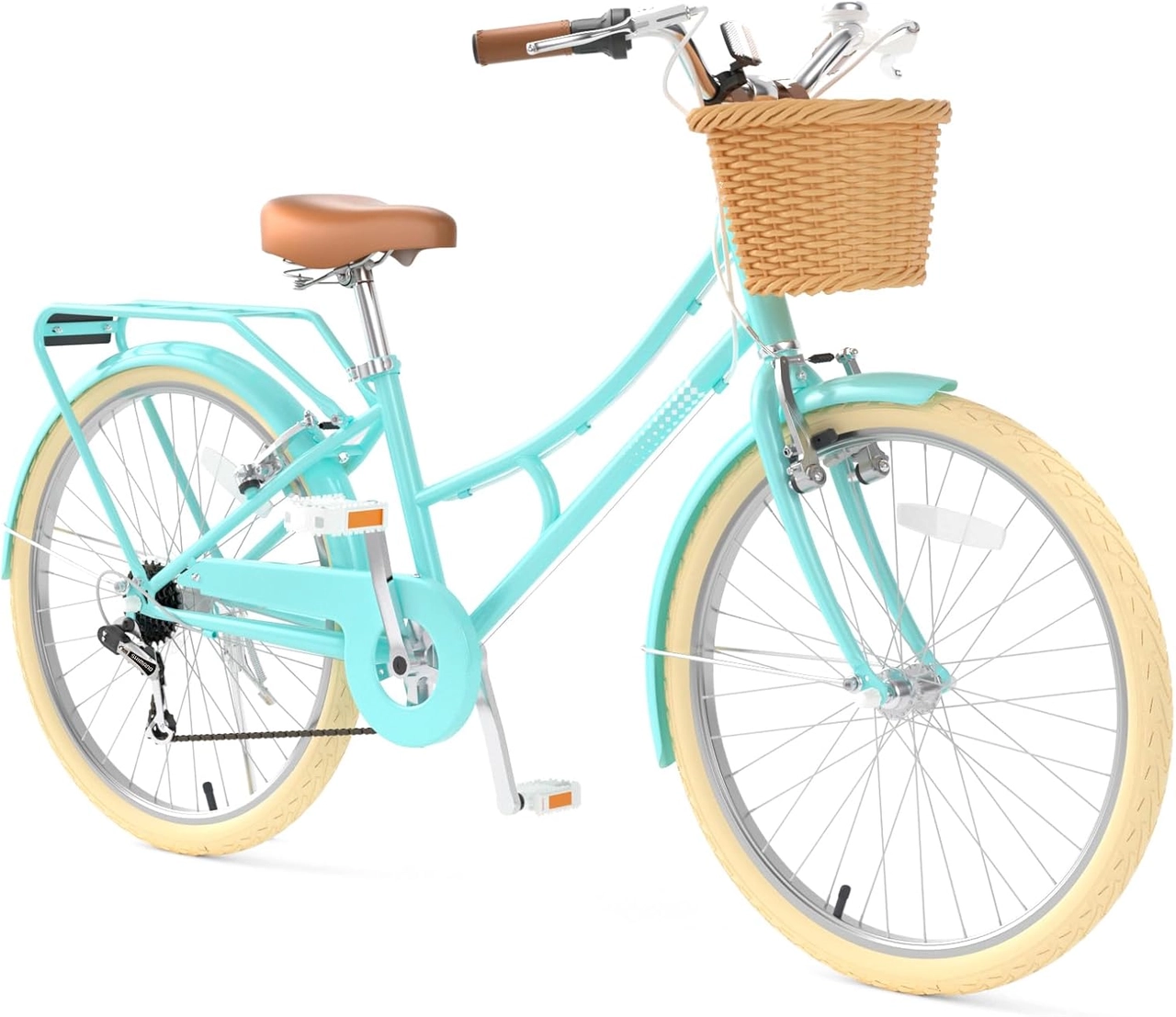 XJD 24-Inch Green Beach Cruiser Bike with U-Brake
A Beach Cruiser Bike offered in Green / 24 Inch, Pink / 24 Inch and Pink / 26 Inch options, making it relevant for an individual comparison of the supplied wheel sizes after measuring the rider.
 Pink XJD Beach Cruiser Bike, 24"/26", U-Brake
A pink Beach Cruiser Bike offered in 24 Inch and 26 Inch options. Use those labels as starting comparison points, then confirm stand-over, reach, brake control and confidence on the actual bicycle.
The XJD 24-Inch Green Beach Cruiser Bike with U-Brake is offered in Green / 24 Inch, Pink / 24 Inch and Pink / 26 Inch catalog options. The Pink XJD Beach Cruiser Bike, 24"/26", U-Brake is offered in 24 Inch and 26 Inch options. Both are categorized as Beach Cruiser Bikes, so compare them only if that bicycle category suits the intended riding.
For a rider measuring 54–64 inches (137–163 cm), the 24-inch versions are appropriate starting points to try. For a rider over 60 inches (153 cm), the 26-inch versions are starting points. Between 60 and 64 inches, compare both sizes on the individual rider because height ranges alone cannot resolve reach, stand-over or control.
If the teenager measures under 54 inches (137 cm), neither supplied wheel size matches the XBikes starting range indicated for that height. Consider the applicable smaller wheel-size starting point instead; a 24-inch or 26-inch label is not a substitute for it.
Make the final decision
Choose only after the teenager has tried the candidate bike and can stand over it, reach the handlebar, operate the brakes and complete basic low-speed manoeuvres without strain. Recheck the fit as the rider grows, and follow the exact product manual or consult a qualified bicycle mechanic for assembly, maintenance, adjustment limits, compatibility, load limits and torque.
Before riding, add a properly fitting bicycle helmet. U.S. Consumer Product Safety Commission guidance says the helmet should sit level and its straps should be adjusted according to the helmet manufacturer’s instructions. The final size decision is the bike the teenager controls confidently today—not the largest size they may eventually grow into.
Bikes for your next adventure
-

Kids Bike Helmet by XJD for Boys & Girls – Black, Blue, Green, Pink, Purple
The XJD Kids Bike Helmet covers a wide 2-to-8-year age range thanks to two head-…$59.99
-

Kids Bike Helmet by XJD for Girls – Pink
The XJD Kids Bike Helmet in Pink is a lightweight multi-sport helmet for girls r…$59.99
$99 -

XJD Kids Bike for Girls – Pink, 12/14/16/20 Inch with Training Wheels
The XJD Kids Bike for Girls in Pink is a training-wheel bike built to carry your…$139
$159