

Are e bikes safe for teens
E-bikes can be safe for teens only when the bike fits, the rider can control it confidently, and a parent checks the equipment, route and local rules.
Start with the teen, not an age label
Age alone cannot answer whether an e-bike is safe. Measure the teen’s standing height and inseam, then have them try the exact bicycle. Check whether they can stand over it comfortably, reach the handlebar without stretching, look ahead while riding, and operate every brake control firmly without shifting their hands into an awkward position.
Do not buy an oversized bicycle for a teen to grow into. A bike that is difficult to mount, balance or stop is the wrong current fit, even if its wheel size appears in an age range. Current confidence matters too: a rider who is still developing starts, turns or emergency stops needs more practice before adding electric assistance.
Use wheel size only as a starting point
Compare the teen’s measured height with the XBikes starting points below, then confirm the complete fit on the assembled bicycle.
| Wheel size | Starting age | Starting rider height |
|---|---|---|
| 20 Inch | Ages 7–12 | 48–60 in / 122–152 cm |
| 24 Inch | Ages 10–14 | 54–64 in / 137–163 cm |
| 26 Inch | Youth and adults | Over 60 in / 153 cm |
The ranges overlap because bodies and bicycle geometries differ. Give more weight to measured height, inseam, reach, brake control and confidence than to age. Wheel diameter does not establish whether a particular frame is manageable, and it says nothing by itself about an e-bike’s electrical system or assistance behavior.
Check control before allowing powered riding
Before using assistance, the teen should demonstrate controlled starts, straight-line riding, signaling, turns, low-speed balance and decisive stops on the same bicycle. Begin in a traffic-free open area with close adult supervision. Use the lowest available assistance setting described in the product manual, and make sure the rider understands what causes assistance to begin and stop.
Compare the exact model’s controls, permitted rider or load limits, and operating instructions with the teen’s abilities. These details are not supplied here, so use the exact product manual. Ask a qualified bicycle mechanic to inspect uncertain assembly, brake operation or compatibility; do not guess at adjustment or torque procedures.
Make the helmet and route part of the decision
A bicycle helmet must fit properly, sit level and have its straps adjusted according to the helmet manufacturer’s instructions. Replace “wear a helmet” with an actual pre-ride check: confirm its position, strap adjustment and secure fastening every time.
Choose the first routes conservatively. Avoid mixing a new e-bike rider immediately with complex junctions, steep descents, heavy traffic or crowded paths. Check the rules that apply where the teen will ride, because permitted rider ages, locations and e-bike classifications can vary. If either the route or applicable rule is unclear, resolve it before the ride.
What the supplied catalog option can—and cannot—show
The 26-Inch XJD Beach Cruiser Bike for Girls – Purple, V-Brake provides 20-, 24- and 26-inch catalog size labels in its listed color options. Those sizes can help a family compare the teen’s measured height with the XBikes starting points and examine reach and brake access in person. However, the supplied facts identify it as a beach cruiser bike, not an e-bike, so it cannot establish the safety, controls or electrical characteristics of an e-bike.
This catalog option is useful as a wheel-size and physical-fit comparison point, particularly across its listed 20-, 24- and 26-inch variants. It is not a substitute for evaluating the exact powered model the teen would ride.

The exact title identifies the purple 26-inch version and a V-brake. Other available labels are Mint Green in 20, 24 and 26 Inch; Pink in 20, 24 and 26 Inch; and Purple in 26 Inch. Do not infer availability, frame dimensions, component specifications or suitability from color and wheel-size labels alone.
A parent’s go-or-wait decision
- Measure height and inseam; use the wheel-size ranges only to narrow the search.
- Have the teen try the exact assembled e-bike and verify stand-over clearance, comfortable reach and reliable access to its brake controls.
- Confirm controlled starts, turns and stops before introducing assistance.
- Fit the helmet correctly and review the exact e-bike manual, route conditions and local rules.
- Use a qualified mechanic for uncertain assembly, maintenance, compatibility or adjustments.
Say “go” only when the exact e-bike fits now, the teen can control it without assistance first, the helmet fits, and the planned ride is permitted and manageable. If any one of those checks fails, wait, change the bike or route, or arrange instruction before powered riding.
Bikes for your next adventure
-
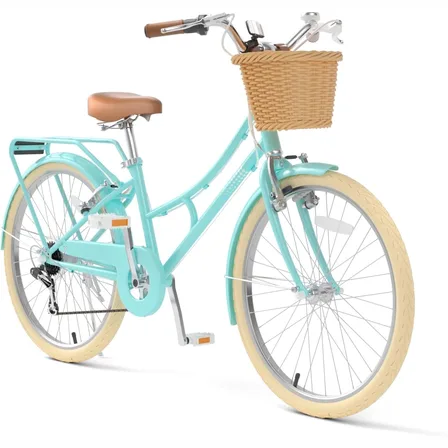
XJD Kids Beach Cruiser Bicycle, Rear Rack & V-Brakes, Mint Green
The XJD Beach Cruiser in Mint Green is a geared, multi-speed cruiser bike for ol…$179.99
$209.99 -
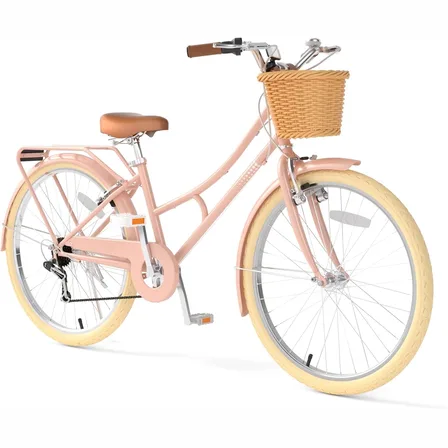
Pink XJD Beach Cruiser Bike, 24"/26", U-Brake
The XJD Pink Beach Cruiser Bike is a single-speed cruiser built for older kids a…$159.99
-

26-Inch XJD Beach Cruiser Bike for Girls – Purple, V-Brake
This XJD 26-inch purple beach cruiser is sized for big kids and teens — suggeste…$218.49
$229.99