

What size bike does an 8 year old need
Most 8-year-olds should start by trying an 18-inch or 20-inch bike; measured height and an individual fit check determine the right choice.
Choose the starting size from height
Measure your child without shoes, standing straight against a wall. Compare that height with the XBikes starting points below. Age eight overlaps two ranges, so age alone cannot settle the decision.
| Wheel size | XBikes age guide | Rider height |
|---|---|---|
| 16 Inch | Ages 4–7 | 40–48 in / 102–122 cm |
| 18 Inch | Ages 5–9 | 43–52 in / 109–132 cm |
| 20 Inch | Ages 7–12 | 48–60 in / 122–152 cm |
| 24 Inch | Ages 10–14 | 54–64 in / 137–163 cm |
An 8-year-old measuring 48–52 inches (122–132 cm) falls within both the 18-inch and 20-inch starting ranges. That overlap means the child should try both sizes. A shorter rider may begin with an 18-inch bike, while a rider comfortably within the 20-inch range may fit a 20-inch bike. A child near any boundary still needs a practical fit check.
Measure inseam as well as total height
For inseam, have the child stand in socks with feet slightly apart. Place a firm book between the legs, raise it gently to simulate a saddle, and measure from the floor to the book’s top edge. Record the result in inches or centimetres.
Compare that measurement with the bicycle maker’s stand-over and saddle information in the exact model manual. No universal inseam number can replace those model-specific dimensions. When standing over the bike, the child should not be pressed against the frame and should be able to stabilize the bicycle confidently.
Perform the fit check before deciding
Have the child try the assembled bicycle rather than buying a larger frame solely for future growth. Check these points:
- Stand-over: The child can straddle the frame without uncomfortable contact and can steady the bike.
- Reach: The handlebars are reachable without stretching, locking the elbows or losing a balanced riding position.
- Brake control: The child can reach and operate the fitted brake controls while keeping command of the handlebars.
- Starting and stopping: The rider can mount, begin, stop and put a foot down without panic or loss of control.
- Confidence: The bike feels manageable when turning and moving at a slow pace.
If either overlapping wheel size appears possible, choose based on control rather than the larger number. A correctly sized smaller option is preferable to an oversized bicycle that the child cannot manage.
How the supplied 20-inch options are relevant
The supplied catalog choices all offer a 20 Inch SKU and belong to the Training Wheel Bikes category, so they are relevant comparison options when the rider measures within the 20-inch starting range and training wheels suit the child’s current confidence. They do not include an 18 Inch SKU; for a child who fits 18 inches, these are nearest-size comparison points, not substitutes.
 Girls' Training Wheel Bike by XJD, 12–20 Inch Wheels – Blue
Offers a 20 Inch SKU relevant to many riders in the age-eight starting range, plus 12, 14 and 16 Inch choices. It is a training-wheel bike, but individual height, reach and control must confirm fit.
 XJD Girls' Bike with Training Wheels, 12/14/16/20 Inch – Purple
Its listed sizes are 12, 14, 16 and 20 Inch. The 20 Inch option may be relevant after measurement and a fit check; this training-wheel model does not provide the 18 Inch comparison size.
 XJD Kids Bike for Girls – Pink, 12/14/16/20 Inch with Training Wheels
This training-wheel bike is offered in 12, 14, 16 and 20 Inch labels. Consider the 20 Inch SKU only when the rider's height, inseam, reach, brake control and confidence support that size.
Girls' Training Wheel Bike by XJD, 12–20 Inch Wheels – Blue, XJD Girls' Bike with Training Wheels, 12/14/16/20 Inch – Purple, and XJD Kids Bike for Girls – Pink, 12/14/16/20 Inch with Training Wheels each list 12 Inch, 14 Inch, 16 Inch and 20 Inch choices. For this question, compare only the size supported by the child’s measurements and fit check; the color wording and catalog titles do not establish fit.
A confident rider who does not need training wheels, or a child whose measurements and control indicate an 18-inch bicycle, may need a different catalog option. Availability of a wheel-size label also does not confirm stand-over, reach or brake access on a particular model.
Complete the safety and setup checks
Follow the exact product manual for assembly, adjustments, maintenance, compatibility, load limits and torque. If anything is unclear, use a qualified bicycle mechanic. Before each ride, confirm that the bicycle is assembled and functioning as its manual requires.
The child also needs a bicycle helmet that fits properly, sits level and has straps adjusted according to the helmet manufacturer’s instructions. A helmet does not correct a poorly fitting bicycle.
What to do next for your 8-year-old
- Measure standing height and inseam.
- Use height to shortlist 18 Inch, 20 Inch or another matching XBikes range.
- Have the child try the shortlisted size or sizes.
- Confirm stand-over, reach, brake operation, starting, stopping and confidence.
- Choose the size the child can control now, never an oversized bike purchased only for growth.
For an 8-year-old, begin with 18 and 20 inches, then let measured height and real control decide; consider the supplied products only if the 20-inch fit works and a training-wheel bike is appropriate.
Bikes for your next adventure
-

Light Purple XJD Toddler Bike Helmet, Adjustable, Size XS (46–51 cm)
This Light Purple XJD toddler bike helmet is made for the smallest riders — the …$20.39
-

XJD Boys 12/14/16" Training Wheel Bike – Blue
The XJD Boys Bike in Blue is a training wheel bike for riders 71–122 cm tall—rou…$169
$199 -
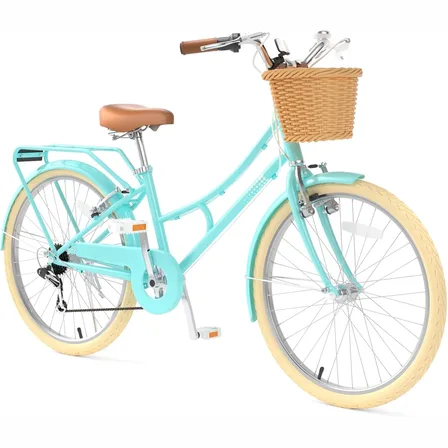
XJD 24-Inch Green Beach Cruiser Bike with U-Brake
This XJD 24-inch beach cruiser in green is made for riders about 4'8" to 5'4" ta…$159.99
$199.99