

How to size a youth bike
To size a youth bike, measure the rider’s height and inseam, compare height with the wheel-size chart, then confirm stand-over clearance, reach, brake control and confidence on the actual bike.
Measure the rider first
Measure without shoes and use current measurements rather than an expected growth spurt. For height, have the child stand straight against a wall and measure from the floor to the top of the head. For inseam, place a firm, book-like object between the legs to represent the saddle, then measure vertically from the floor to its top edge.
Height provides the starting wheel size. Inseam helps you judge whether the child can stand over the bike comfortably and manage stops. Record both in inches or centimetres so you can compare consistently.
Compare height with the XBikes starting points
Wheel size describes the wheel, not every frame dimension. Use this chart to narrow the options, but do not order from age or wheel size alone.
| Wheel size | Age starting point | Rider height |
|---|---|---|
| 12 Inch | 3–4 | 34–40 in / 86–102 cm |
| 14 Inch | 3–6 | 37–45 in / 94–114 cm |
| 16 Inch | 4–7 | 40–48 in / 102–122 cm |
| 18 Inch | 5–9 | 43–52 in / 109–132 cm |
| 20 Inch | 7–12 | 48–60 in / 122–152 cm |
| 24 Inch | 10–14 | 54–64 in / 137–163 cm |
| 26 Inch | Youth and adults | Over 60 in / 153 cm |
Overlapping ranges are intentional starting points. If the rider falls into two rows, choose between the actual bicycles by fit and control. Age is secondary to measured height, inseam, reach, brake operation and present confidence.
Check the bike with the child on it
Have the child try the exact bicycle whenever possible. Do not buy an oversized bike merely to leave room for growth. With the child straddling the frame, check that they can stand over it without the frame preventing a stable stance. The precise clearance depends on the bicycle, so follow its product manual rather than applying an invented universal number.
Next, steady the bicycle while the rider sits in a normal riding position. Confirm that they can reach the handlebar without locking their elbows, stretching their torso or losing a balanced posture. They should be able to steer in both directions without the handlebar or controls becoming difficult to manage.
Test stopping and low-speed control
Ask the rider to place their hands naturally on the grips and operate the brakes. They need to reach and use the controls without shifting their hands into an insecure position. Follow the exact product manual for adjustment, assembly, compatibility and torque; use a qualified bicycle mechanic if correct setup is uncertain.
In a traffic-free area with close adult supervision, check whether the rider can:
- start without being pushed into motion;
- ride a straight line and make controlled turns;
- stop when asked while remaining balanced;
- put a foot down promptly when stopping;
- look ahead without struggling to control the bicycle.
If fear, stretching or inconsistent braking appears, the nominal age or height match does not make the bike a good current fit. Recheck the setup and compare another appropriate size.
How the supplied catalog option helps
The XJD Pink Beach Cruiser for Girls – Rear Rack & V-Brake is listed in 20 Inch, 24 Inch and 26 Inch SKU labels. Those sizes let families compare three relevant starting points for taller youth: 20 Inch for 48–60 in / 122–152 cm, 24 Inch for 54–64 in / 137–163 cm, and 26 Inch for riders over 60 in / 153 cm. Its V-brake also makes brake reach and operation an essential part of the in-person fit check. The title and styling do not establish fit.

This product is relevant only when the rider’s measured height points toward one of its listed wheel sizes and the individual fit checks succeed. It is not a substitute for a 12, 14, 16 or 18 Inch bicycle when one of those smaller starting points suits the rider.
Make the final size decision
- Use measured height to identify one or two likely wheel sizes.
- Use inseam to assess stand-over comfort on the actual frame.
- Confirm relaxed reach, steering and reliable access to the brakes.
- Watch the child start, turn, stop and place a foot down under supervision.
- Reject a larger bike if it reduces control, even if it promises longer use.
After choosing the size, fit a bicycle helmet so it sits level and secure, with its straps adjusted according to the helmet manufacturer’s instructions. The decision is complete only when the child fits the bike now: they can stand over it, reach every control and ride and stop with current confidence.
Bikes for your next adventure
-
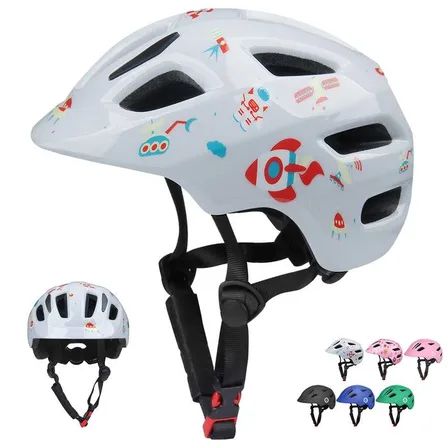
White Astronaut Bike Helmet for Kids by XJD – Toddler to Youth Sizes
4 reviews
The XJD White Astronaut kids' bike helmet is made for toddlers through younger e…$59.99
-
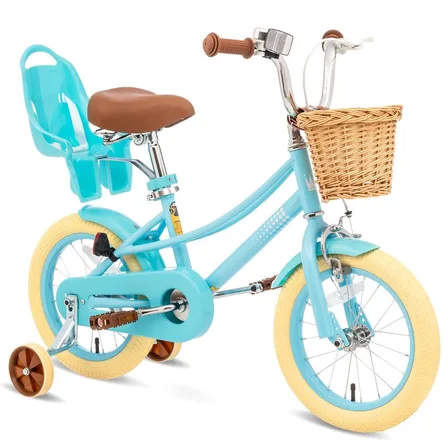
Girls' Training Wheel Bike by XJD, 12–20 Inch Wheels – Blue
This XJD girls' training wheel bike in Blue covers one of the widest fit ranges …$139
$159 -
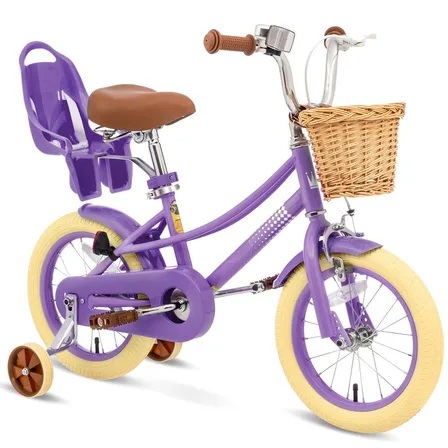
XJD Girls' Bike with Training Wheels, 12/14/16/20 Inch – Purple
The XJD girls' bike with training wheels in Purple is built to grow with your ri…$139
$159