

How to teach a kid how to ride a bike
Teach a kid to ride a bike by confirming the bike fits, practicing balance and braking first, then adding pedaling in a flat, open area.
Measure the rider before the first lesson
Measure the child’s height without shoes. Also check inseam against the actual bicycle: when straddling it, the child needs comfortable clearance rather than contact with the frame. Have the child sit on the saddle and hold the grips. They should reach the controls without stretching, steer without leaning forward excessively, and operate the brakes with their own hands.
Use age only as a starting clue. Measured height, inseam, reach, brake control and current confidence decide whether the bicycle is suitable. Do not choose an oversized bike merely to allow room for growth.
| Wheel size | Starting age | Rider height |
|---|---|---|
| 12 Inch | 3–4 | 34–40 in / 86–102 cm |
| 14 Inch | 3–6 | 37–45 in / 94–114 cm |
| 16 Inch | 4–7 | 40–48 in / 102–122 cm |
| 18 Inch | 5–9 | 43–52 in / 109–132 cm |
| 20 Inch | 7–12 | 48–60 in / 122–152 cm |
| 24 Inch | 10–14 | 54–64 in / 137–163 cm |
| 26 Inch | Youth and adults | Over 60 in / 153 cm |
Prepare the bike, helmet and practice area
Choose a wide, level, traffic-free paved area without parked cars, posts or crowds. Avoid starting on a hill: speed can arrive before the child has learned control. Dress the rider in secure footwear and clothing that cannot catch in moving parts.
A bicycle helmet should fit properly, sit level and have its straps adjusted according to its manufacturer’s instructions. Before riding, follow the exact bicycle manual for assembly, inspection and adjustments. If anything is loose, damaged or unclear, use a qualified bicycle mechanic rather than improvising a procedure or torque setting.
Teach the controls while stationary
Before asking for motion, name only the controls the child needs immediately: handlebars for direction and brakes for stopping. Hold the bicycle steady while the child practices looking ahead, turning the bars gently and applying the brakes. Ask them to show that they can reach and operate the brakes repeatedly without shifting their hands into an awkward position.
Agree on one simple instruction, such as “brake and feet down.” The child should understand and perform it while stationary before progressing.
Build balance before adding pedals
Start with short glides. Set the saddle only as permitted by the bicycle manual and within its marked limits; the goal at this stage is for the learner to feel supported and able to stop confidently. Let the child push forward, lift the feet briefly and look toward a visible point ahead.
Walk beside the rider. If support is needed, steady the child gently around the upper torso rather than steering the handlebars for them. Release support for a moment when balance appears, but tell the child before doing so. Repeat short, calm runs until the rider can:
- look ahead instead of down at the front wheel;
- glide along a roughly chosen line;
- slow with the brakes; and
- finish with both feet under control.
Add pedaling in small steps
Once gliding and stopping are consistent, position one pedal where the child can press it forward to start. Ask for one push, eyes ahead, then the second foot onto its pedal. Keep each attempt short enough that stopping remains deliberate.
- Practice starting and stopping in a straight line.
- Add gentle, wide turns in both directions.
- Practice looking toward the intended path through each turn.
- Combine a start, turn and controlled stop.
End the session while concentration is still good. Several brief sessions usually preserve confidence better than forcing progress after the child becomes tired or frustrated. Move beyond the practice area only when starting, steering and braking are repeatable without physical help.
Know when the supplied bikes are relevant
The supplied catalog options help only when comparing larger 24- or 26-inch beach cruiser sizes for a rider who has already reached those height starting points. They are not substitutes for the smaller wheel sizes commonly used during early learning, and each still requires an individual stand-over, reach and brake-control check.
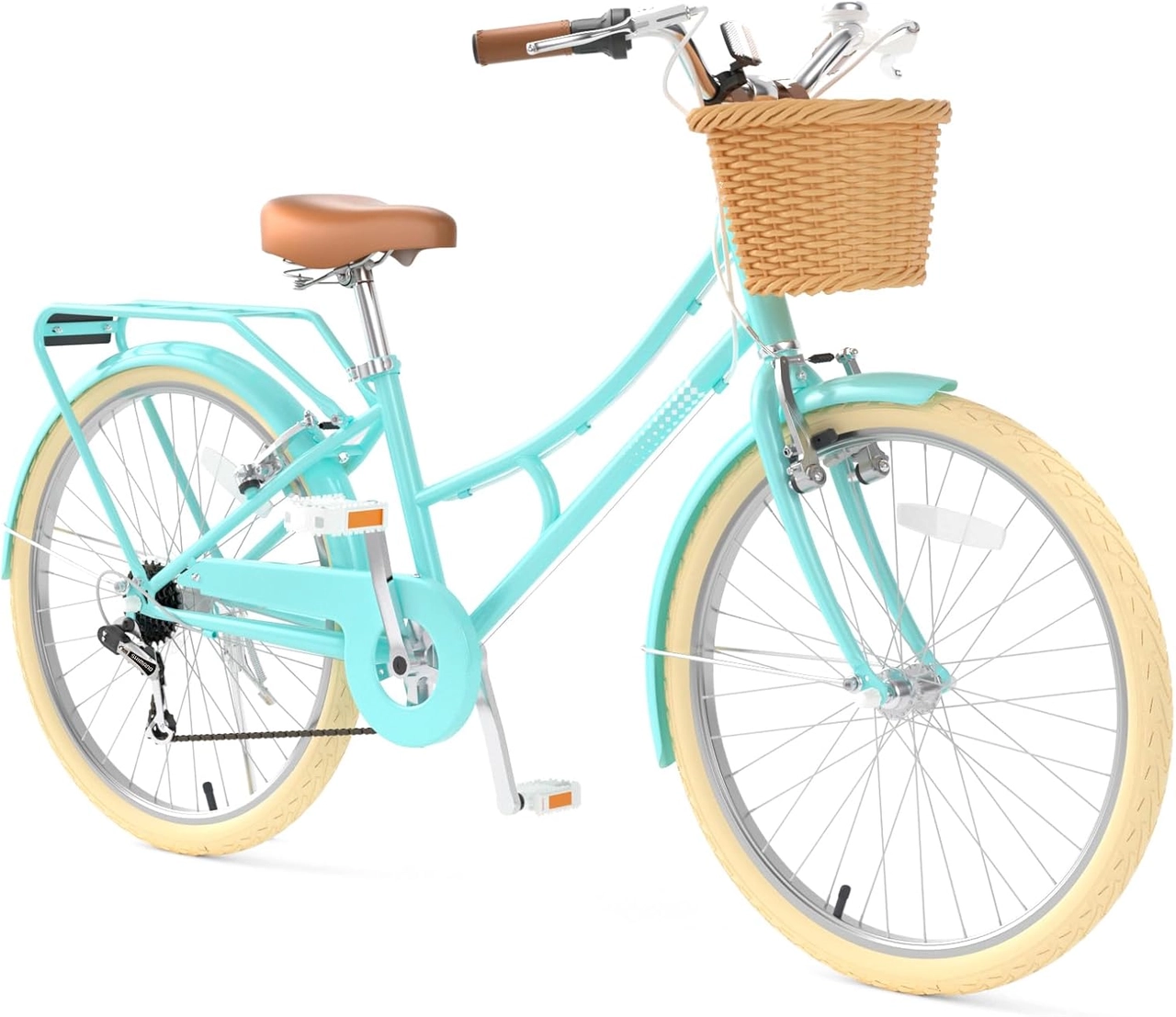 XJD 24-Inch Green Beach Cruiser Bike with U-Brake
A 24- or 26-inch beach cruiser comparison for taller learners. Available labels include Green / 24 Inch, Pink / 24 Inch and Pink / 26 Inch; individual fit and control still determine relevance.
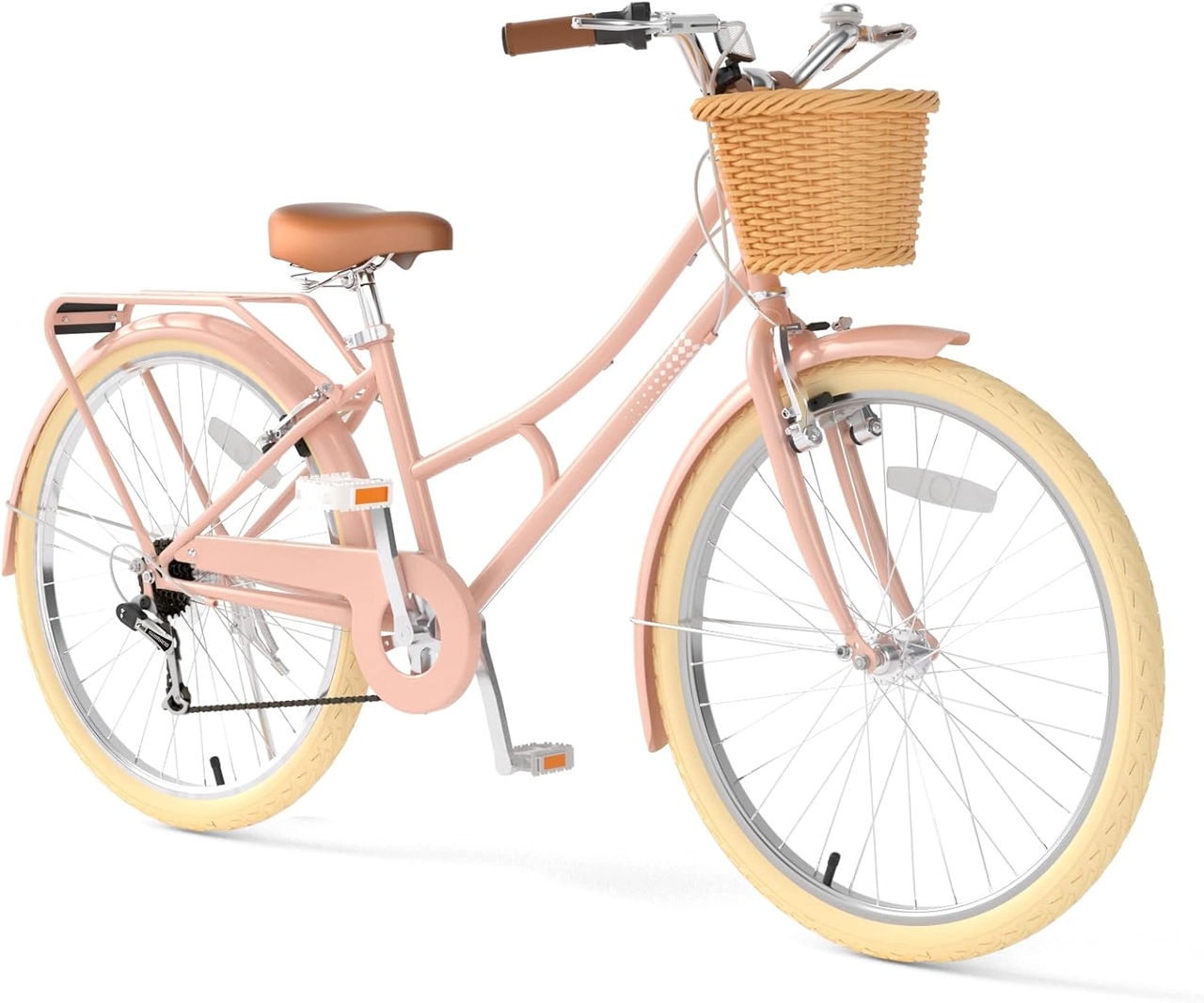 Pink XJD Beach Cruiser Bike, 24"/26", U-Brake
This beach cruiser offers 24 Inch and 26 Inch labels, making it relevant only when the rider matches the corresponding height starting point and passes stand-over, reach and brake-control checks.
XJD 24-Inch Green Beach Cruiser Bike with U-Brake is offered in Green / 24 Inch, Pink / 24 Inch and Pink / 26 Inch labels. Pink XJD Beach Cruiser Bike, 24"/26", U-Brake is offered in 24 Inch and 26 Inch labels. The useful comparison here is wheel size and available color label only; the supplied facts do not establish geometry, weight or suitability for a particular child.
A 24-inch option is a starting comparison for ages 10–14 and heights 54–64 in / 137–163 cm. A 26-inch option starts with youth and adults over 60 in / 153 cm. If the rider falls below those height ranges, cannot stand over the bicycle comfortably, must stretch to steer, or cannot operate its brakes, choose an appropriately smaller bicycle instead.
Make the next decision from observed control
Before the next lesson, record the child’s height, check inseam clearance on the actual bike, and watch one stationary brake demonstration. Continue with balance practice if fit and control are sound; add pedaling only after controlled glides and stops. Change the bicycle or seek a mechanic’s help if fit, assembly or brake operation remains uncertain.
Bikes for your next adventure
-

Kids Bike Helmet by XJD for Boys & Girls – Black, Blue, Green, Pink, Purple
The XJD Kids Bike Helmet covers a wide 2-to-8-year age range thanks to two head-…$59.99
-

Kids Bike Helmet by XJD for Girls – Pink
The XJD Kids Bike Helmet in Pink is a lightweight multi-sport helmet for girls r…$59.99
$99 -

XJD Kids Bike for Girls – Pink, 12/14/16/20 Inch with Training Wheels
The XJD Kids Bike for Girls in Pink is a training-wheel bike built to carry your…$139
$159