

What age is 18 inch bike for
An 18-inch bike is generally for children ages 5–9 who are 43–52 inches (109–132 cm) tall. Height and an individual fit check matter more than age.
Is an 18-inch bike the right starting point?
Use the age range only to begin the comparison. Measure the child’s height without shoes, then confirm that the actual bicycle fits their inseam, reach and present riding ability. Two children of the same age can need different wheel sizes because their proportions and confidence differ.
An 18-inch bike is worth trying when the rider falls within the 43–52-inch height range. It should not be bought oversized simply to allow room for growth. If the child cannot comfortably stand over the bicycle, reach the controls or operate the brakes, that particular bike does not fit—even when age and height fall inside the starting range.
What to measure and check
- Measure standing height: Have the child stand straight against a wall without shoes. Compare the result with the 43–52-inch (109–132 cm) starting range.
- Measure inseam: With feet slightly apart, measure from the floor to the crotch. Compare this measurement with the stand-over clearance and adjustment guidance for the exact bicycle.
- Check stand-over: Have the child straddle the bike with both feet on the ground. The frame must not prevent a comfortable, controlled stance.
- Check reach: While seated in a normal riding position, the child should reach the handlebar without stretching, locking the arms or leaning excessively.
- Check brake control: The rider must be able to reach and operate the bike’s brakes reliably. Consult the exact product manual or a qualified bicycle mechanic for adjustment or assembly questions.
- Watch confidence: Ask the child to start, steer, stop and put a foot down under close adult supervision. A hesitant or unstable rider may need a different fit even if the measurements appear suitable.
How 18 inches compares with nearby wheel sizes
| Wheel size | Age starting point | Rider-height starting point |
|---|---|---|
| 16 Inch | 4–7 | 40–48 in / 102–122 cm |
| 18 Inch | 5–9 | 43–52 in / 109–132 cm |
| 20 Inch | 7–12 | 48–60 in / 122–152 cm |
The ranges overlap, so a child near a boundary should try the relevant sizes rather than choosing from age alone. A child who is 47 inches tall, for example, falls within both the 16-inch and 18-inch starting ranges; reach, inseam, control and confidence should decide. A 50-inch rider falls within the 18-inch and 20-inch starting ranges, but that does not make the sizes interchangeable.
How the supplied XBikes products help with comparison
Neither supplied catalog product has an 18-inch option. They are nearest-size comparison points, not substitutes for an 18-inch bicycle. The Pink Girls' 12/14/16" Bike by XJD – Basket & Doll Seat is listed with 12 Inch, 14 Inch and 16 Inch SKU labels, so only its 16-inch option borders the requested size. The Blue XJD Freestyle BMX Bike, 20-Inch – No Pegs is a 20-inch model with a Default SKU label and sits on the other side of 18 inches.
These particular options help frame the decision below and above 18 inches: the 16-inch option has a starting range of ages 4–7 and heights 40–48 inches (102–122 cm), while the 20-inch starting range is ages 7–12 and heights 48–60 inches (122–152 cm). Their catalog availability does not prove that either fits a particular child.
 Pink Girls' 12/14/16" Bike by XJD – Basket & Doll Seat
This model offers 12 Inch, 14 Inch and 16 Inch SKU labels. Its 16-inch option is a nearby comparison point, but it is not an 18-inch substitute and still requires an individual fit check.
 Blue XJD Freestyle BMX Bike, 20-Inch – No Pegs
This 20-inch BMX model is a nearby larger-size comparison point. It is not equivalent to an 18-inch bike and is relevant only when the rider’s measurements, reach, brake control and confidence support a 20-inch fit.
Consider the 16-inch catalog option only if the child’s measurements and trial fit support 16 inches. Consider the 20-inch catalog product only if the child fits and controls a 20-inch bike. If the fit check points to 18 inches, look for an actual 18-inch model rather than treating either supplied product as equivalent.
What to do before deciding
Have the child try the exact bicycle whenever possible. Confirm comfortable stand-over, natural handlebar reach, dependable brake operation and the ability to start and stop without fighting the bike. If an in-person trial is unavailable, compare height and inseam with the exact manufacturer’s fit information and avoid sizing up merely for future growth.
For assembly, maintenance, compatibility, load limits and torque settings, follow the manual for the exact product or ask a qualified bicycle mechanic. Do not transfer instructions from a different wheel size or model.
A properly fitting bicycle helmet is also essential. It should fit the child correctly, sit level and have its straps used according to the helmet manufacturer’s instructions.
The 18-inch decision
Start with 18 inches when the child is roughly age 5–9 and measures 43–52 inches tall, then let the physical fit check make the final decision. Measure height and inseam now, arrange a trial, and choose 18 inches only if the child can stand over, reach, brake and ride with control.
Bikes for your next adventure
-

26-Inch XJD Beach Cruiser Bike for Girls – Purple, V-Brake
This XJD 26-inch purple beach cruiser is sized for big kids and teens — suggeste…$218.49
$229.99 -
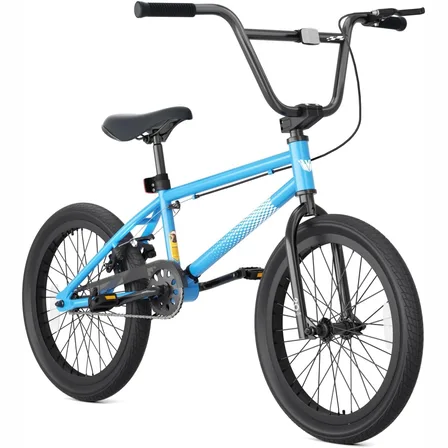
Blue XJD Freestyle BMX Bike, 20-Inch – No Pegs
The XJD 20-Inch Blue Freestyle BMX is an entry-level BMX bike for boys and girls…$189.99
-
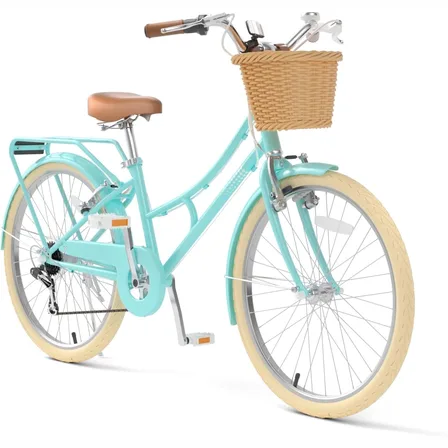
XJD Kids Beach Cruiser Bicycle, Rear Rack & V-Brakes, Mint Green
The XJD Beach Cruiser in Mint Green is a geared, multi-speed cruiser bike for ol…$179.99
$209.99