

How to teach an older child to ride a bicycle
Teach an older child to ride by fitting the bike to the child, lowering the learning difficulty, practising balance before pedalling, and adding one skill at a time.
Measure the rider before choosing a bicycle
Measure the child’s height and inseam while they wear the shoes they will use for riding. Age is only a starting point. The final choice depends on whether the rider can stand over the bicycle, reach the handlebar comfortably, operate the brakes, and control the bike without stretching or leaning awkwardly.
Have the child try the bicycle whenever possible. Do not choose an oversized model simply to allow room for growth. A larger wheel label does not compensate for poor stand-over clearance, excessive reach, or brakes the child cannot operate confidently.
| Wheel size | Starting age | Starting rider height |
|---|---|---|
| 12 Inch | 3–4 | 34–40 in / 86–102 cm |
| 14 Inch | 3–6 | 37–45 in / 94–114 cm |
| 16 Inch | 4–7 | 40–48 in / 102–122 cm |
| 18 Inch | 5–9 | 43–52 in / 109–132 cm |
| 20 Inch | 7–12 | 48–60 in / 122–152 cm |
| 24 Inch | 10–14 | 54–64 in / 137–163 cm |
| 26 Inch | Youth and adults | Over 60 in / 153 cm |
Use these ranges only to identify sizes worth trying. A child near an overlap may control the smaller option better, especially when learning later than peers or feeling nervous.
Set up a low-pressure first session
Choose a flat, open area away from traffic, parked vehicles, steep slopes, and busy paths. The child should wear a properly fitting bicycle helmet. It should sit level, and its straps should be adjusted according to the helmet manufacturer’s instructions.
Before moving, ask the child to demonstrate that they can mount, place both feet down, hold a straight line through the handlebar, and reach every brake control. Follow the exact bicycle manual for assembly and adjustments; use a qualified bicycle mechanic when the instructions are missing or the setup is uncertain.
Teach balance before pedalling
- Start with walking: Have the child sit on the bicycle and move it forward with short steps, learning how steering responds.
- Progress to gliding: Encourage longer pushes followed by brief moments with both feet raised. Look ahead rather than down at the front wheel.
- Practise controlled stops: Begin at walking speed. The child should use the bicycle’s controls smoothly and put a foot down only as the bike finishes stopping.
- Add pedalling: Once glides are repeatable, position a pedal for a strong first push, then support with words rather than holding or steering the bicycle.
- Combine the skills: Practise starting, riding straight, gentle turns, slowing, stopping, and restarting in short sessions.
Stand nearby without gripping the handlebar. Holding the bike upright can prevent the rider from feeling and correcting small changes in balance. End a session when concentration or confidence drops; a calm repeat the next day is more useful than forced extra laps.
Decide whether training wheels help
For an older beginner, training wheels may provide initial reassurance, but they change the balance task. If the child can already glide and correct a lean, continue practising those skills instead of adding training wheels. If fear prevents any useful movement, a training-wheel model can be considered as a confidence-building comparison, provided its size and controls fit the rider.
The supplied catalog options cover training-wheel bicycles in 12, 14, 16, and 20 Inch labels, plus a beach cruiser in 24 and 26 Inch labels. They help compare the size categories most likely to bracket an older beginner’s measurements, but none should be selected from age or wheel label alone.
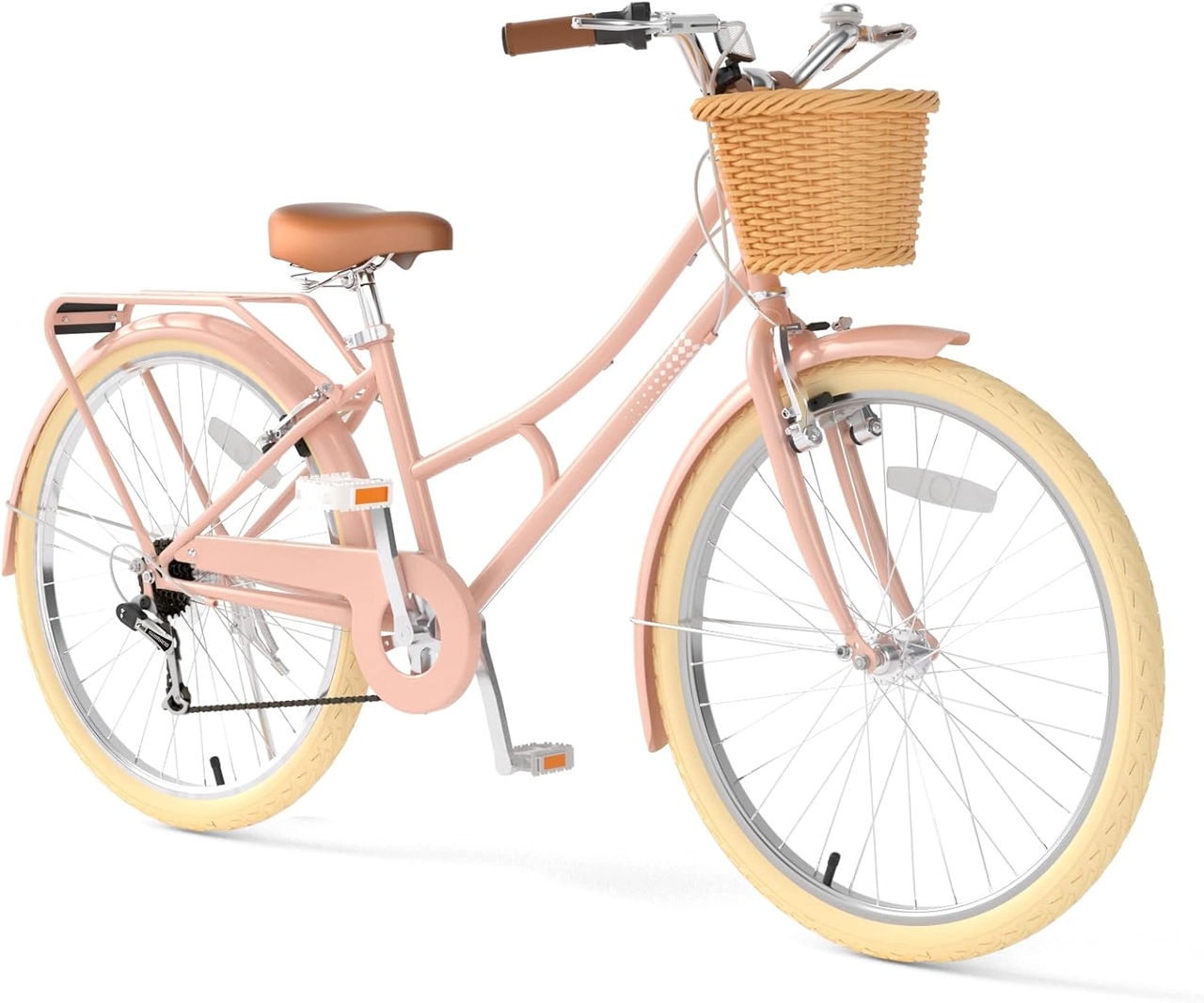 Pink XJD Beach Cruiser Bike, 24"/26", U-Brake
Available in 24 Inch and 26 Inch options, this U-brake beach cruiser provides comparison points for taller older learners whose measurements fit those XBikes starting ranges.
 Light Pink XJD Girls' Bicycle with Basket & Training Wheels
Its 12, 14, 16, and 20 Inch options make this training-wheel bicycle relevant for comparing several smaller fit ranges, especially the 20 Inch range for some older beginners.
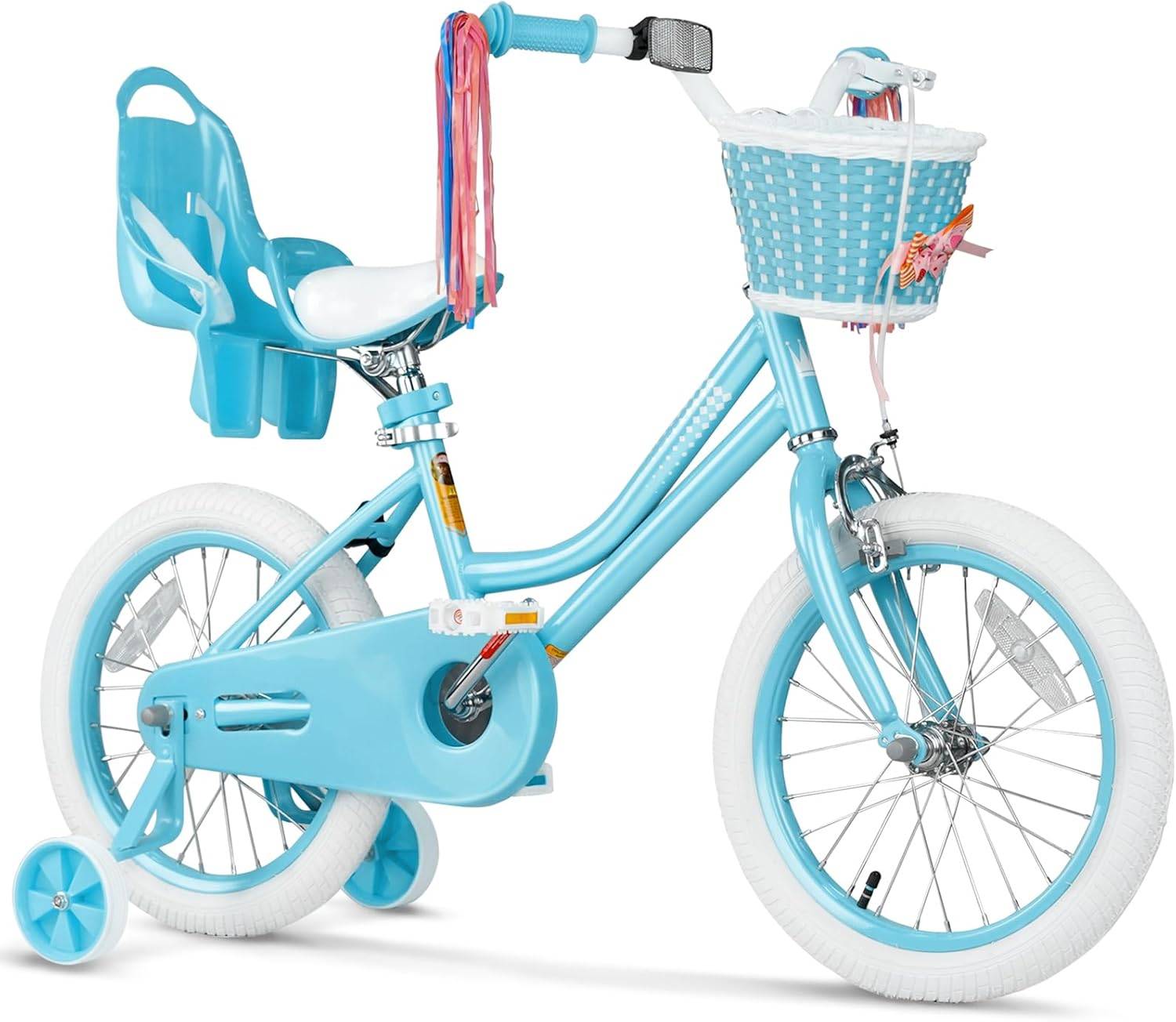 Blue XJD Girls Bike with Training Wheels – 12/14/16 Inch
This training-wheel bicycle is available in 12, 14, and 16 Inch options. It is relevant only when an older beginner’s individual measurements and control support one of those smaller sizes.
Compare the supplied bicycles by fit and purpose
Light Pink XJD Girls' Bicycle with Basket & Training Wheels is listed in 12, 14, 16, and 20 Inch options. Its 20 Inch option falls within the XBikes starting range of ages 7–12 and heights 48–60 in / 122–152 cm, but the rider still needs an individual fit check.
Blue XJD Girls Bike with Training Wheels – 12/14/16 Inch offers 12, 14, and 16 Inch options. It is relevant only if the older child’s measured height, inseam, reach, brake control, and confidence support one of those smaller sizes; the wording in its title is not fit evidence.
Pink XJD Beach Cruiser Bike, 24"/26", U-Brake provides 24 and 26 Inch comparison points. The 24 Inch starting range is ages 10–14 and heights 54–64 in / 137–163 cm; 26 Inch starts with youth and adults over 60 in / 153 cm. The catalog identifies a U-brake, but brake reach and control must still be checked on the actual bicycle.
Know when to progress
Move beyond the practice area only when the child can start without a push, look ahead, hold a predictable line, turn both ways, slow smoothly, stop where intended, and recover from a small wobble without panic. Traffic skills require separate instruction and supervision.
Measure the child now, shortlist only the wheel sizes that match that measurement, and arrange a fit check. Then begin with walking and gliding; add pedalling only after the child can balance and stop under control.
Bikes for your next adventure
-

Kids Bike Helmet by XJD for Boys & Girls – Black, Blue, Green, Pink, Purple
The XJD Kids Bike Helmet covers a wide 2-to-8-year age range thanks to two head-…$59.99
-

Kids Bike Helmet by XJD for Girls – Pink
The XJD Kids Bike Helmet in Pink is a lightweight multi-sport helmet for girls r…$59.99
$99 -

XJD Kids Bike for Girls – Pink, 12/14/16/20 Inch with Training Wheels
The XJD Kids Bike for Girls in Pink is a training-wheel bike built to carry your…$139
$159