

Is 20 inch bike good for 10 year old
Yes—a 20 inch bike can be good for a 10-year-old who is 48–60 in (122–152 cm) tall and can comfortably stand over, reach and control it. Age alone is not enough.
Start with height, not the tenth birthday
XBikes uses 20 inch wheels as a starting point for ages 7–12 and rider heights of 48–60 in (122–152 cm). A 10-year-old falls within that age band, but the child’s measured height is the more useful first comparison.
There is an important overlap with 24 inch bikes, which start at ages 10–14 and heights of 54–64 in (137–163 cm). Therefore, a child between 54 and 60 in (137 and 152 cm) may fall within both starting ranges. That does not make the sizes interchangeable: the better choice is the bike the child can actually control.
| Wheel size | XBikes age starting point | XBikes height starting point |
|---|---|---|
| 20 Inch | Ages 7–12 | 48–60 in / 122–152 cm |
| 24 Inch | Ages 10–14 | 54–64 in / 137–163 cm |
| 26 Inch | Youth and adults | Over 60 in / 153 cm |
Measure before comparing bikes
Measure the child’s height without shoes, standing upright against a wall. Then measure inseam from the floor to the crotch while the child stands naturally. Height identifies likely wheel sizes; inseam helps you evaluate stand-over room on the actual frame.
Do not convert inseam into a bike size using an invented formula. Frame shapes and adjustment ranges vary, even when wheel diameters match. Compare the measurements with the exact bicycle and follow its product manual for adjustment, assembly, load limits, compatibility and torque. If anything is unclear, use a qualified bicycle mechanic.
Require an individual fit check
Have the child try the bicycle before deciding. The American Academy of Pediatrics advises against buying an oversized bike merely for future growth. During the check, confirm that the rider can:
- Stand over the frame comfortably rather than being forced against it.
- Reach the handlebar without stretching, locking the elbows or losing a stable posture.
- Turn the handlebar and look ahead while remaining balanced.
- Reach and operate the brakes with enough control to stop confidently.
- Start, pedal, steer and stop without the bicycle feeling unwieldy.
A child who fits the height band but cannot complete these checks is not ready for that particular 20 inch bike. Conversely, being ten does not automatically justify moving to a 24 inch model.
How confidence affects the decision
Current riding confidence matters alongside physical dimensions. A hesitant rider may struggle with a bicycle that feels long, tall or difficult to stop, even if the wheel-size chart appears suitable. A confident rider still needs proper stand-over clearance, reach and brake control; skill cannot correct a poor fit.
Use a calm, low-pressure trial area. Ask the child to demonstrate controlled starts, turns and stops rather than accepting a seated pose as proof of fit. If the child cannot manage the bike predictably, compare another correctly sized frame instead of assuming practice will solve an oversized setup.
Where the supplied 20 inch option fits
The catalog includes the XJD Girls' Bike with Training Wheels, 12/14/16/20 Inch – Purple. Its available size labels include 12 Inch, 14 Inch, 16 Inch and the requested 20 Inch, so the 20 Inch option is directly relevant for comparison. The title also identifies training wheels, which may be pertinent to a child who still uses that type of support. These facts do not replace checking the individual bike’s frame fit, controls or manual.

Compare the 20 Inch label specifically; the smaller 12, 14 and 16 Inch labels are different wheel sizes and should not be treated as equivalent choices for a ten-year-old. Do not infer brake type, construction, weight, load limit or certification from the catalog title because those details were not supplied.
Helmet and final decision
For every ride, use a bicycle helmet that fits properly. U.S. Consumer Product Safety Commission guidance says it should sit level and its straps should be adjusted according to the helmet manufacturer’s instructions.
Choose a 20 inch bike for the 10-year-old only if measured height is within 48–60 in (122–152 cm) and the real-bike check confirms comfortable stand-over, reach, braking and confident control. If the child is 54–60 in (137–152 cm), compare an actual 24 inch bike as well. If the child is over 60 in (153 cm), begin with the 26 inch youth/adult starting point rather than assuming a 20 inch bike will fit.
Bikes for your next adventure
-
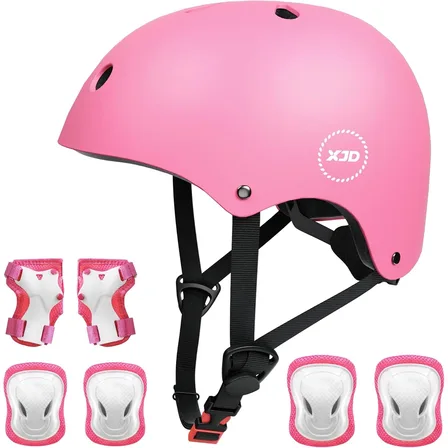
XJD Kids Helmet & Protective Gear Set for Girls, Pink
The XJD Kids Helmet & Protective Gear Set in Pink is a complete safety kit for g…$24.64
-

Kids Bike Helmet by XJD for Girls – Pink
The XJD Kids Bike Helmet in Pink is a lightweight multi-sport helmet for girls r…$59.99
$99 -
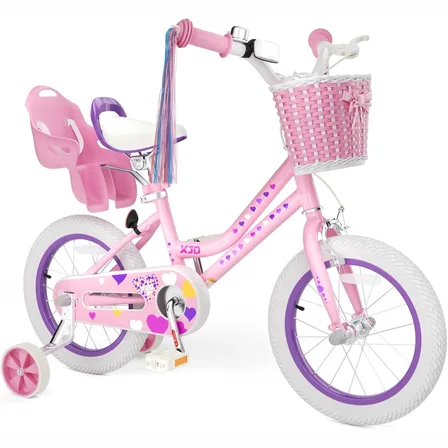
Light Pink XJD Girls' Bicycle with Basket & Training Wheels
The Light Pink XJD Girls' Bicycle with Basket & Training Wheels is a retro-style…$109.99
$129.99