

Is 20 inch bike good for 9 year old
Yes, a 20-inch bike can be good for a 9-year-old if the child is 48–60 inches (122–152 cm) tall and can comfortably control that specific bike.
Start with height, not the ninth birthday
XBikes lists 20-inch wheels as a starting point for ages 7–12 and rider heights of 48–60 inches (122–152 cm). That places many 9-year-olds in the expected range, but age alone cannot confirm the fit. Children of the same age can differ substantially in height, leg length, reach and riding confidence.
Measure the child barefoot, standing straight against a wall. Then measure the inseam from the floor to the crotch. Height helps identify the likely wheel-size range; inseam helps assess whether the child can stand over the actual bicycle without being pressed against its frame.
Compare the nearby wheel sizes
| Wheel size | XBikes starting point | What it means at age 9 |
|---|---|---|
| 18 Inch | Ages 5–9; 43–52 in / 109–132 cm | Worth comparing when the rider is below 48 inches or lacks confidence on a larger bike. |
| 20 Inch | Ages 7–12; 48–60 in / 122–152 cm | The usual starting point when the measured height falls within this range. |
| 24 Inch | Ages 10–14; 54–64 in / 137–163 cm | May overlap by height, but should not be chosen merely to allow room for growth. |
A child between 54 and 60 inches falls within both the 20-inch and 24-inch height ranges. That overlap calls for an actual comparison, not an automatic move to the larger wheel. Follow the fit and control checks below on each candidate.
Have the child try the exact bicycle
The American Academy of Pediatrics advises having a child try the bicycle and avoiding an oversized model bought simply for future growth. Wheel diameter does not reveal the frame shape, saddle position or reach, so two bicycles with 20-inch wheels may feel different.
- Check stand-over: With the child standing over the frame, confirm that the bicycle is not pressing into the crotch and can be steadied without strain.
- Check the seated position: The child should feel balanced and able to start and stop without panic or a forced stretch.
- Check reach: Hands should reach the handlebar comfortably while the child remains in control rather than leaning excessively.
- Check braking: Confirm that the child can reach and operate the controls on the specific bicycle. Do not assume suitability from wheel size alone.
- Watch a short ride: Look for controlled starts, turns and stops. Wobbling, fear, difficulty steering or inability to stop reliably means the fit or setup needs reconsideration.
How the supplied catalog options relate
The catalog includes one verified 20-inch option and another useful smaller-size comparison. They help answer whether a 20-inch bike is relevant, but their titles and wheel labels cannot replace measuring the child and checking control on the assembled bicycle.
 XJD Kids Bike for Girls – Pink, 12/14/16/20 Inch with Training Wheels
The supplied sizes include a 20 Inch label, making this model directly relevant for comparison when the child measures 48–60 inches and passes an individual fit and control check.
 XJD Light Purple Girls Bike with Basket, Training Wheels, 12/14/16/20 Inch
Despite 20 Inch appearing in the exact catalog title, the supplied available SKU labels stop at 16 Inch. Treat this product as a smaller-size comparison point, not a verified available 20-inch option.
XJD Kids Bike for Girls – Pink, 12/14/16/20 Inch with Training Wheels has supplied size labels of 12 Inch, 14 Inch, 16 Inch and 20 Inch. Its 20-inch label makes it directly relevant to this question, subject to the individual fit checks above. The presence of training wheels in the catalog title does not establish the rider’s readiness or confirm fit.
XJD Light Purple Girls Bike with Basket, Training Wheels, 12/14/16/20 Inch mentions 20 Inch in its exact catalog title, but the supplied available SKU labels are only 12 Inch, 14 Inch and 16 Inch. Therefore, it is a smaller-size comparison point in the provided data, not a verified available 20-inch choice. Do not treat its title wording as proof that a 20-inch SKU is available.
Finish the decision safely
If the child measures 48–60 inches, try a 20-inch bicycle first. If the child is under 48 inches, compare the 18-inch range rather than forcing a 20-inch fit. If the child is at least 54 inches, a 24-inch model may also merit an in-person comparison, but only when stand-over, reach, braking and confidence remain comfortable.
Use a properly fitting bicycle helmet on every ride. U.S. Consumer Product Safety Commission guidance says the helmet should sit level and its straps should be adjusted according to the manufacturer’s instructions. For assembly, maintenance, load limits, compatibility and torque requirements, follow the exact product manual or ask a qualified bicycle mechanic.
The practical answer is simple: choose 20 inches for this 9-year-old only after measuring height and inseam, then confirming comfortable stand-over, reach, brake operation and controlled riding on that exact bike.
Bikes for your next adventure
-
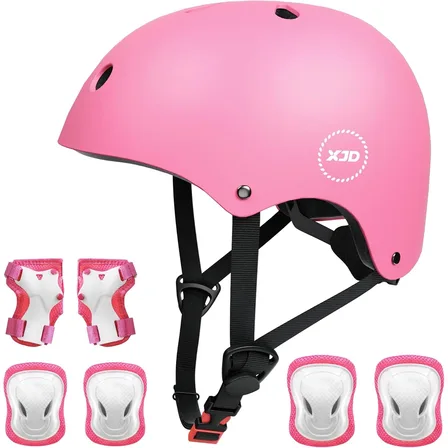
XJD Kids Helmet & Protective Gear Set for Girls, Pink
The XJD Kids Helmet & Protective Gear Set in Pink is a complete safety kit for g…$24.64
-

Kids Bike Helmet by XJD for Girls – Pink
The XJD Kids Bike Helmet in Pink is a lightweight multi-sport helmet for girls r…$59.99
$99 -

Light Pink XJD Girls' Bicycle with Basket & Training Wheels
The Light Pink XJD Girls' Bicycle with Basket & Training Wheels is a retro-style…$109.99
$129.99