

Is 20 inch bike good for what height
A 20-inch bike generally suits a child 48–60 inches (122–152 cm) tall, often around ages 7–12, but the child must pass an individual fit check.
Start with measured height, not age
Measure the rider barefoot, standing straight against a wall. Compare that height with the XBikes starting range for a 20-inch wheel bike: 48–60 inches (122–152 cm). Age is only a rough reference because children of the same age can have different leg lengths, arm lengths, coordination and confidence.
A rider below 48 inches may be better matched to a smaller starting point: the XBikes range for an 18-inch bike is 43–52 inches (109–132 cm). A rider near the upper end of the 20-inch range may also overlap the 24-inch starting range of 54–64 inches (137–163 cm). Overlap means that a hands-on comparison is needed; it does not mean the sizes fit identically.
| Wheel size | XBikes rider-height starting point | Typical age reference |
|---|---|---|
| 18 Inch | 43–52 in / 109–132 cm | 5–9 |
| 20 Inch | 48–60 in / 122–152 cm | 7–12 |
| 24 Inch | 54–64 in / 137–163 cm | 10–14 |
Measure inseam for the stand-over check
Height narrows the search, but inseam helps reveal whether the frame is manageable. Have the child stand barefoot with feet slightly apart. Place a firm, thin book upward between the legs, as if it were a bicycle saddle, and measure from the floor to the book’s top edge.
Then have the child try the actual bicycle. With both feet flat on the ground and the bike upright, check that the rider can stand over the frame without the top tube pressing into the body. Frame shapes vary, so wheel diameter alone cannot establish stand-over clearance. Do not buy a bike that is currently oversized simply to allow room for growth.
Check reach, steering and brakes
Seat the child on the bicycle and watch the whole riding position. The rider should reach the handlebar without stretching, locking the elbows or leaning so far forward that steering becomes awkward. They should be able to turn the handlebar both ways while remaining balanced and in control.
Ask the rider to operate each brake control from a normal hand position. Fingers must reach and use the controls confidently without the hand slipping away from the grip. Also confirm that the child can start, stop, mount and dismount without panic or assistance beyond what is appropriate for their present riding ability.
If the child is technically within the height range but cannot control the bike comfortably, the 20-inch bike is not a good current fit. A confident rider near a size boundary may compare adjacent sizes, but current control should decide—not the desire to keep the bicycle longer.
How the supplied catalog option helps
The XJD Pink Beach Cruiser for Girls – Rear Rack & V-Brake is offered with 20 Inch, 24 Inch and 26 Inch SKU labels. Its 20 Inch option directly matches the wheel size in the question, while its labeled larger options can help a rider at the upper boundary understand that wheel sizes are distinct choices requiring separate fit checks.
These particular catalog options are useful because the same exact product title lists 20 Inch alongside 24 Inch and 26 Inch choices, making wheel-size selection explicit rather than something to infer from an image.

Do not treat the 24 Inch or 26 Inch labels as equivalent substitutes for 20 Inch. Under the XBikes starting points, 24 Inch corresponds to 54–64 inches (137–163 cm), while 26 Inch is for youth and adults over 60 inches (153 cm). The rider still needs to try the chosen bicycle because frame geometry, reach and confidence can differ even when height falls within a stated range.
Complete the fit check before deciding
- Measure the child’s barefoot height and inseam.
- Use 48–60 inches (122–152 cm) only as the starting range for a 20-inch bike.
- Have the child stand over the actual frame and sit in a normal riding position.
- Confirm comfortable handlebar reach, steering, brake reach, starting and stopping.
- Compare an adjacent size only when the measured height overlaps its range, then choose according to present control and confidence.
A properly fitting helmet is also essential: it should fit the child, sit level and have its straps adjusted according to the helmet manufacturer’s instructions. For assembly, adjustments, maintenance, compatibility, load limits or torque requirements, follow the exact bicycle manual or ask a qualified bicycle mechanic rather than guessing.
The practical answer
Choose a 20-inch bike when the rider measures 48–60 inches tall and can comfortably clear, reach and control the actual bicycle. If any of those checks fail, pause and compare the appropriate adjacent size instead of forcing the 20-inch choice or buying oversized for future growth.
Bikes for your next adventure
-

Light Pink XJD Girls' Bicycle with Basket & Training Wheels
The Light Pink XJD Girls' Bicycle with Basket & Training Wheels is a retro-style…$109.99
$129.99 -

Kids Bike Helmet by XJD for Girls – Pink
The XJD Kids Bike Helmet in Pink is a lightweight multi-sport helmet for girls r…$59.99
$99 -
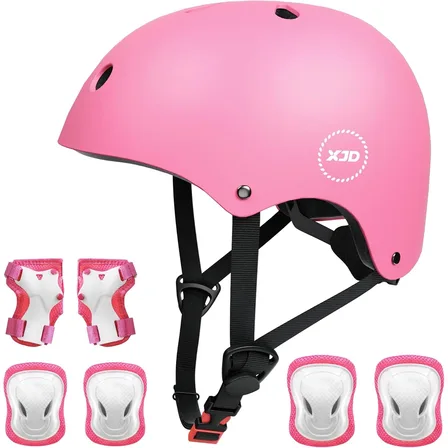
XJD Kids Helmet & Protective Gear Set for Girls, Pink
The XJD Kids Helmet & Protective Gear Set in Pink is a complete safety kit for g…$24.64