

Is a 20 inch bike good for adults
Usually, no: a 20-inch bike is generally too small for an adult. It may suit a shorter adult only if height, inseam, reach and control all check out in person.
When can a 20-inch bike fit an adult?
Wheel size alone does not determine fit, but it is a useful starting point. The XBikes standard places 20-inch bikes at rider heights of 48–60 inches (122–152 cm), with ages 7–12 given only as a secondary guide. It places riders over 60 inches (153 cm) in the 26-inch youth-and-adult range.
An adult within the 20-inch height range might be able to use a particular 20-inch bike, but adult status does not prove suitability and the chart does not guarantee fit. Frame proportions, riding position and controls can differ even when two bicycles share a wheel size. The rider must try the exact bike rather than relying on its wheel label.
| Wheel size | XBikes rider-height starting point | What it means here |
|---|---|---|
| 20 Inch | 48–60 in / 122–152 cm | Potentially relevant to a shorter adult, subject to a complete fit check |
| 24 Inch | 54–64 in / 137–163 cm | A comparison size where the height ranges overlap |
| 26 Inch | Over 60 in / 153 cm | The stated youth-and-adult starting point for taller riders |
Measure before comparing bicycles
First measure the rider’s height without shoes, standing upright against a wall. Then measure inseam from the floor to the crotch using a firm, level object to represent the top of a bicycle saddle. Record both measurements in inches or centimetres.
Use measured height to choose which wheel-size ranges deserve an in-person comparison. Use inseam at the bicycle itself: the rider needs usable clearance when standing over the frame. Do not invent a clearance target or assume that a smaller wheel automatically produces the right frame height; check the instructions for the exact bicycle or ask a qualified bicycle mechanic.
Try the exact 20-inch bike
With the bicycle supported securely, have the rider perform these checks:
- Stand-over: The rider can straddle the frame and place their feet securely on the ground without the frame preventing a controlled stop or dismount.
- Saddle position: The saddle can be adjusted to a usable position within the limits marked by the manufacturer.
- Reach: The rider can hold the handlebar without being cramped, excessively folded or stretched forward.
- Steering: The rider can turn the handlebar while maintaining balance and control, without knees or body position interfering.
- Brake control: The rider can reach and operate the provided brakes confidently from a normal riding position.
- Confidence: Starting, riding, turning and stopping feel controlled at low speed in a suitable practice area.
If any check fails, that 20-inch bike is not a good fit, even if the rider’s height appears in the chart. Do not choose an awkwardly sized bicycle with the expectation that the rider will adapt to it.
How the two catalog options help
The supplied catalog includes two relevant 20-inch reference points: Girls' Training Wheel Bike by XJD with Basket – Purple has a 20 Inch SKU label, while Blue XJD Freestyle BMX Bike, 20-Inch – No Pegs is cataloged as a kids’ BMX bike. They help identify actual 20-inch options, but their different catalog categories also show why the wheel label cannot replace trying the exact bicycle.
 Girls' Training Wheel Bike by XJD with Basket – Purple
This training-wheel model includes a 20 Inch SKU label, making that selection relevant for an exact-bike fit check. Its 14 Inch and 16 Inch selections are smaller alternatives, not equivalent sizes.
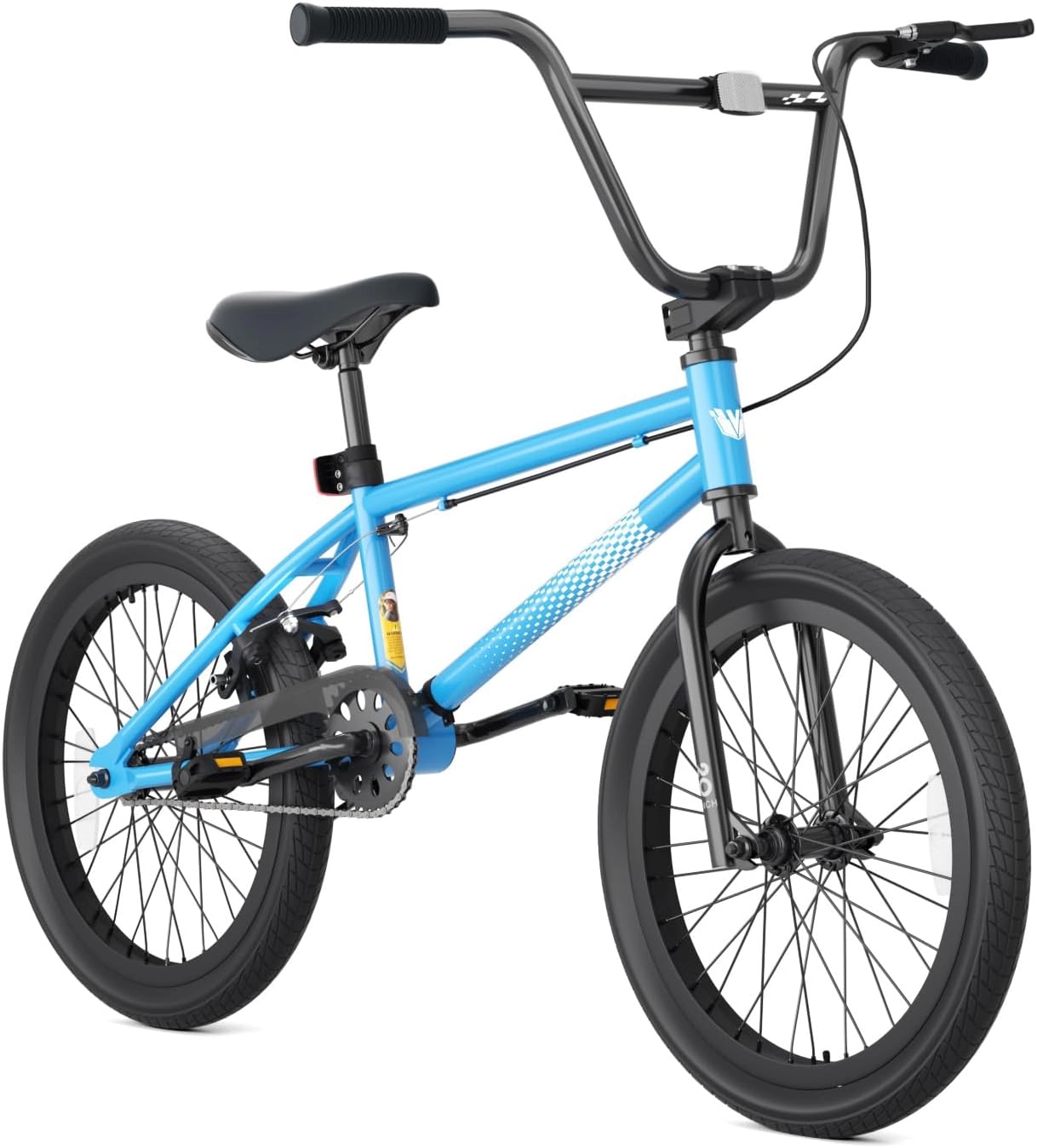 Blue XJD Freestyle BMX Bike, 20-Inch – No Pegs
This kids' BMX catalog option is explicitly titled as a 20-inch bike. Its supplied facts do not establish adult fit, so the rider must verify stand-over, reach, brake control and confidence.
Girls' Training Wheel Bike by XJD with Basket – Purple is listed under Training Wheel Bikes and is offered with 14 Inch, 16 Inch and 20 Inch SKU labels. Only its 20 Inch selection is relevant to this question; the smaller selections are not substitutes for a 20-inch bike. Its title and category do not establish adult fit.
Blue XJD Freestyle BMX Bike, 20-Inch – No Pegs is a 20-inch catalog option in Kids' BMX Bikes. “Default” is its only supplied SKU label. The provided facts do not establish its frame dimensions, load limit, brake arrangement or suitability for a particular adult, so those points must be confirmed from the exact product manual and an individual fit check.
Do not size up or down by age alone
The American Academy of Pediatrics guidance summarized for this article favors having the rider try the bicycle, checking stand-over, control and brake reach, and avoiding an oversized bike bought merely for future growth. The same principle applies in reverse: an adult should not accept a cramped 20-inch bicycle simply because its wheels seem easier to manage.
Before riding, use a properly fitting bicycle helmet. It should sit level, with its straps adjusted according to the helmet manufacturer’s instructions. For assembly, maintenance, load limits, compatibility and torque settings, follow the exact bicycle manual or use a qualified bicycle mechanic.
The practical decision
If the adult is over 60 inches (153 cm), begin the comparison at the stated 26-inch youth-and-adult range rather than assuming a 20-inch model will work. If the adult is 60 inches or shorter, a 20-inch bike remains only a candidate: measure height and inseam, compare overlapping sizes where applicable, and accept the exact bike only when stand-over, reach, steering, brake operation and low-speed control all work comfortably.
Bikes for your next adventure
-

Kids Bike Helmet by XJD for Girls – Pink
The XJD Kids Bike Helmet in Pink is a lightweight multi-sport helmet for girls r…$59.99
$99 -
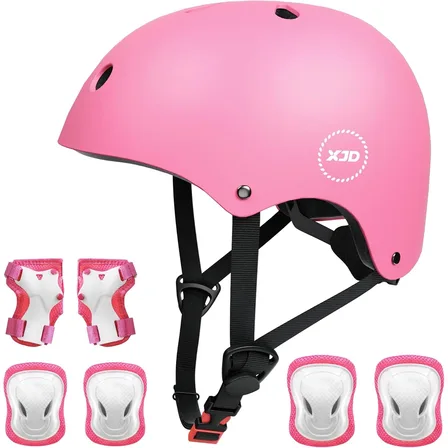
XJD Kids Helmet & Protective Gear Set for Girls, Pink
The XJD Kids Helmet & Protective Gear Set in Pink is a complete safety kit for g…$24.64
-

Light Pink XJD Girls' Bicycle with Basket & Training Wheels
The Light Pink XJD Girls' Bicycle with Basket & Training Wheels is a retro-style…$109.99
$129.99