

Is a 16 inch bike frame too small
A 16 inch bike frame may be too small if the rider cannot pedal, steer and brake without crowding. First confirm whether “16 inch” means frame size or wheel size.
Frame size and wheel size are not the same
On children’s bicycles, “16 inch bike” usually describes wheel diameter. A 16 inch frame measurement is a different specification and may refer to the distance between particular points on the bicycle frame. You cannot use one measurement as a substitute for the other.
Check the bicycle label, listing or exact product manual to identify what the 16 inch figure describes. If it is a frame dimension, wheel-size age and height ranges cannot determine whether that frame fits. The rider must try the bicycle, and the manufacturer’s fit information should be followed.
Measure the rider before deciding
Measure the child without shoes, standing straight against a wall. Record total height. Then measure inseam from the floor to the crotch using a firm book held level between the legs. These measurements create a useful starting point, but the bicycle itself still needs to be checked.
For a bicycle marketed by wheel size, compare measured height with these XBikes starting points:
| Wheel size | Starting age | Rider height |
|---|---|---|
| 12 Inch | 3–4 | 34–40 in / 86–102 cm |
| 14 Inch | 3–6 | 37–45 in / 94–114 cm |
| 16 Inch | 4–7 | 40–48 in / 102–122 cm |
| 18 Inch | 5–9 | 43–52 in / 109–132 cm |
| 20 Inch | 7–12 | 48–60 in / 122–152 cm |
| 24 Inch | 10–14 | 54–64 in / 137–163 cm |
| 26 Inch | Youth and adults | Over 60 in / 153 cm |
Overlapping ranges are intentional: height is more useful than age, and neither replaces an individual fit check. Inseam, reach, brake control and the child’s current confidence must guide the final choice.
Signs that the bicycle is too small
A small bicycle is not identified by age alone. With the seat adjusted only within the limits shown by the exact product manual, watch the child ride and look for several connected problems:
- Knees rise excessively or feel crowded against the handlebar while pedaling.
- The child cannot use a comfortable pedaling position without exceeding the permitted seat adjustment.
- The cockpit forces cramped arms, awkward steering or poor control.
- The rider has difficulty reaching and operating the brakes reliably.
One observation may reflect adjustment rather than size. If correct adjustment within the manual’s limits does not produce comfortable control, the bicycle is too small or otherwise unsuitable. Do not improvise beyond the manual; ask a qualified bicycle mechanic when adjustment, assembly or compatibility is uncertain.
Check the fit on the actual bicycle
Have the child try the bicycle rather than buying solely from a chart. While standing over it, the rider needs usable clearance and control. While seated, the child should reach the handlebar without stretching or being crowded, steer smoothly, pedal comfortably and operate every brake control confidently.
American Academy of Pediatrics guidance supports trying the bicycle, checking stand-over and brake reach, and avoiding an oversized bicycle bought merely for growth. Moving up is not automatically better: a larger bicycle that compromises control is not an appropriate solution to a small one.
- Confirm whether 16 inches identifies the frame or wheels.
- Measure height and inseam.
- Compare height with the wheel-size starting points when applicable.
- Perform stand-over, reach, pedaling, steering and brake checks.
- Choose the size the child controls now, not one intended only for future growth.
How the supplied 16 Inch options help
The two catalog options are relevant when “16 inch” means wheel size: both offer 12 Inch, 14 Inch and 16 Inch SKU labels, allowing those wheel-size choices to be compared. They do not establish a 16 inch frame dimension, and their shared training-wheel category does not replace a fit check.
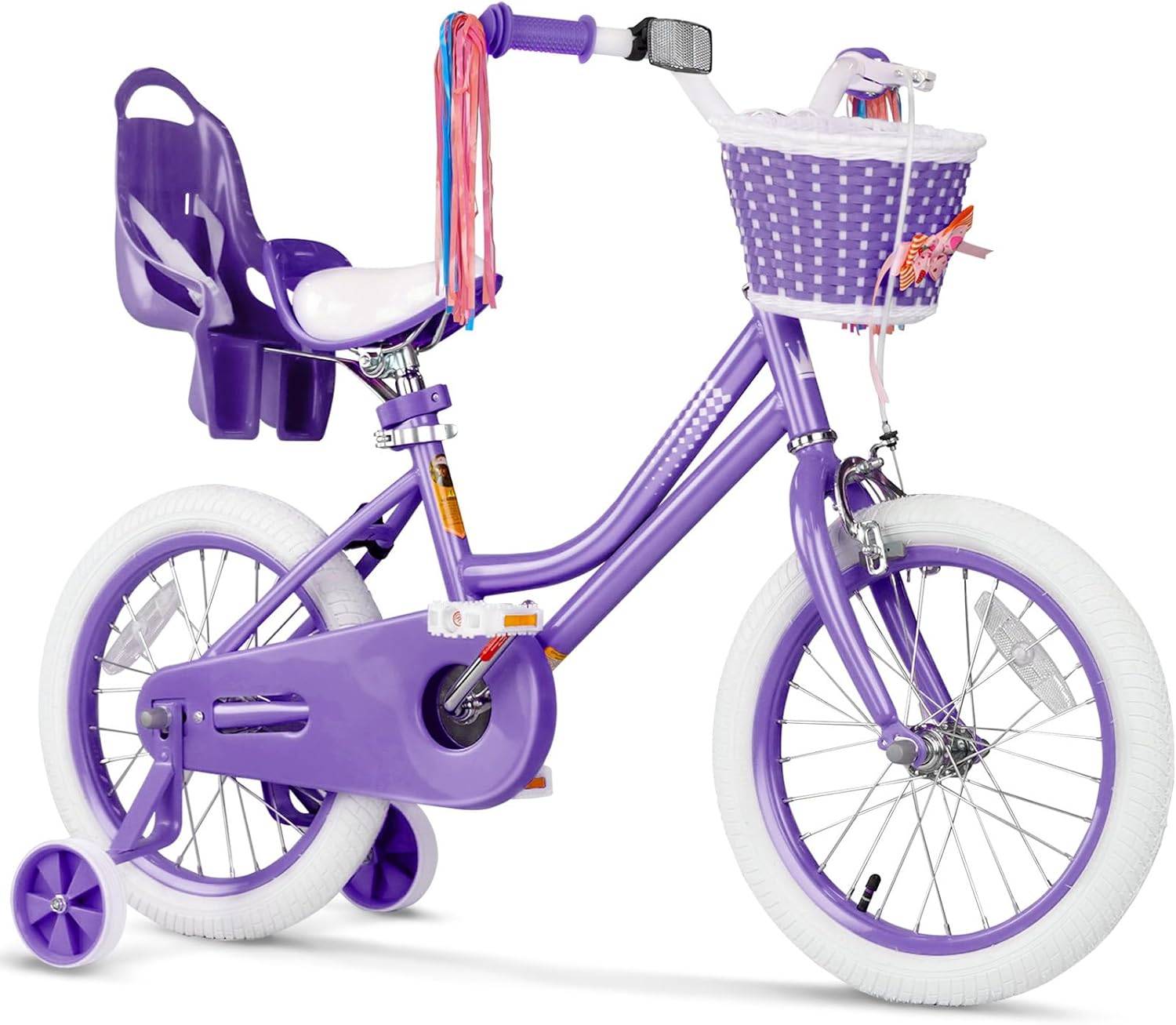 XJD Girls Bike for Kids Ages 3-8, 12/14/16 Inch with Training Wheels – Purple
A Training Wheel Bike offered with 12 Inch, 14 Inch and 16 Inch SKU labels. Its 16 Inch option is relevant only if the title’s measurement means wheel size; verify the child’s individual fit.
 Girls 12/14/16 Inch Kids Bike by XJD with Training Wheels – Peach
This Training Wheel Bike offers 12 Inch, 14 Inch and 16 Inch SKU labels, making it a relevant wheel-size comparison. The age wording in its title is only a catalog label, not fit evidence.
XJD Girls Bike for Kids Ages 3-8, 12/14/16 Inch with Training Wheels – Purple is listed under Training Wheel Bikes and has 12 Inch, 14 Inch and 16 Inch options. The ages embedded in its title are a catalog label, not evidence that it fits a particular child.
Girls 12/14/16 Inch Kids Bike by XJD with Training Wheels – Peach is also listed under Training Wheel Bikes with the same three SKU labels. Color and title wording do not change the fit process: select by measured height and then verify the individual bicycle.
Neither product supplies an 18 Inch or larger option in the given catalog facts. If the child measures beyond the 16 Inch starting range, these products should not be presented as equivalent substitutes for a larger wheel size.
Make the 16 inch decision
If the figure is a 16 Inch wheel label and the rider is 40–48 in / 102–122 cm tall, treat that as a starting point and complete the hands-on checks. If the rider is cramped after permitted adjustments, cannot steer or brake confidently, or falls outside the relevant range, compare another size and try it rather than forcing the fit.
Before riding, use a properly fitting bicycle helmet. It should sit level, with its straps fitted according to the helmet manufacturer’s instructions. The final answer is simple: keep the 16 inch bicycle only when the measured rider can stand over, reach, pedal, steer and brake it comfortably now.
Bikes for your next adventure
-

XJD Boys & Girls BMX Bike with Training Wheels, 12/14/16" – Blue
The XJD Boys & Girls BMX Bike in Blue is a first pedal bike for kids roughly age…$99.99
$119.99 -

XJD Girls BMX Bike 12/14/16 Inch with Training Wheels – Pink Blue
The XJD Girls BMX Bike in Pink/Blue is built as a first pedal bike for kids roug…$99.99
$119.99 -

Light Purple XJD Toddler Bike Helmet, Adjustable, Size XS (46–51 cm)
This Light Purple XJD toddler bike helmet is made for the smallest riders — the …$20.39