

Is 16 inch bike good for what age
A 16-inch bike is usually a starting point for ages 4–7 and heights 40–48 in (102–122 cm), but the child must try it for fit and control.
Is a 16-inch bike right for your child?
Age gives you a quick place to begin, not a final answer. A 16-inch bicycle is worth trying when the rider falls within the XBikes starting range above. Measured height, inseam, reach, brake control and current confidence should decide whether it is suitable.
Children of the same age can have different proportions and riding abilities. Do not choose an oversized bicycle merely to leave room for growth. A bike that is difficult to stand over, steer or stop can make learning harder.
Measure before choosing the wheel size
First, measure the child’s current height while they stand straight against a wall without bulky footwear. Then measure inseam from the floor to the crotch. Record both measurements rather than relying on an old height or clothing size.
Use height to identify the likely wheel-size range, then use inseam during an actual fit check. Wheel diameter does not reveal the frame’s exact stand-over height, seat range or reach, so two bicycles with the same wheel size may not fit identically.
| Wheel size | Age starting point | Rider-height starting point |
|---|---|---|
| 12 Inch | 3–4 | 34–40 in / 86–102 cm |
| 14 Inch | 3–6 | 37–45 in / 94–114 cm |
| 16 Inch | 4–7 | 40–48 in / 102–122 cm |
| 18 Inch | 5–9 | 43–52 in / 109–132 cm |
Overlap is normal. For example, a child measuring 44 inches appears in the 14-, 16- and 18-inch starting ranges. That does not make those sizes equivalent; it means the child should compare actual fit and handling rather than select by the chart alone.
What to check during the test fit
- Stand-over: Have the child straddle the bicycle. They should be able to stand securely over it without the frame preventing a stable stance.
- Seat position: Check whether the seat can be adjusted to a usable learning position according to the exact bicycle manual.
- Reach: The child should reach the handlebar without stretching, locking the elbows or losing a balanced posture.
- Brake control: If the bicycle has hand controls, confirm that the child can reach and operate them reliably while maintaining their grip and direction.
- Handling: Ask the child to start, steer, turn and stop in a controlled practice area. Watch for wobbling caused by struggling with the bicycle’s size rather than ordinary beginner hesitation.
Confidence matters alongside body measurements. A new rider near an overlap may feel more controlled on the smaller suitable option, while an experienced rider may handle another fitting option comfortably. The answer should come from demonstrated control, not pressure to “grow into” a bike.
How the supplied catalog option helps
The XJD Pink Girls' Bike – Kids 12/14/16 Inch Training Wheel Bicycle is relevant because its available SKU labels include 12 Inch, 14 Inch and the requested 16 Inch. Those labeled options can help a family compare nearby starting ranges while considering a training-wheel bicycle, but each selected size still requires an individual fit check. The title and SKU labels do not establish fit on their own.
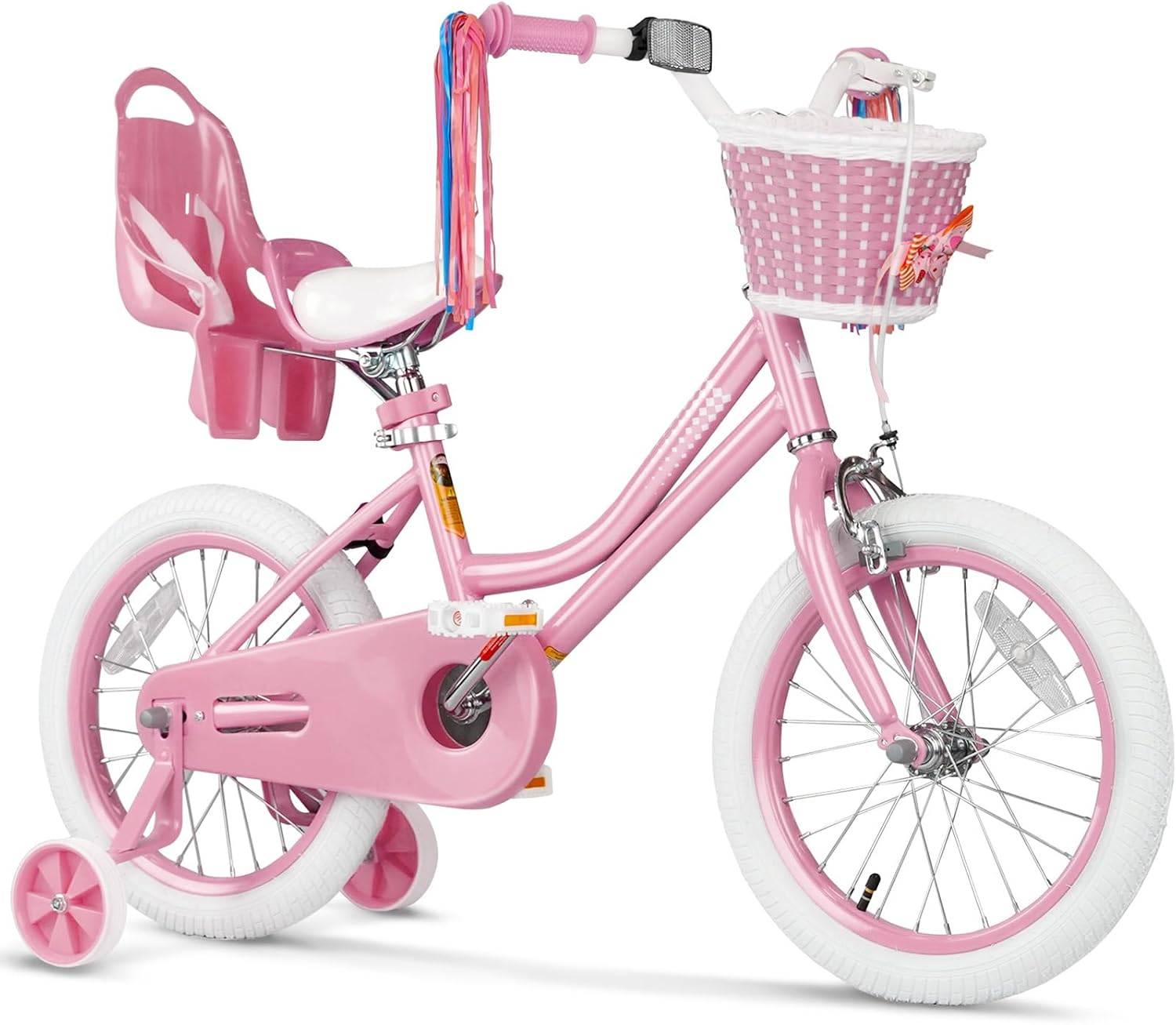
Start with its 16 Inch option for a child aged 4–7 who measures 40–48 inches (102–122 cm), then verify stand-over, reach, controls and confidence. Its 14 Inch option is a distinct smaller comparison for ages 3–6 and heights 37–45 inches (94–114 cm). Its 12 Inch option is another distinct size, starting at ages 3–4 and heights 34–40 inches (86–102 cm). Do not treat these wheel sizes as interchangeable.
Use the exact product manual for assembly, adjustment, maintenance, load limits, compatibility and any torque requirements. If the instructions are unavailable or the bicycle cannot be adjusted confidently, use a qualified bicycle mechanic.
When a 16-inch bike is not the answer
A 16-inch model is not the appropriate choice merely because the child is four to seven. Look elsewhere if the measured height is outside its 40–48-inch starting range, or if the rider cannot stand over the bicycle securely, reach the handlebar comfortably, operate its controls or demonstrate controlled stopping.
A rider near a boundary may need to compare an adjacent size. Use the relevant starting range, but repeat the complete fit check on every bicycle. Never move up solely to extend the purchase’s useful life.
Make the final decision
Measure height and inseam now, try the 16-inch bicycle, and accept it only if the child can stand, reach, steer and stop with control. Before riding, provide a properly fitting bicycle helmet: it should sit level, and its straps should be used according to the helmet manufacturer’s instructions. If either bike control or helmet fit remains uncertain, pause and get in-person fitting help.
Bikes for your next adventure
-
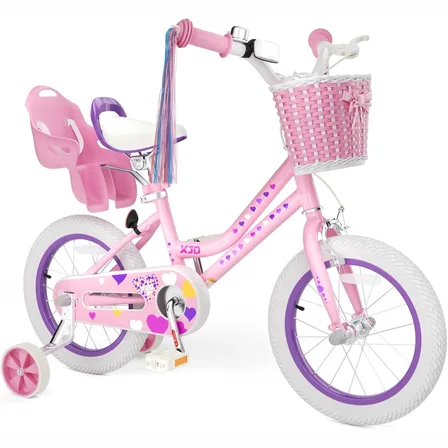
Light Pink XJD Girls' Bicycle with Basket & Training Wheels
The Light Pink XJD Girls' Bicycle with Basket & Training Wheels is a retro-style…$109.99
$129.99 -

Blue XJD Kids Bike Helmet for Boys & Girls
The Blue XJD Kids Bike Helmet is a lightweight, adjustable multi-sport helmet fo…$59.99
$99 -

Kids Bike Helmet by XJD for Girls – Pink
The XJD Kids Bike Helmet in Pink is a lightweight multi-sport helmet for girls r…$59.99
$99