

Is 16 inch bike frame small
Yes, a 16 inch bike frame is generally considered small, but on a child’s bike “16 inch” usually identifies the wheel size, not the frame. Check which measurement the label describes, then measure the rider and test the actual bicycle before deciding.
First confirm what “16 inch” means
A frame size and a wheel size are different measurements. Frame size describes part of the bicycle’s structure, while wheel size is the diameter category commonly used to compare children’s bicycles. Therefore, a listing for a 16 Inch kids bike should not automatically be read as specifying a 16 inch frame.
Look at the product title, size selector and exact product manual. If they say “16 Inch” without explicitly calling it a frame measurement, use it as a wheel-size starting point and seek confirmation from the product documentation. Frame geometry can differ between bicycles even when their wheel labels match.
Is a 16 Inch kids bike small for this rider?
Under the XBikes starting points, a 16 Inch wheel bicycle is intended for riders about 40–48 in / 102–122 cm tall, with ages 4–7 offered only as a rough reference. It is smaller than the 18 Inch, 20 Inch, 24 Inch and 26 Inch categories, but larger than the 12 Inch and 14 Inch categories.
That range cannot guarantee fit. A 16 Inch bicycle may be too small for a taller child, too large for a shorter child, or unsuitable because of the rider’s proportions and confidence. Height comes before age, including any age wording that happens to appear in a product title.
What to measure and compare
- Standing height: Measure the child without shoes, standing upright against a wall. Compare the result with the 40–48 in / 102–122 cm starting range.
- Inseam: Measure from the floor to the crotch while the child stands naturally. Compare that measurement with the bicycle’s stand-over clearance and usable saddle adjustment; consult the exact manual where specifications are needed.
- Stand-over: Have the child straddle the bicycle with both feet flat on the ground. They should not be forced onto tiptoes or pressed uncomfortably against the bicycle.
- Reach and steering: With the child seated, check that the handlebar can be reached without stretching, locking the elbows or losing comfortable steering control.
- Brake control: Confirm that the child can reach and operate the bicycle’s brakes as designed while maintaining control.
- Confidence: Watch starting, stopping, turning and getting off. A nominally correct size is still wrong if the rider cannot control it confidently.
How the supplied 16 Inch options help
All three supplied products include a 16 Inch SKU label, so they are relevant wheel-size options for a child whose measurements and hands-on fit check support that category. Their neighboring size labels also make them useful comparison points when the child sits near a height boundary. They do not establish that any bicycle has a 16 inch frame.
 XJD Kids Bike for Girls – Pink, 12/14/16/20 Inch with Training Wheels
Includes supplied 12 Inch, 14 Inch, 16 Inch and 20 Inch labels, making it relevant for comparing the requested 16 Inch wheel category with smaller choices and a larger listed option.
 XJD Pink Girls' Bike – Kids 12/14/16 Inch Training Wheel Bicycle
Offers supplied 12 Inch, 14 Inch and 16 Inch labels in the Training Wheel Bikes category, so it is relevant when comparing the requested wheel size against smaller listed categories.
 XJD Girls Bike for Kids Ages 3-8, 12/14/16 Inch with Training Wheels – Purple
Offers supplied 12 Inch, 14 Inch and 16 Inch labels. The age wording is part of its exact catalog title and should not replace a height-based, individual fit check.
XJD Kids Bike for Girls – Pink, 12/14/16/20 Inch with Training Wheels is listed in Training Wheel Bikes and offers 12 Inch, 14 Inch, 16 Inch and 20 Inch labels. Its wider supplied size selection can help compare the requested category with both smaller options and a 20 Inch option.
XJD Pink Girls' Bike – Kids 12/14/16 Inch Training Wheel Bicycle is also a Training Wheel Bikes product, with 12 Inch, 14 Inch and 16 Inch labels. It is relevant when the fit decision is between the requested wheel category and either of the two smaller supplied categories.
XJD Girls Bike for Kids Ages 3-8, 12/14/16 Inch with Training Wheels – Purple provides the same supplied 12 Inch, 14 Inch and 16 Inch labels in the Training Wheel Bikes category. “Ages 3-8” is part of its catalog title, not evidence that it fits every child in that span; use the XBikes height starting points and an individual check.
What to do if the child is between sizes
Do not choose an oversized bicycle merely to allow room for growth. Have the child try the candidate sizes and favor the one that permits comfortable stand-over, natural reach, reliable brake operation and confident control now. If the measured height falls outside the 16 Inch starting range, compare the adjacent XBikes category indicated by height rather than forcing a 16 Inch choice.
Follow the exact product manual for assembly, adjustment, maintenance, load limits, compatibility and any torque requirements. If the instructions are missing or the setup cannot be verified, use a qualified bicycle mechanic. Before riding, provide a properly fitting bicycle helmet that sits level and has its straps adjusted according to the helmet manufacturer’s instructions.
The decision
Call a 16 inch frame small, but do not assume a kids bike carrying a 16 Inch label has that frame measurement. Confirm the label, measure height and inseam, then choose a 16 Inch wheel option only if the child can straddle, reach, brake and steer it comfortably and confidently today.
Bikes for your next adventure
-
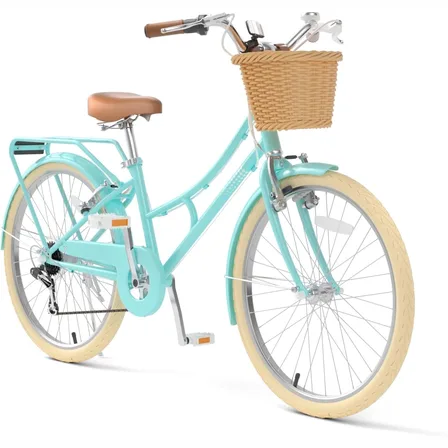
XJD Kids Beach Cruiser Bicycle, Rear Rack & V-Brakes, Mint Green
The XJD Beach Cruiser in Mint Green is a geared, multi-speed cruiser bike for ol…$179.99
$209.99 -
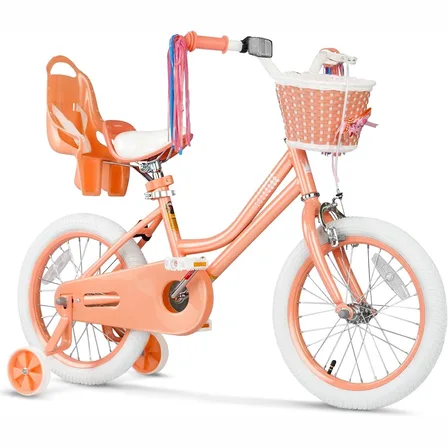
Girls 12/14/16 Inch Kids Bike by XJD with Training Wheels – Peach
The XJD Girls Bike in Peach is a training-wheel bike built for girls roughly 3 t…$149
$169 -
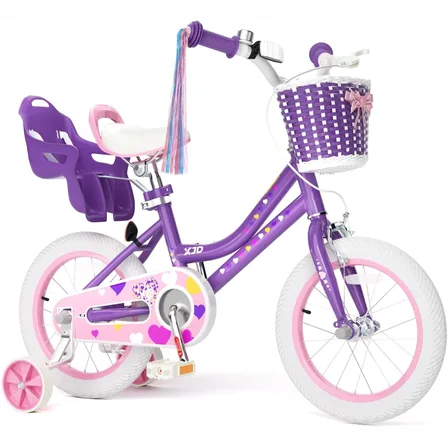
XJD Light Purple Girls Bike with Basket, Training Wheels, 12/14/16/20 Inch
The XJD Girls Bike with Basket in Light Purple is a single-speed training-wheel …$99.99
$119.99