

Is a 20 bike good for a 10 year old
Yes, a 20-inch bike is often suitable for a 10-year-old who is 48–60 inches (122–152 cm) tall, but body fit and control matter more than age.
Start with height, not the birthday
XBikes uses ages 7–12 and rider heights of 48–60 inches (122–152 cm) as starting points for a 20-inch bike. A 10-year-old falls within that age band, but the child’s measured height is the more useful first comparison.
Measure the child without shoes, standing straight against a wall. Then measure the inseam from the floor to the crotch using a book held level between the legs. The inseam helps you assess stand-over clearance when the child tries the actual bicycle; it should not be converted into a wheel size with an invented formula.
Check the actual 20-inch bike
Have the child try the bicycle rather than relying on its wheel label. With the child straddling the frame and both feet flat on the ground, confirm that there is comfortable clearance between the body and the top of the frame. If contact occurs or the child cannot stand securely, the bike is too large in that position.
Next, seat the child and check reach. The child should be able to hold the handlebar without stretching, locking the elbows or leaning excessively forward. Ask them to turn the handlebar in both directions while remaining balanced.
Finally, confirm that the child can reach and operate the bike’s brakes confidently with the hands in a normal riding position. American Academy of Pediatrics guidance supports trying the bike, checking stand-over and control, and avoiding an oversized bicycle bought only for future growth.
When to compare a 24-inch bike
| Wheel size | XBikes age starting point | XBikes height starting point |
|---|---|---|
| 20 Inch | Ages 7–12 | 48–60 in / 122–152 cm |
| 24 Inch | Ages 10–14 | 54–64 in / 137–163 cm |
The ranges overlap, so some 10-year-olds may need to compare both sizes. A child who is 54 inches (137 cm) or taller enters the 24-inch starting range, but that does not automatically make a 24-inch bike the right choice. Compare stand-over clearance, handlebar reach, brake access and ease of control on each actual bicycle.
Choose the size the child can control now. Do not move up merely because the larger bike may last longer. If the 20-inch bike feels cramped while the 24-inch option permits secure stand-over and confident operation, the larger size may fit better. If the 24-inch bike requires stretching or reduces confidence, it is oversized even though the child’s age appears in its starting range.
How the supplied BMX option helps
The Blue XJD Freestyle BMX Bike, 20-Inch – No Pegs is directly relevant because its supplied catalog title identifies it as a 20-inch kids’ BMX bike. It gives you an actual 20-inch option on which to perform the fit and control checks above; the catalog facts do not establish its rider measurements, component details or suitability for a particular child.
These catalog options help answer the title by letting a parent compare the requested wheel size against the individual child’s stand-over, reach, brake control and confidence rather than treating age as proof of fit.

Use a short try-out routine
- Confirm the child’s measured height against the 20-inch starting range.
- Check stand-over clearance with both feet planted securely.
- Check that the seated position does not require an awkward stretch.
- Ask the child to reach and operate the brakes from a normal grip.
- In a safe, traffic-free area with appropriate supervision, observe starting, stopping, turning and putting a foot down.
Reject the fit if the child appears unstable, cannot operate the brakes reliably, must stretch to steer or feels intimidated by the bike. Current confidence is part of fit, especially for a child who is still developing riding skills.
Before the first ride
Use a bicycle helmet that fits properly, sits level and has its straps adjusted according to the helmet manufacturer’s instructions, consistent with U.S. Consumer Product Safety Commission guidance.
Follow the exact bicycle manual for assembly, adjustments, maintenance, torque, load limits and compatibility. If the manual is unavailable or any setup is uncertain, use a qualified bicycle mechanic rather than guessing.
For a 10-year-old measuring 48–60 inches (122–152 cm), try the 20-inch bike first; buy it only if the child also clears the frame, reaches the controls, brakes reliably and rides with confidence.
Bikes for your next adventure
-
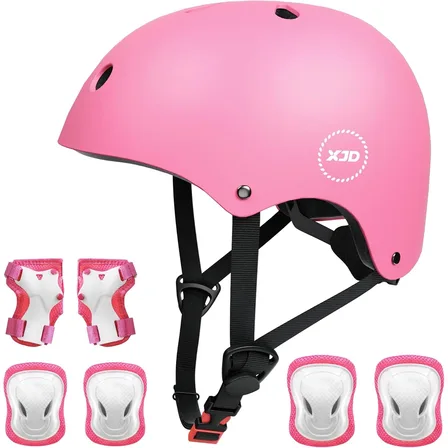
XJD Kids Helmet & Protective Gear Set for Girls, Pink
The XJD Kids Helmet & Protective Gear Set in Pink is a complete safety kit for g…$24.64
-

Light Purple XJD Toddler Bike Helmet, Adjustable, Size XS (46–51 cm)
This Light Purple XJD toddler bike helmet is made for the smallest riders — the …$20.39
-
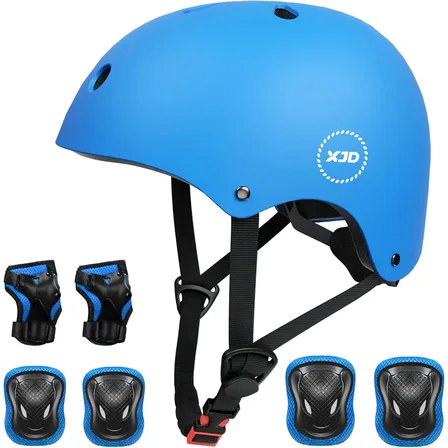
Blue XJD Helmet & Protective Gear Set for Kids, Sizes S/M
The Blue XJD Helmet & Protective Gear Set is made for kids roughly 3 to 8 years …$23.79