

Should child bike trailer have suspension
A child bike trailer does not always need suspension. Choose it for frequent riding on rough, broken or uneven surfaces; for smooth paved routes, correct fit, tire setup and careful riding may matter more.
Decide from the routes you actually ride
Suspension is most relevant when repeated bumps would otherwise reach the passenger compartment. Gravel paths, cracked pavement, roots and rough park trails make it more useful. A trailer used mainly on maintained cycleways and smooth streets may not gain enough comfort from suspension to justify extra cost, complexity or maintenance.
Do not treat suspension as permission to ride faster or use unsuitable terrain. It cannot correct poor attachment, excessive speed, wrong tire pressure, overloading or a route prohibited by the trailer manufacturer.
Measure before comparing trailers
Record the child’s seated height, shoulder width and headroom while wearing the intended helmet. Check that the child can sit naturally without the helmet pressing against the roof or seat and that the harness can be positioned as the manufacturer directs. If two children will ride, assess both seating positions and their combined load.
Also note the trailer’s intended cargo, the towing bicycle and the routes’ narrowest gates or storage spaces. Obtain the permitted passenger size, load limit, tire-pressure range and bicycle or axle compatibility from the exact trailer manual. If any attachment or compatibility point is uncertain, ask a qualified bicycle mechanic.
Compare the whole suspension design
| Question | What to look for |
|---|---|
| Can it suit the load? | A manufacturer-approved adjustment or operating range that includes the actual passenger and cargo load. |
| Does it control repeated bumps? | Stable, composed movement on the surfaces you expect, without using suspension as a substitute for slowing down. |
| Can it be maintained? | Clear manual instructions, inspectable parts and available qualified service. |
| Is the trailer compatible? | Written confirmation for the towing bicycle, hitch or axle arrangement and intended use. |
A suspension label alone reveals little. Compare how the complete trailer is intended to work at your real load, not merely whether it has springs. Follow the manual for assembly, adjustment, inspection and replacement; specifications and procedures vary by model.
When suspension is worth prioritizing
- Prioritize it when rough surfaces are routine, rides are long enough for repeated vibration to matter, and an appropriate model is approved for the child, load, bicycle and route.
- Consider it optional when rides are short and mainly on smooth pavement, provided the trailer otherwise fits and is used within all instructions.
- Do not proceed yet when the manual does not confirm passenger limits, intended terrain or hitch compatibility. Suspension cannot resolve those unknowns.
Before buying, take a representative test route if the seller permits it, using an appropriate load and following the manufacturer’s instructions. Listen for rattles, observe whether the compartment remains controlled over small bumps, and check that towing and braking remain predictable. Never place a child in a setup that has not been assembled and checked as directed.
Helmet, setup and riding still matter
Use a bicycle helmet that fits properly, sits level and has straps adjusted according to its manufacturer’s instructions. Follow the trailer maker’s rules about helmets, restraints and passenger posture. Confirm the hitch is secured exactly as specified before every ride, and recheck the trailer after transport, folding or adjustment.
Choose speed for visibility, stopping distance, corners and surface condition. Avoid obstacles rather than relying on suspension to absorb them. If the trailer tracks poorly, bottoms out, makes unexpected noises or shows damage, stop using it until the manual’s checks are completed or a qualified bicycle mechanic evaluates it.
Where the supplied kids’ bikes fit
The supplied catalog products are training-wheel bicycles, not child bike trailers, so neither provides evidence about trailer suspension. They help only as comparison points for a later stage when a child rides a bicycle independently: XJD Kids' Training Wheel Bike for Boys & Girls, 12/14/16 Inch – White offers 12, 14 and 16 Inch labels, while Girls' Training Wheel Bike by XJD, 12–20 Inch Wheels – Blue offers 12, 14, 16 and 20 Inch labels. They are not substitutes for a trailer or a suspension decision.
 XJD Kids' Training Wheel Bike for Boys & Girls, 12/14/16 Inch – White
A training-wheel bicycle with supplied 12, 14 and 16 Inch SKU labels. It is relevant only when comparing a later move to independent riding, not as evidence for child-trailer suspension.
 Girls' Training Wheel Bike by XJD, 12–20 Inch Wheels – Blue
A training-wheel bicycle offered with supplied 12, 14, 16 and 20 Inch SKU labels. It can inform an individually checked bicycle-fit comparison but does not replace a trailer or answer suspension compatibility.
If independent riding is the actual next step, measure the rider rather than relying on a catalog title or age alone. XBikes starting points are 12 Inch at 34–40 in (86–102 cm), 14 Inch at 37–45 in (94–114 cm), 16 Inch at 40–48 in (102–122 cm), and 20 Inch at 48–60 in (122–152 cm). The child must still try the bicycle: check stand-over clearance, reach, brake control and current confidence, and do not buy oversized merely for growth.
For the trailer decision, write down your child’s seated dimensions, total carried load and usual surfaces, then compare only manuals that confirm fit and compatibility. Choose suspension when rough-route comfort is a recurring need; otherwise prioritize a correctly fitted, compatible trailer and controlled riding.
Bikes for your next adventure
-

Kids Bike Helmet by XJD for Girls – Pink
The XJD Kids Bike Helmet in Pink is a lightweight multi-sport helmet for girls r…$59.99
$99 -
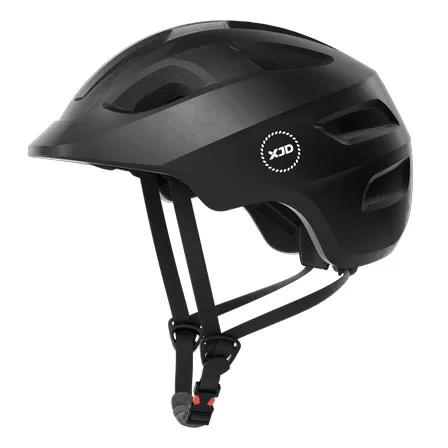
Kids Multi-Sport Bike Helmet by XJD – Black
7 reviews
The XJD Kids Multi-Sport Bike Helmet in Black is a lightweight, adjustable helme…$59.99
$49 -

Blue XJD Kids Bike Helmet for Boys & Girls
The Blue XJD Kids Bike Helmet is a lightweight, adjustable multi-sport helmet fo…$59.99
$99