

Should i buy a 10 year old bike
Buy a 10-year-old bicycle only if it fits the child now and a qualified bicycle mechanic confirms that it is sound. If you mean a bike for a 10-year-old, choose by measured height, inseam, reach, brake control and confidence—not age alone.
First, identify which question you mean
“A 10 year old bike” can mean a bicycle manufactured about a decade ago or a bicycle intended for a 10-year-old rider. In either case, the decision begins with present fit and control. A correctly sized older bicycle may be worth considering; a newer bicycle that is too large, difficult to stop or awkward to steer is not a suitable choice.
Do not buy extra size simply to allow room for growth. The American Academy of Pediatrics advises having the child try the bicycle and checking stand-over clearance, control and brake reach.
Measure the rider before comparing bikes
- Height: Measure the child without shoes, standing straight against a wall.
- Inseam: Measure from the floor to the crotch while the child stands in socks. Use this to assess stand-over clearance on the actual bicycle.
- Reach: With the child seated, check whether they can hold the handlebar and turn it comfortably without stretching or locking their arms.
- Brake control: Confirm that the child can reach and operate the provided brakes while maintaining a secure grip and steering control.
- Confidence: Consider the child’s current starting, balancing, turning and stopping ability. A nominal size is only a starting point.
Use wheel size as a starting point
| Wheel label | Starting age | Rider height |
|---|---|---|
| 12 Inch | 3–4 | 34–40 in / 86–102 cm |
| 14 Inch | 3–6 | 37–45 in / 94–114 cm |
| 16 Inch | 4–7 | 40–48 in / 102–122 cm |
| 18 Inch | 5–9 | 43–52 in / 109–132 cm |
| 20 Inch | 7–12 | 48–60 in / 122–152 cm |
| 24 Inch | 10–14 | 54–64 in / 137–163 cm |
| 26 Inch | Youth and adults | Over 60 in / 153 cm |
For a 10-year-old, the starting points overlap: 20 Inch may correspond to a rider 48–60 inches tall, while 24 Inch may correspond to 54–64 inches. A rider over 60 inches may begin comparing 26 Inch bicycles. These ranges do not establish fit; test the actual bicycle for stand-over, reach, brake operation and confident control.
Check a decade-old bicycle before buying
Age by itself neither approves nor disqualifies a used bicycle. Its current condition and maintenance history matter. Look for visible frame or fork damage, corrosion, loose or rough movement, damaged wheels or tires, a slipping or rusty drivetrain, worn contact points and brakes that do not operate consistently. Ask what was replaced, repaired or stored outdoors, but do not treat an undocumented answer as proof.
Have a qualified bicycle mechanic inspect the bicycle before purchase when possible, especially if you see damage, do not know its history or cannot assess its braking and steering systems. Follow the exact bicycle or component manual for maintenance, compatibility and torque; do not guess at adjustment procedures or specifications. Include the likely cost of necessary service and parts when comparing the older bicycle with another option.
How the supplied XBikes options help
The catalog choices provide current size comparison points for two different stages. The XJD Light Purple Girls Bike with Basket, Training Wheels, 12/14/16/20 Inch is listed in Training Wheel Bikes and has available 12 Inch, 14 Inch and 16 Inch SKU labels. Those sizes correspond to younger or shorter starting ranges than most 10-year-old riders, so measured fit must rule the decision.
The XJD Kids Beach Cruiser Bicycle, Rear Rack & V-Brakes, Mint Green is listed in Beach Cruiser Bikes with available 20 Inch, 24 Inch and 26 Inch SKU labels. These labels span the XBikes starting ranges most likely to be compared for a 10-year-old, but they do not tell you which version fits a particular child. Its V-brakes must still be reachable and controllable by the rider.
These particular catalog options help separate a smaller training-wheel comparison from 20, 24 and 26 Inch cruiser comparisons, making it easier to eliminate unsuitable sizes before arranging an individual fit check.
 XJD Light Purple Girls Bike with Basket, Training Wheels, 12/14/16/20 Inch
Available in 12 Inch, 14 Inch and 16 Inch SKUs, this Training Wheel Bike is mainly a smaller-size comparison; use the rider’s measurements and individual fit check.
 XJD Kids Beach Cruiser Bicycle, Rear Rack & V-Brakes, Mint Green
Its available 20 Inch, 24 Inch and 26 Inch SKUs cover useful starting comparisons for many 10-year-old riders, but measured fit, reach and V-brake control determine relevance.
Make the purchase decision
- Buy the decade-old bike only if the child can stand over it, reach the controls, steer and brake confidently, and a mechanic finds no condition or compatibility problem that makes the purchase impractical.
- Do not buy it if it is oversized for growth, its history or damage cannot be resolved, required repairs erase its value, or the child cannot control it comfortably.
- For a 10-year-old rider, measure first, shortlist wheel labels from the height table, then test each actual bicycle rather than selecting from age wording.
Before the first ride, provide a bicycle helmet that fits properly, sits level and has straps secured according to its manufacturer’s instructions. Your next step is simple: record the child’s height and inseam, test stand-over and controls, and arrange a mechanic’s inspection if the bicycle itself is ten years old.
Bikes for your next adventure
-
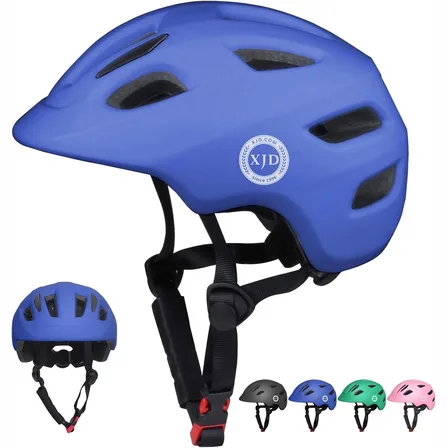
Blue XJD Kids' Bike Helmet, Adjustable Fit – Sizes XS & S
The Blue XJD Kids' Bike Helmet is a lightweight, adjustable helmet for toddlers …$20.39
-

Kids Bike Helmet by XJD for Boys & Girls – Black, Blue, Green, Pink, Purple
The XJD Kids Bike Helmet covers a wide 2-to-8-year age range thanks to two head-…$59.99
-
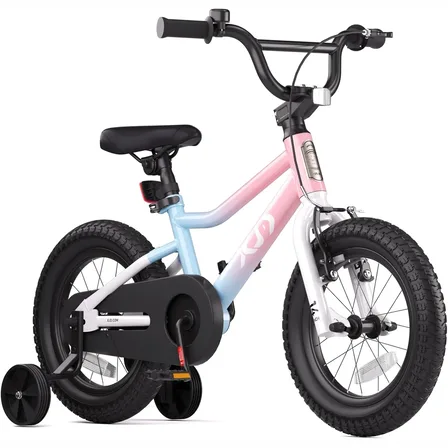
XJD Girls BMX Bike 12/14/16 Inch with Training Wheels – Pink Blue
The XJD Girls BMX Bike in Pink/Blue is built as a first pedal bike for kids roug…$99.99
$119.99