

What age 20 inch bike
A 20-inch bike is generally a starting point for children ages 7–12 who are 48–60 inches (122–152 cm) tall, but measured fit matters more than age.
Is a 20-inch bike right for your child?
Use age only to begin the search. Two children of the same age can have different leg lengths, arm lengths, balance skills and confidence. A child near the stated age range may therefore fit an 18-inch, 20-inch or 24-inch bike differently.
For a 20-inch bike, first compare the rider’s measured height with the XBikes starting range of 48–60 inches (122–152 cm). Then have the child try the actual bicycle. Do not choose an oversized bike simply to leave room for growth; the child needs comfortable control now.
What to measure before choosing
- Standing height: Measure without shoes, with the child standing straight against a wall. Compare the result with the wheel-size starting points below.
- Inseam: Measure from the floor to the crotch while the child stands naturally. Compare that measurement with the actual bicycle’s stand-over clearance and adjustment range; follow the exact product manual where dimensions or adjustment procedures are needed.
- Reach: On the bicycle, check that the child can hold the handlebar without stretching, locking the elbows or leaning excessively forward.
- Brake control: The rider should be able to reach and operate the brake controls confidently while maintaining a secure grip.
Wheel diameter alone does not determine frame geometry, saddle range or reach. That is why a measurement chart narrows the options but cannot confirm the final fit.
How 20-inch sizing compares
| Wheel size | Age starting point | Rider-height starting point |
|---|---|---|
| 18 Inch | Ages 5–9 | 43–52 in / 109–132 cm |
| 20 Inch | Ages 7–12 | 48–60 in / 122–152 cm |
| 24 Inch | Ages 10–14 | 54–64 in / 137–163 cm |
The ranges overlap because age and height do not produce one automatic answer. A child measuring 50 inches, for example, falls within both the 18-inch and 20-inch starting ranges. Compare both bicycles in person and favor the one that provides better stand-over, reach, brake operation and confident handling.
A rider measuring 55 inches is within both the 20-inch and 24-inch starting ranges. That overlap does not make the sizes equivalent. The child still needs to try each candidate, and a 24-inch bicycle should not be selected if it compromises control.
A practical fit check
Ask the child to stand over the bicycle and confirm that the frame does not prevent comfortable, controlled footing. With the saddle adjusted according to the product manual, check that starting, stopping and putting a foot down feel manageable.
Next, watch the child hold the handlebar and use the brakes. The controls should be reachable without shifting the hands into an insecure position. In a suitable, traffic-free area, confirm that the child can start, steer, stop and dismount without panic or obvious strain. Current confidence is part of fit, not an afterthought.
If adjustment limits, assembly steps or compatibility are unclear, consult the exact bicycle manual or a qualified bicycle mechanic. Do not improvise settings or procedures.
How the supplied catalog option helps
The supplied catalog option is relevant because the XJD Pink Beach Cruiser for Girls – Rear Rack & V-Brake is offered with a 20 Inch SKU label, as well as 24 Inch and 26 Inch labels. It lets you identify the requested wheel-size option and recognize that the larger labels represent different sizes, not interchangeable fits.

Select the 20 Inch label only after confirming the child fits that specific bicycle. The presence of 24 Inch and 26 Inch options is useful for comparison, but it is not evidence that a child should size up. XBikes lists 24 inches as a starting point for ages 10–14 and heights 54–64 inches (137–163 cm), while 26 inches is for youth and adults over 60 inches (153 cm). Individual fit remains decisive.
Do not skip the helmet check
A correctly sized bicycle still requires a properly fitting bicycle helmet. The helmet should sit level and its straps should be used according to the helmet manufacturer’s instructions. Recheck the fit rather than assuming that an older helmet remains suitable.
Your next decision
Measure the child’s height and inseam, begin with a 20-inch bike if the height is 48–60 inches (122–152 cm), and arrange an actual fit check. Choose it only if the child has suitable stand-over clearance, relaxed reach, reliable brake control and enough confidence to start and stop; otherwise compare the adjacent starting size that matches the measurements.
Bikes for your next adventure
-

26-Inch XJD Beach Cruiser Bike for Girls – Purple, V-Brake
This XJD 26-inch purple beach cruiser is sized for big kids and teens — suggeste…$218.49
$229.99 -
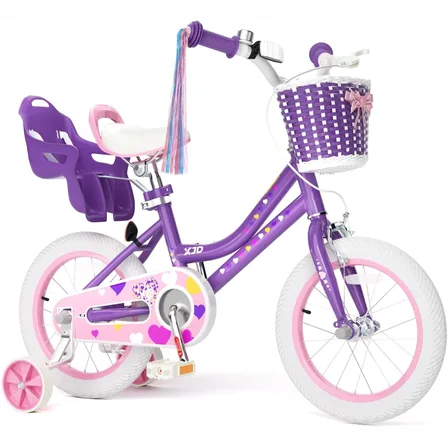
XJD Light Purple Girls Bike with Basket, Training Wheels, 12/14/16/20 Inch
The XJD Girls Bike with Basket in Light Purple is a single-speed training-wheel …$99.99
$119.99 -
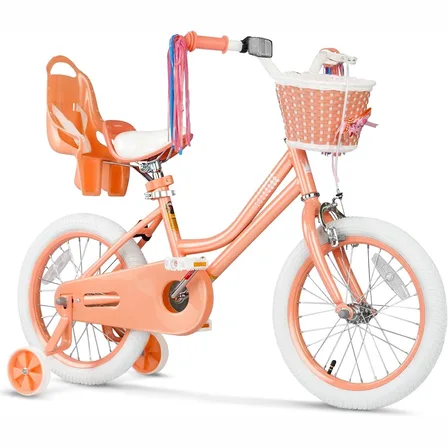
Girls 12/14/16 Inch Kids Bike by XJD with Training Wheels – Peach
The XJD Girls Bike in Peach is a training-wheel bike built for girls roughly 3 t…$149
$169