

What age is 20 inch bike
A 20-inch bike generally suits children ages 7–12 who are 48–60 inches (122–152 cm) tall, but the child’s measurements and control matter more than age.
Start with height, not the birthday
The age range is a useful starting point, not a guarantee. Children of the same age can differ substantially in height, leg length, reach and riding confidence. Measure the child rather than choosing a 20-inch bike solely because the age range appears suitable.
Have the child stand straight without shoes and measure from the floor to the top of the head. Then measure inseam from the floor to the crotch, using a book held level between the legs to represent the bike’s saddle area. Compare the measured height with the XBikes starting point of 48–60 inches (122–152 cm), then confirm the fit on the actual bicycle.
Compare the nearby wheel-size ranges
| Wheel size | Starting age | Rider height |
|---|---|---|
| 16 Inch | 4–7 | 40–48 in / 102–122 cm |
| 18 Inch | 5–9 | 43–52 in / 109–132 cm |
| 20 Inch | 7–12 | 48–60 in / 122–152 cm |
| 24 Inch | 10–14 | 54–64 in / 137–163 cm |
Overlap is normal. For example, a child’s age might point toward 20 inches while measured height also falls within an adjacent range. That is a reason to compare actual fit and control, not to automatically choose the larger wheel. Do not buy an oversized bicycle merely to leave room for growth.
Check the child on the actual bike
A suitable 20-inch bike should let the child mount, stop and steer without strain or fear. During a supervised fitting, check these points:
- Stand-over: The child should be able to straddle the bicycle without the frame pressing uncomfortably into the body.
- Reach: The handlebars should be reachable without locking the elbows, stretching the torso or losing a stable seated position.
- Brake control: The child must be able to reach and operate the bicycle’s controls reliably. Confirm the specific setup on the bike rather than assuming all 20-inch models operate alike.
- Starting and stopping: Ask the child to demonstrate controlled starts, stops and turns in a safe, traffic-free area.
- Confidence: If the child becomes tense, cannot control the bike or needs an awkward body position, reassess the size or setup.
Wheel size alone does not determine stand-over height, reach or control placement. Frame shapes and adjustments may differ, so an individual fit check remains necessary even when the height falls squarely inside the 20-inch range.
How the supplied 20-inch options are relevant
Both supplied catalog options help answer this question because they provide 20-inch choices to examine after the rider matches the starting range. Girls' Training Wheel Bike by XJD with Basket – Purple lists 14 Inch, 16 Inch and 20 Inch SKU labels, while Blue XJD Freestyle BMX Bike, 20-Inch – No Pegs is cataloged as a 20-inch kids’ BMX bike. Their different catalog categories also show why wheel diameter does not establish the complete riding setup.
 Girls' Training Wheel Bike by XJD with Basket – Purple
Available with a 20 Inch SKU label, alongside distinct 14 Inch and 16 Inch options. The 20 Inch version is relevant only after checking the child’s height, inseam, reach, brake control and confidence.
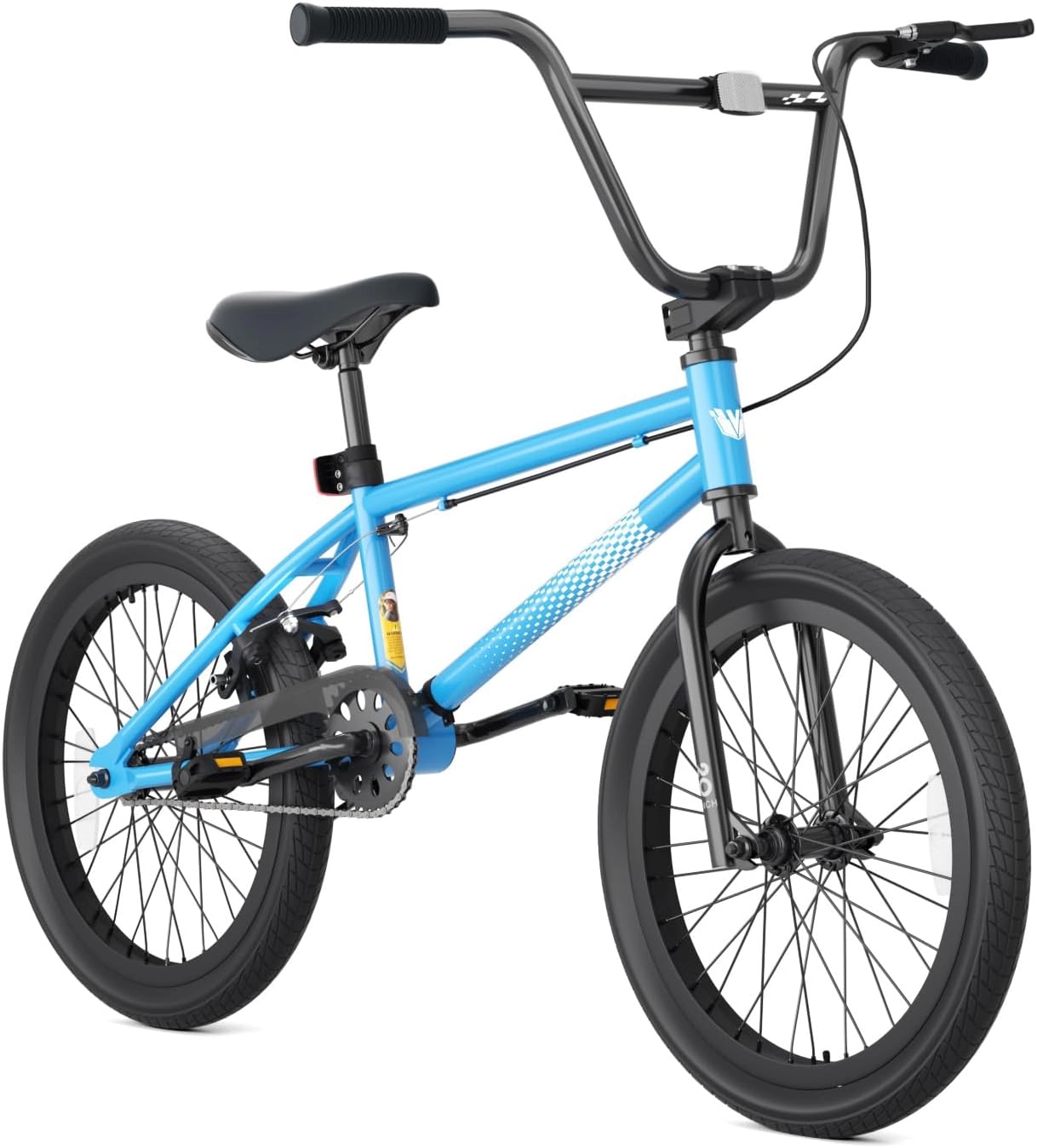 Blue XJD Freestyle BMX Bike, 20-Inch – No Pegs
This Kids' BMX Bikes catalog option is identified as 20-inch in its exact title. It is relevant for an individual fit comparison, but the supplied facts do not establish suitability for a particular rider.
For Girls' Training Wheel Bike by XJD with Basket – Purple, select and verify the 20 Inch SKU when evaluating the size discussed here; its 14 Inch and 16 Inch labels are different sizes, not equivalent alternatives. Blue XJD Freestyle BMX Bike, 20-Inch – No Pegs is directly relevant by its stated 20-inch title and Kids' BMX Bikes classification.
Neither title proves that the bicycle will fit a particular child. The catalog facts do not supply frame dimensions, brake details, load limits or assembly specifications. Consult the exact product manual for those details, and use a qualified bicycle mechanic when fit, assembly, adjustment or compatibility is uncertain.
Do the final safety and fit check
Before riding, use a properly fitting bicycle helmet. It should sit level, and its straps should be adjusted according to the helmet manufacturer’s instructions. A helmet does not correct a poorly fitting or oversized bicycle.
Recheck the child’s ability to stand over the frame, reach the handlebars, operate the brakes and stop under control. These checks are especially important when the child is near 48 inches or 60 inches tall, where comparison with an adjacent wheel-size range may be useful.
The decision to make now
If the rider is ages 7–12 and measures 48–60 inches (122–152 cm), place a 20-inch bike on the comparison list. Next, arrange an actual fit check. Choose it only if the child can comfortably straddle it, reach and operate its controls, and ride with current confidence; otherwise compare the adjacent size indicated by measured height rather than sizing up for future growth.
Bikes for your next adventure
-

26-Inch XJD Beach Cruiser Bike for Girls – Purple, V-Brake
This XJD 26-inch purple beach cruiser is sized for big kids and teens — suggeste…$218.49
$229.99 -
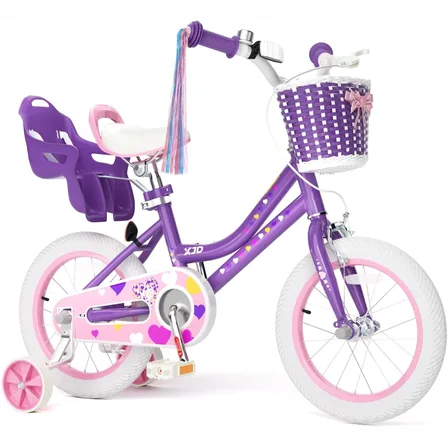
XJD Light Purple Girls Bike with Basket, Training Wheels, 12/14/16/20 Inch
The XJD Girls Bike with Basket in Light Purple is a single-speed training-wheel …$99.99
$119.99 -
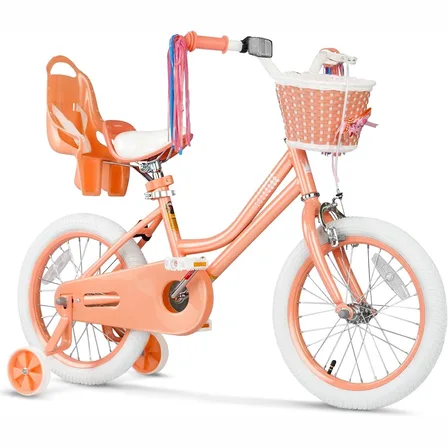
Girls 12/14/16 Inch Kids Bike by XJD with Training Wheels – Peach
The XJD Girls Bike in Peach is a training-wheel bike built for girls roughly 3 t…$149
$169