

What age can a child go in a bike trailer
A child can go in a bike trailer only when they meet the trailer manual’s minimum requirements and can ride in its required seating position securely. Age alone is not enough.
Check the trailer before deciding
There is no single age that applies to every bike trailer. Designs, restraint systems and permitted uses differ, so begin with the manual for the exact trailer and any applicable local rules. Compare the child with every stated requirement, including minimum age, seating or posture requirements, load limit and approved configuration. If the manual is missing or unclear, contact the manufacturer rather than guessing.
Do not transfer an age claim from another trailer, stroller mode or accessory to yours. A product may have different instructions depending on whether it is being pushed or towed. Use only configurations and accessories explicitly approved in the exact manual.
Assess the child, not just the birthday
Even after the manual’s minimum age is met, confirm that the child can maintain the posture the restraint system requires throughout the ride. Their body should remain properly positioned rather than slumping or shifting in a way that changes how the harness fits.
- Seat the child in the stationary trailer and fasten the restraint exactly as directed.
- Check that the restraint lies in the locations shown by the manufacturer and remains secure over ordinary movement.
- Confirm that the child, clothing and any permitted helmet do not interfere with the enclosure or seating position.
- Make sure the total carried load and number of occupants remain within the manual’s limits.
If the child cannot stay correctly positioned, the restraint cannot be adjusted as instructed, or any requirement is uncertain, wait. For a child whose physical development or medical needs make positioning uncertain, ask their pediatric clinician for individual guidance.
Prepare the equipment and first outing
Follow the manual for assembly, hitch compatibility, wheel attachment, restraint adjustment, permitted cargo and maintenance. No universal torque, attachment method or load limit should be substituted for the manufacturer’s directions. Have a qualified bicycle mechanic inspect the setup if you cannot verify assembly or compatibility yourself.
A helmet must fit properly, sit level and have its straps adjusted according to the helmet manufacturer’s instructions. Also check the trailer manual: helmet guidance can depend on the operating mode and the trailer’s headroom or seating design.
- Practice towing the empty trailer somewhere away from traffic.
- Load the child while the bicycle and trailer are stable, then recheck the restraint and hitch.
- Choose a short, calm first ride on a smooth, familiar route.
- Stop promptly if the child slumps, becomes distressed or no longer remains correctly restrained.
A trailer changes the bicycle’s length, width, acceleration and stopping response. Allow extra room and ride conservatively while learning how the complete setup handles.
When a child may be ready for their own bicycle
The supplied catalog item is not a bike trailer and cannot establish trailer readiness. It becomes relevant later, when comparing a trailer passenger’s options with a child-sized training-wheel bicycle. The XJD Girls Bike for Kids Ages 3-8, 12/14/16 Inch with Training Wheels – Purple is listed in 12 Inch, 14 Inch and 16 Inch options. The “Ages 3-8” wording is a catalog label, not proof that any particular child fits.
These particular options help answer the title only as next-stage comparison points: they show three small bicycle wheel sizes to assess after a family is considering independent riding instead of trailer transport.
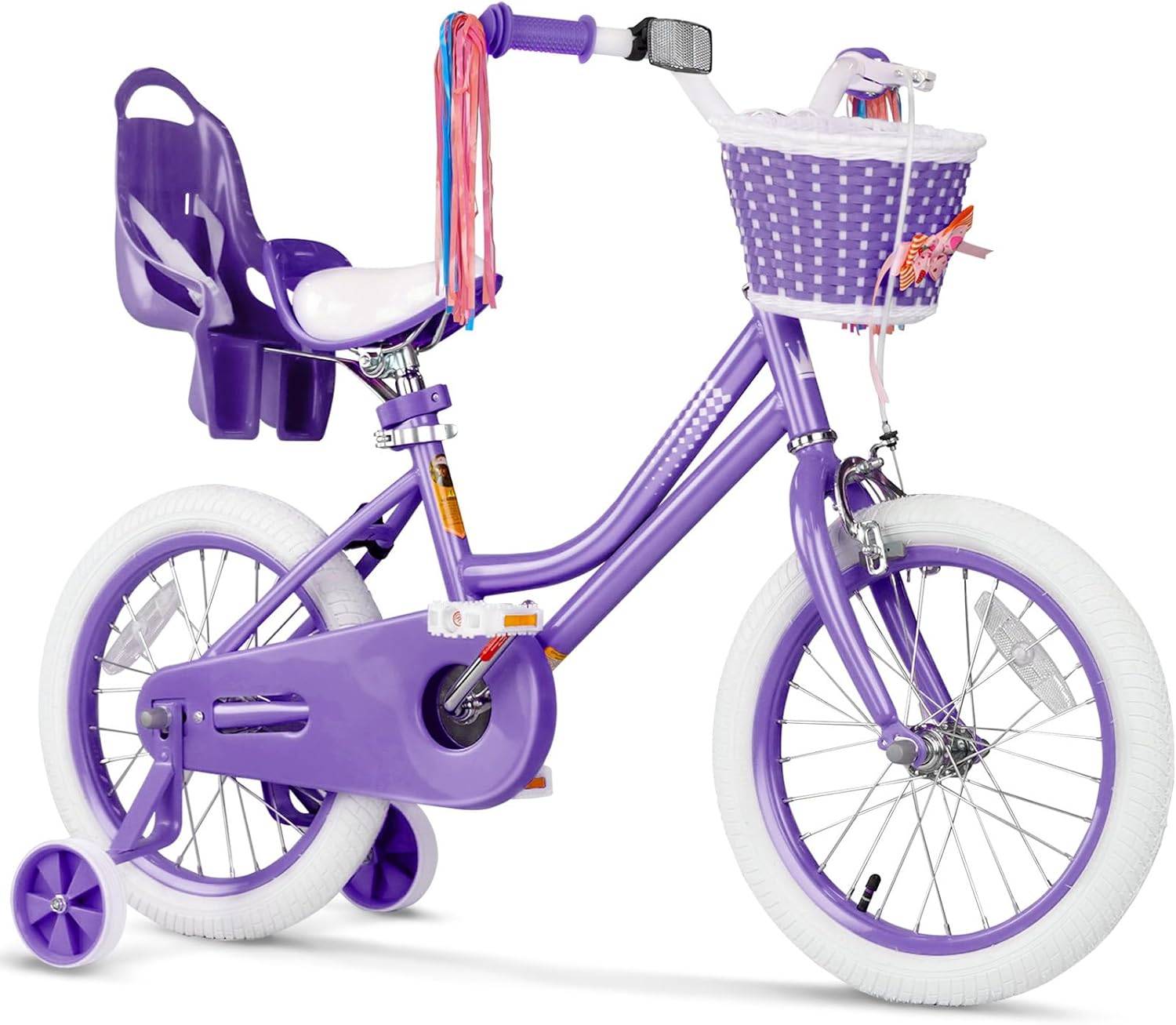
| Wheel size | XBikes starting point |
|---|---|
| 12 Inch | Ages 3–4; height 34–40 in / 86–102 cm |
| 14 Inch | Ages 3–6; height 37–45 in / 94–114 cm |
| 16 Inch | Ages 4–7; height 40–48 in / 102–122 cm |
These ranges are starting points, not a substitute for trying the bicycle. Measure the child’s standing height and inseam, then check stand-over clearance, reach, brake control and present confidence on the actual bike. Do not choose an oversized bicycle merely to leave growing room.
Make the go-or-wait decision
Use a simple rule: go only if the exact trailer manual permits the child’s age and configuration, the child can remain correctly seated and restrained, the complete setup meets all stated limits, and the towing adult has verified its assembly and handling. Otherwise, wait or obtain guidance from the manufacturer, a pediatric clinician or a qualified bicycle mechanic, depending on what remains uncertain.
Bikes for your next adventure
-

Kids Bike Helmet by XJD for Girls – Pink
The XJD Kids Bike Helmet in Pink is a lightweight multi-sport helmet for girls r…$59.99
$99 -

Blue XJD Kids Bike Helmet for Boys & Girls
The Blue XJD Kids Bike Helmet is a lightweight, adjustable multi-sport helmet fo…$59.99
$99 -
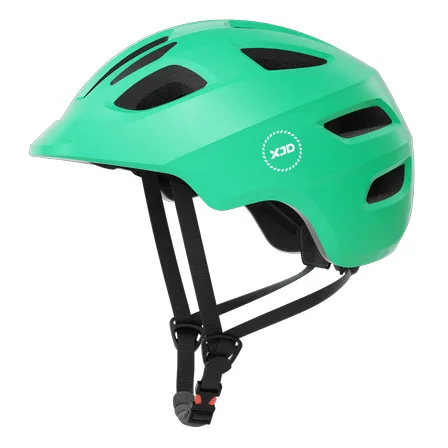
Green XJD Kids Bike Helmet for Boys & Girls
The Green XJD Kids Bike Helmet is a lightweight multi-sport helmet for toddlers …$59.99
$99